
Most travellers either skip Mount Aso altogether or visit on a quick day trip from Fukuoka or Kumamoto. In my opinion, that’s a mistake. I spent two weeks road tripping around Kyushu, and the three nights we based ourselves in the Aso region ended up being the highlight of our entire trip.
Mt Aso is quite possibly one of the most unique landscapes in Japan. It sits within one of the world’s largest volcanic calderas, stretching around 120 kilometres in circumference. Here, you’ll find active volcanoes, rolling grasslands, cascading waterfalls, panoramic lookouts and charming rural towns, all within an easy drive of one another.
In this guide, I’ll share the best things to do in the Mt Aso region, along with practical tips to help you make the most of your visit.
Mount Aso At a Glance
🚗 How long to stay
2-3 nights
🚙 Do you need a car?
Yes. Public transport is limited. Compare rental prices here.
🏨 Where to stay
Kamenoi Hotel Aso
🌸 Best time to visit
April-June and October-November
⛰️ Top highlights
Kusasenri, Takachiho Gorge, Daikanbo Lookout
✈️ Closest airport
Kumamoto Airport
Why Mount Aso Is Worth Visiting
Mt Aso is made up of five peaks: Mt Nekodake, Mt Takadake, Mt Nakadake, Mt Eboshidake and Mt Kishimadake. Mt Nakadake is the most famous, thanks to its active volcanic vent and striking turquoise crater lake, which can sometimes be viewed up close when conditions permit.
Many travellers assume the only reason to visit Mt Aso is to see the steaming Nakadake Crater up close. However, during our time in Aso, it didn’t even make our top highlights list.

In fact, following the helicopter crash in January 2026, the Nakadake Crater access road and toll road remain closed to vehicles. Don’t let that put you off visiting. You can still hike to a vantage point to view the crater from above or admire the dramatic volcanic landscape from the nearby Kusasenri grasslands.
While the crater is undoubtedly impressive, it’s only one small part of what makes this region so special.
Beyond the volcano, you’ll find sweeping grasslands, scenic hiking trails, waterfalls, peaceful shrines and picturesque rural landscapes that make Aso well worth spending a few days exploring.
Where to Stay
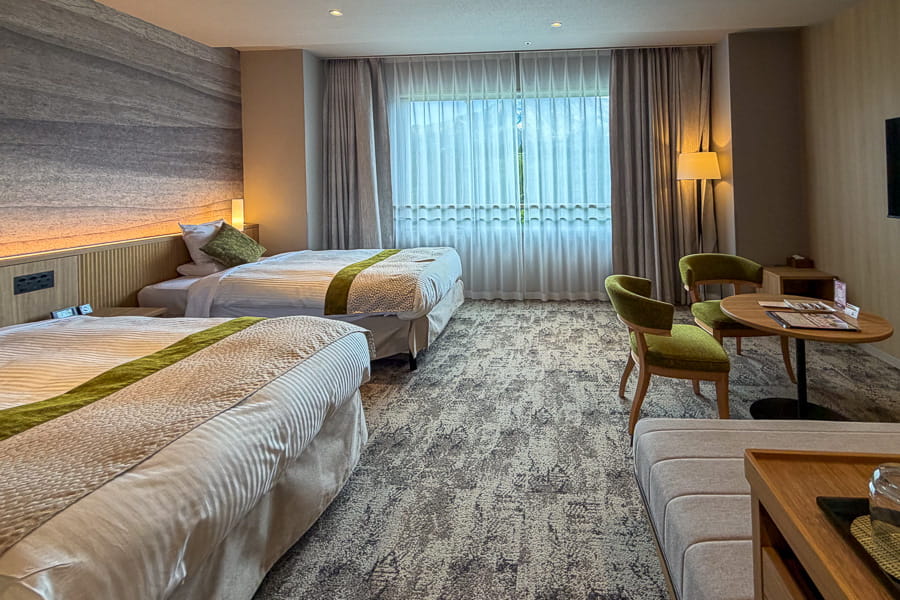
We based ourselves at Kamenoi Hotel Aso for three nights, and I genuinely couldn’t have chosen a better base. This recently renovated onsen hotel is set amongst expansive grounds, with many of the rooms offering spectacular views across the Aso mountain range.

One of the unexpected highlights of our stay was the breakfast and dinner buffet package. The spread featured live cooking stations serving everything from fresh sushi and sashimi to grilled wagyu beef skewers and local trout, alongside an extensive selection of traditional Japanese dishes and a handful of Western favourites. They even have Aso’s famous fresh milk on tap.
Although the menu remained largely the same throughout our three-night stay, we never tired of it thanks to the incredible variety on offer.
As the surrounding towns are relatively small, dinner options can be limited in the evenings, so returning to the hotel after a day of exploring for a soak in the onsen followed by an exceptional buffet dinner quickly became one of our favourite parts of each day.
The public onsen facilities were among the best I’ve experienced in Japan.
There are four indoor baths set at different temperatures, a spacious open-air onsen, a steam room and even a mud pack station where you can cover yourself in mineral-rich onsen mud, which is said to help exfoliate the skin and stimulate circulation.
There’s also a shampoo bar, and free iceypoles to enjoy after your hot soak – bliss!

My alternative pick was the Fairfield by Marriot Kumamoto Aso. Located in the centre of Aso town, this modern hotel offers a great value stay with clean and comfortable rooms, convenient parking, coin laundry and a common area for guests.
How to Get Around
To follow this Mount Aso itinerary, you’ll need a car, as public transport is very limited throughout the region.
Fortunately, driving around Aso is straightforward. The roads are well maintained and, while they can be winding through the mountains, they’re generally wide and easy to navigate. We used Google Maps throughout our trip without any issues.
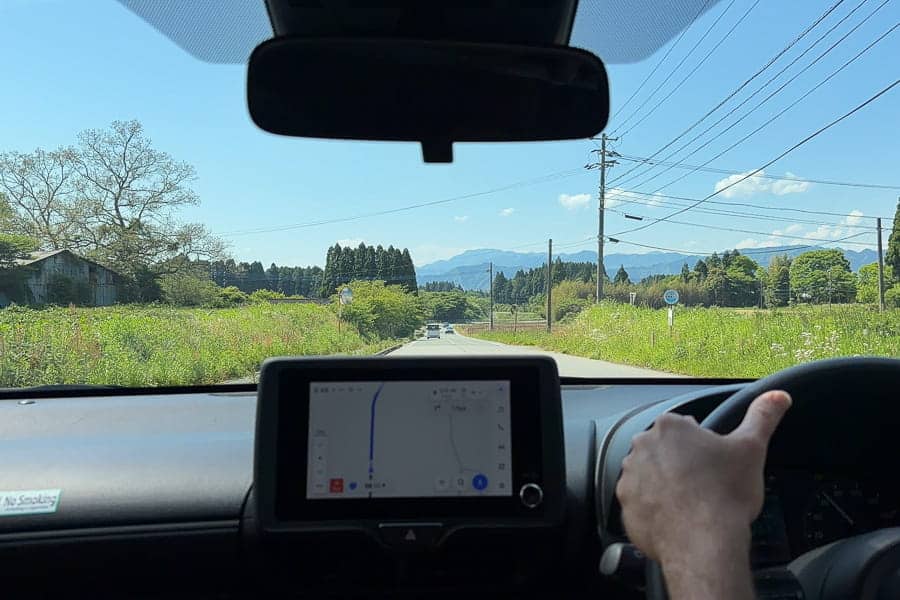
Parking was also surprisingly easy, with most attractions offering either free or inexpensive parking.
We booked our rental car online through Klook before arriving in Japan. Although we always travel with comprehensive travel insurance, I still chose the additional insurance offered by the rental company for a small fee for extra peace of mind.
Tip: You’ll need an International Driving Permit to rent a car and drive in Japan, so be sure to organise one before you leave home.
3 Days in Mount Aso
We spent the night before arriving in Aso in the idyllic onsen town of Kurokawa Onsen. I highly recommend spending a night here in a traditional ryokan if your itinerary allows.
If you’re travelling from Kumamoto, it makes more sense to follow this itinerary in reverse.
Day 1
After a traditional Japanese breakfast and one final soak in the private onsen at our ryokan, we packed up and began the scenic drive towards Aso.
Nabegataki Falls
Our first stop was Nabegataki Falls, one of the most unique waterfalls I’ve visited in Japan. Unlike most waterfalls, you can actually walk behind the 10-metre cascade through a shallow cave, giving you a completely different perspective.
It’s possible to reserve your entry online, although the booking website is only available in Japanese and can be a little difficult to navigate. As we visited midweek, we took our chances and were able to purchase tickets on arrival without any issues.

From the car park, a wooden boardwalk with a number of stairs leads down to the falls. Once at the bottom, it’s an easy 10-minute loop around the waterfall.
Entrance fee: 300 yen
Milk Road
If time permits, take a detour along Milk Road before continuing to Daikanbo Lookout.
This incredibly scenic drive follows the rim of the Aso Caldera, with sweeping grasslands stretching in every direction and spectacular views of Mt Aso’s five peaks.
We visited in May, when the surrounding hills were covered in vibrant green grass, making this one of the most beautiful drives of our entire Kyushu road trip.
Daikanbo Lookout
Daikanbo Lookout offers one of the best panoramic views in the region and is the perfect introduction to the immense scale of the Aso Caldera.
From here, you can appreciate just how vast the volcanic landscape is, with a patchwork of farmland spread across the caldera floor below and the five peaks of Mt Aso rising in the distance. The scale is difficult to appreciate until you’re standing on the rim looking down at the teeny-looking farms spread across the caldera floor.

From the car park, allow around 10 to 15 minutes to walk to the main viewing platform for the best views.
There’s a small café and souvenir shop at the lookout selling snacks and drinks, but we decided to wait until we reached Aso town for lunch. We stumbled across a small family-run restaurant called ぽれおん食堂, where we enjoyed a simple but delicious katsu curry.
Aso Milk Factory
End the day with a visit to the Aso Milk Factory, the best place to sample the region’s famous Aso milk.
As well as incredibly creamy fresh milk, you’ll also find delicious soft serve, gelato, puddings and other dairy treats. There’s also a souvenir shop selling local products and crafts, plus an Italian restaurant.
Day 2
Spend your first full day exploring the volcanic heart of Aso National Park.
Sensuikyo Gorge (Alternative: Hike Mt Kishimadake)
If you’re visiting Aso in May, don’t miss Sensuikyo Gorge, where thousands of vibrant pink Kyushu azaleas blanket the surrounding hillsides.
Located just a short drive from Kamenoi Hotel, it’s an easy and incredibly scenic walk, with beautiful views back across the caldera from the opposite perspective of Daikanbo Lookout.
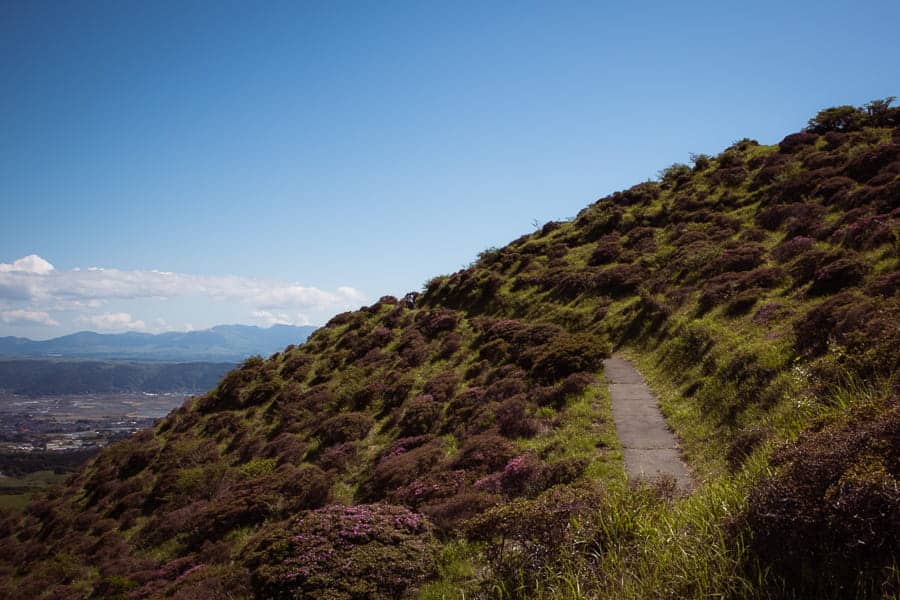
The azaleas typically bloom from mid-May to late June. We visited about a week before peak bloom, but the display was still spectacular.
If you’re visiting outside azalea season, I’d swap this stop for the hike up Mt Kishimadake instead. This short but steep walk takes around an hour return along paved paths and staircases, rewarding you with panoramic views across Kusasenri, the Aso Caldera and the steaming Nakadake Crater.
Komezuka Hill
On the drive towards Kusasenri, you’ll pass the distinctive cone-shaped Komezuka Hill, one of Aso’s most recognisable landmarks.
Although the hill itself is protected and cannot be climbed, there are several roadside pull-offs where you can safely stop for photos of its perfectly symmetrical shape.

Kusasenri Grasslands
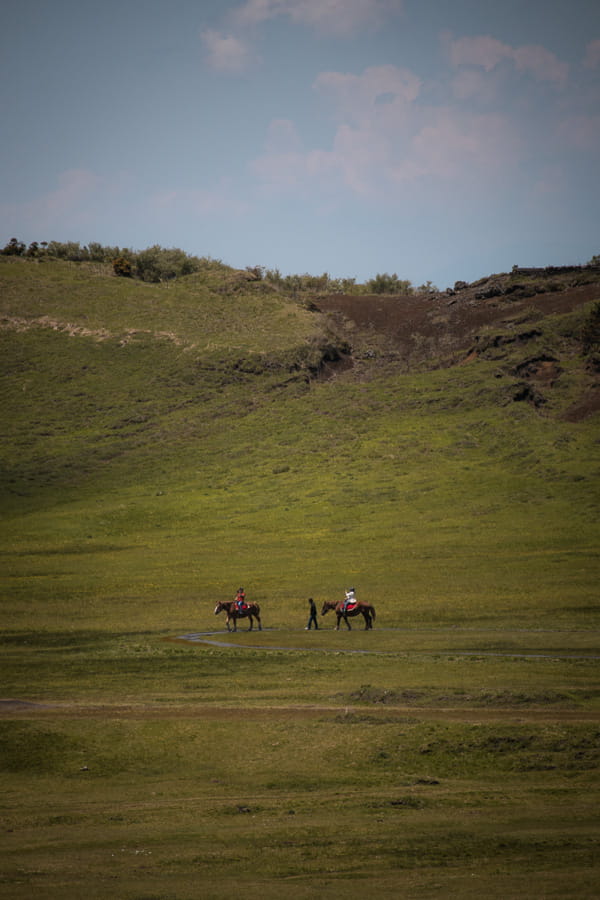
Kusasenri is one of the most beautiful areas within Aso National Park. This sweeping grass-covered plateau is dotted with seasonal ponds, grazing horses and, in late spring, colourful azaleas.
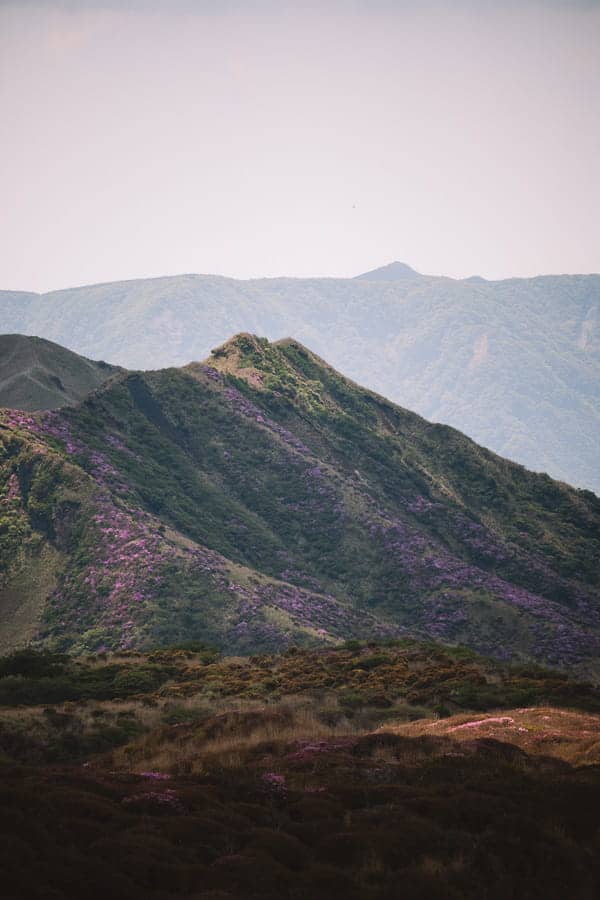
The large visitor precinct includes the Mt Aso Visitor Centre, Aso Volcano Museum, cafés, restaurants and a spacious car park, making it a great place to spend a few hours exploring.
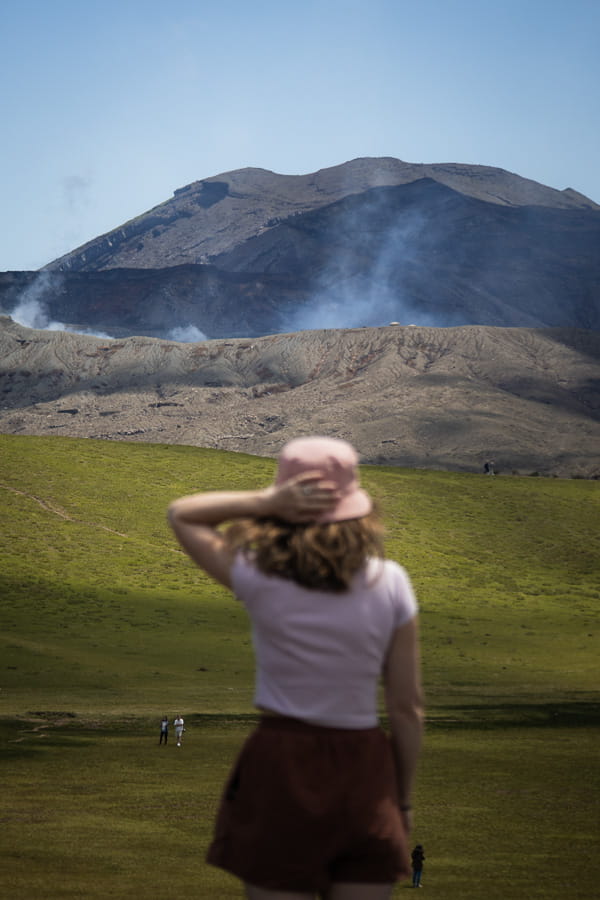
From the grasslands, you’ll also enjoy excellent views of the steaming Nakadake Crater. Horse riding tours across the plateau are also available.
Parking: 500 yen
Nakadake Crater
Nakadake Crater is Japan’s largest active volcano and the region’s most famous attraction. On clear days, you’ll often see plumes of steam rising from the crater from all around Aso.
At the time of our visit in May 2026, the toll road to the crater remained closed following the fatal helicopter crash in January 2026. Currently, the furthest point accessible by car is the Asosanjo Terminal.
If you’re keen to get closer, it’s still possible to hike towards the crater area on foot. The trail climbs steadily uphill and offers impressive views of the volcanic landscape and crater from above, although the crater viewing platform remains closed.

The trailhead isn’t particularly well signposted and took us a little while to find, but you can start the hike from the far end of this car park, right here.
Tip: Access to the crater area is regularly restricted depending on volcanic activity and gas levels. Be sure to check the live conditions before you visit.
Usopp One Piece Statue
We finished the day with a quick detour to Aso Station before returning to the hotel for another relaxing soak in the onsen.
Outside the station you’ll find the Usopp statue, one of ten bronze One Piece statues scattered throughout Kumamoto Prefecture. The statues were created as part of a regional tourism initiative, celebrating the fact that One Piece creator Eiichiro Oda was born in Kumamoto.
The statue stands right outside Aso Station beside the car park, making it an easy stop if you’re passing through. We also visited the Luffy statue in Kumamoto City, but if you’re hoping to collect them all, you’ll find statues spread throughout the prefecture.

Day 3
Although technically located in neighbouring Miyazaki Prefecture, Takachiho Gorge is one of the best day trips from Mt Aso and absolutely deserves a place on your itinerary.
We dedicated our second full day in Aso to exploring the area, with several worthwhile stops along the way making for an unforgettable day.
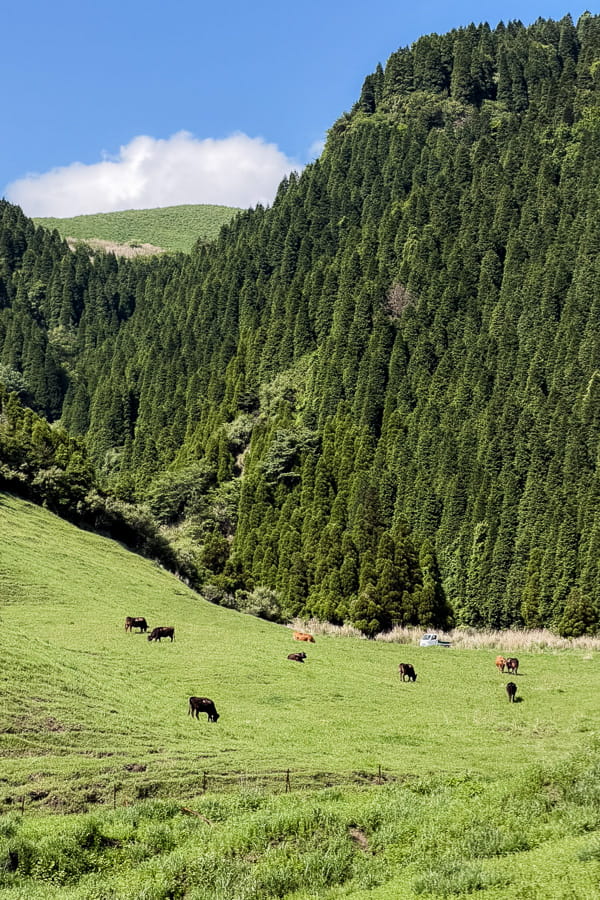
The drive itself takes around 75 minutes from Aso and is part of the experience. As we wound through the mountains, we were treated to lush forests, rolling green hills dotted with grazing cattle and sweeping valley views around almost every corner.
Takachiho Gorge
As Takachiho Gorge is the busiest attraction in the area, we headed there first.
With its towering basalt cliffs, emerald-green water and the picturesque Minainotaki Waterfall tumbling into the river below, it’s undoubtedly one of the most beautiful natural attractions in Kyushu and another standout from our road trip.

The spectacular gorge was formed more than 100,000 years ago by volcanic eruptions from nearby Mount Aso. Over thousands of years, the Gokase River carved through the hardened lava flows, creating the dramatic column-like basalt cliffs seen today.
For everything you need to know about visiting, including row boat hire, parking and the best photo spots, read my dedicated Takachiho Gorge guide.

Amanoiwato Shrine Cave
After exploring the gorge, we drove to the nearby Amanoiwato Shrine. While the main shrine is well worth a look, our real destination was the lesser-known cave shrine a 20-minute walk away. It’s a little confusing to find on Google Maps, but the entrance path to the cave shrine is here.

The peaceful forest trail follows the river before arriving at a moss-covered cave shrine surrounded by hundreds of carefully stacked stone cairns, creating one of the most atmospheric places we visited in Kyushu.
Before leaving, we grabbed a simple but delicious lunch from a small riverside cafe near the start of the walking trail.
If you’re driving between the cave shrine and your next stop, keep an eye out for the nearby rice terraces, which make a worthwhile photo stop, particularly in growing season when they’re lush and vibrant.
Kamishikimi Kumanoimasu Shrine
Our final stop before returning to Aso was Kamishikimi Kumanoimasu Shrine (say that 5 times fast!)
After passing beneath the torii gate, you’ll climb a long staircase lined with traditional moss-covered stone lanterns and towering cedar trees before reaching the peaceful shrine buildings. Be sure to continue beyond the shrine to visit Ugeto Iwa, a giant wind-eroded rock arch hidden further up the mountain.
The entire setting feels wonderfully mystical – if it isn’t too busy!

Since access to Nakadake Crater has been restricted, Kamishikimi Shrine has become a popular alternative stop for many tour groups travelling from Kumamoto and Fukuoka.
If possible, visit early in the morning or later in the afternoon to enjoy a quieter experience. We had to wait for a busload of tourists to leave before getting this photo!
Tip: If you’d rather avoid the staircase, there’s a gently sloping walking path on the left-hand side that leads to the shrine.
Final Thoughts
That wraps up our three days exploring the remarkable Mt Aso region. While it’s technically possible to visit on a day trip, I truly think you’d only be scratching the surface of everything this unique part of Kyushu has to offer.
Staying for a few nights allowed us to experience so much more than just the famous crater. From scenic mountain drives and peaceful hiking trails to waterfalls, rolling grasslands and one of the best onsen hotels we’ve stayed at in Japan, Aso ended up being an unexpected highlight of our Kyushu road trip.
For us, three nights felt like the perfect amount of time. It gave us the chance to fully enjoy the facilities at Kamenoi Hotel while exploring the region at a relaxed pace. If you’re short on time, though, two nights would still allow you to see many of Aso’s highlights.
If you’re planning a trip to Kyushu, be sure to check out my other Japan travel guides for more detailed itineraries, destination guides and practical travel tips to help you make the most of your adventure.
Kyushu Guides:
- How to Visit Takachiho Gorge, Kyushu’s Most Scenic Gorge
- Kyushu Itinerary: Ultimate 12-Day Road Trip Through Japan’s Most Underrated Island
More Japan Travel Guides:
- The Perfect 3 Day Kyoto Itinerary: How to Avoid the Crowds
- Exploring Fuji Five Lakes: 3 Days in Kawaguchiko Itinerary
- An Exciting 4 Days in Osaka Itinerary: Perfect for First-Timers!
- A Fun 7 Day Tokyo Itinerary: Ultimate 1 Week in Tokyo Guide
- An Efficient 4 Weeks in Japan Itinerary (Perfect for First-Timers)