
Japan has a habit of drawing me back, time and time again.
After six trips exploring the country’s bustling cities, ancient temples and glimpses of Mt Fuji, trip number seven felt like the perfect excuse to venture somewhere new. Instead of returning to the familiar streets of Honshu, we set our sights on Kyushu – Japan’s third-largest island and a region known for its dramatic volcanic landscapes, emerald-green valleys, winding river gorges and atmospheric onsen towns.
With two weeks to explore, it didn’t take long to realise we’d barely scratch the surface. The more I researched, the longer my list of places to visit became. You could easily spend a month exploring Kyushu alone. This itinerary focuses on northern and central Kyushu, where hiring a car opens up some of the island’s most spectacular scenery and lesser-visited corners.
Compared to my usual Japan itineraries, this trip felt refreshingly different. There were moments when it hardly felt like Japan at all. Vast grasslands stretched to the horizon, grazing cattle replaced crowds of commuters, and roads wound through landscapes that felt almost untouched. We traded neon-lit city streets for rolling hills and volcanic peaks, and spent many evenings unwinding in bubbling hot onsen waters.
If you’re drawn to road trips, outdoor adventures and destinations that sit well beyond the typical tourist trail, this Kyushu itinerary covers everything you need to plan an unforgettable journey through one of Japan’s most remarkable and underrated regions.
Kyushu Itinerary Overview (12 Days at a Glance)
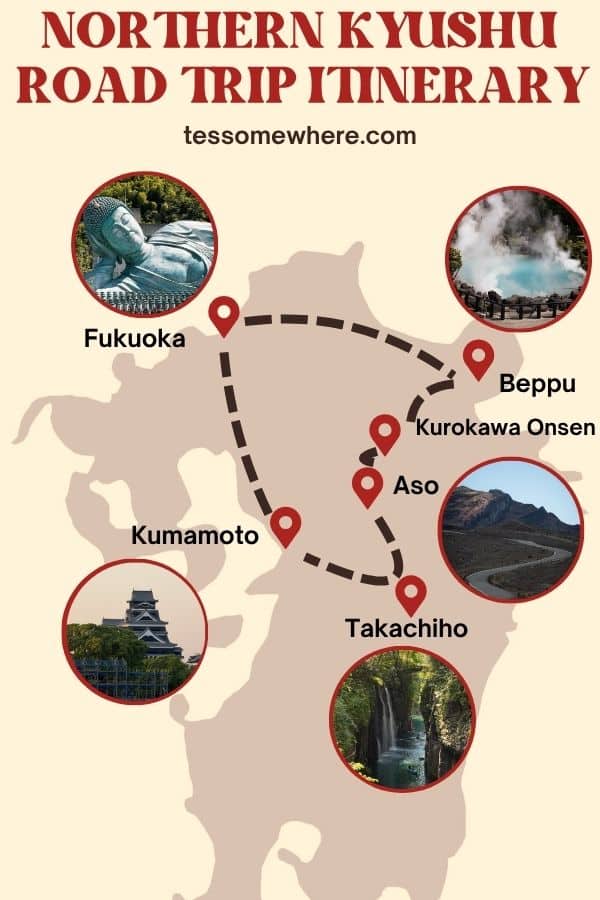
Here’s a quick breakdown of my (nearly) 2-week Kyushu itinerary:
- Days 1 – 3: Fukuoka
- Days 4 – 5: Beppu (pick up rental car)
- Day 6: Kurokawa Onsen
- Day 7 – 10: Aso
- Day 11 – 12: Kumamoto (return rental car)
Road Trip Map
Before You Go – Essential Kyushu Travel Tips
Best Time to Visit
Since so much of this itinerary focuses on Kyushu’s incredible natural attractions, the best time to visit is spring (March–May) or autumn (September–November).
We travelled around Kyushu in mid-May (late spring), and the weather was perfect – mid-20s with only a few light showers on a couple of days. Everywhere we visited was green and lush as summer approached, and we’d just skipped the crazy busy Golden Week holidays. Unlike cherry blossom season in Tokyo, Kyushu isn’t as crowded if you want to time your trip to catch the sakura blooms.
This itinerary is also possible in summer, but I’d avoid July and August if possible due to the risk of tropical storms and typhoons, along with Japanese summer’s sweltering humidity. While I quite enjoy travelling in Japan in winter, much of the landscape will be brown, and you’ll need snow chains when driving along mountain roads.
How to Get Around
This itinerary assumes you start your Kyushu adventures in the capital city, Fukuoka.
Getting to Fukuoka is very easy – the airport is only a 10-minute drive from the city! We flew in after spending a few days exploring Seoul, and it was refreshing not to wait in the huge immigration lines we’d come to expect from arriving in Tokyo or Osaka. Fukuoka feels like a normal large Japanese city – but again, nowhere near as packed or touristed as any city on the Golden Route.
You don’t need to hire a car in Fukuoka. The city is easily travelled by bus and subway, and you can use trains for day trips, such as to the giant reclining Buddha at Nanzoin Temple.
You can access Kyushu from Honshu using the Kyushu Shinkansen, which connects with the Sanyo Shinkansen at Hakata Station. Direct, no-transfer travel to and from Osaka (Shin-Osaka Station) is provided exclusively by the Mizuho and Sakura lines.
To fully explore the best spots in Kyushu, that aren’t easily accessible by public transport, I recommend hiring a car in either Fukuoka or Beppu / Oita.
Kyushu Car Rental
We’ve only hired a rental car once before in Japan – while exploring the Fuji Five Lakes region – and tend to avoid city driving for peace of mind (and to avoid parking hassles) when travelling in Japan.
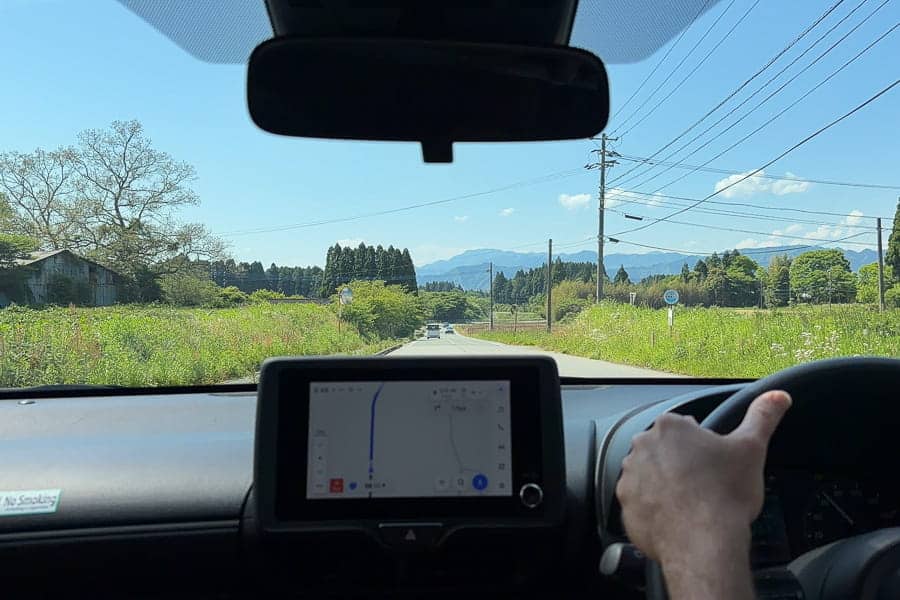
Driving around Kyushu was simple and stress-free, with pleasant roads (although very windy in the mountainous Aso region) and easy parking outside of the big cities.
For our itinerary, we caught the Sonic Limited Express train from Fukuoka to Beppu, then picked up our hire car when leaving Beppu and headed to the Aso region. While bus connections are available, they’re very limited and will greatly restrict what you can do and see in the Mt Aso region – so a hire car is invaluable.
We hired a car online through Klook, with pickup in Beppu and return in Kumamoto for convenience. Alternatively, you could arrange pickup for your last day in Fukuoka and return it there, but we wanted to avoid driving (and finding parking) in the bigger cities as much as possible.
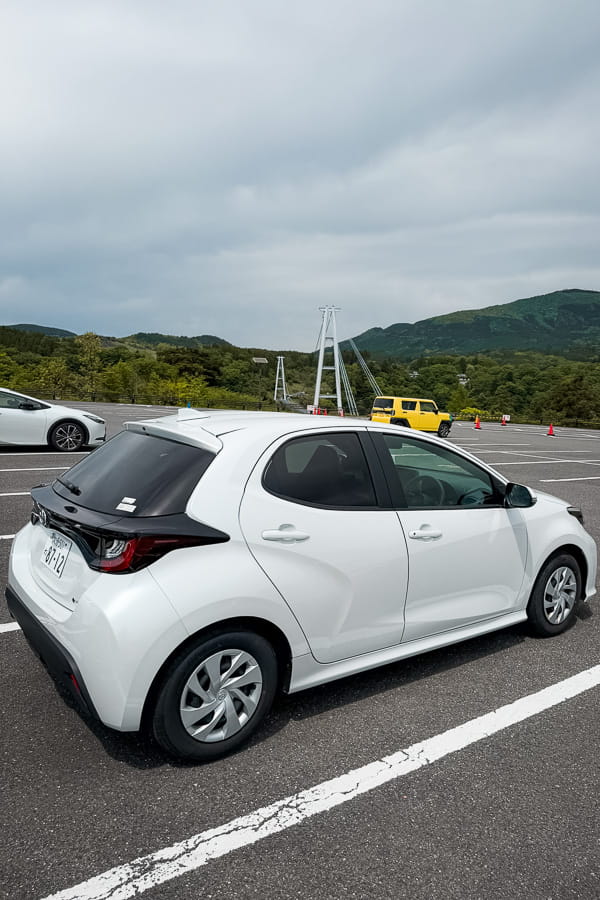
I opted to pay the small extra fee to hire an ETC card for automatic payment at toll roads, but we didn’t even need it. We only encountered one toll road, which we could avoid when leaving Beppu
Tip: You’ll need an International Driver’s Permit to drive in Japan – don’t forget to organise one before you leave home!
12 Day Kyushu Itinerary (Day-by-Day Breakdown)
Days 1 – 3: Fukuoka
Welcome to the capital of Kyushu! Three nights felt like the perfect amount of time for us to explore the city’s highlights, with time for several easy day trips to the outskirts.
Where to Stay
Accommodation in Fukuoka was the most expensive of our two weeks in Kyushu, although I found it still a lot more affordable than Tokyo. We stayed near Hakata Station, which was convenient for our day trip to Nanzoin and catching the train to Beppu. We could walk 30 minutes to the Tenjin area or catch the subway, which was only a 5-minute ride.
I’d recommend staying near Hakata Station if you’re planning to do a day trip or two, or staying in downtown Tenjin if you mostly plan on shopping, eating, and temple hopping while in Fukuoka.
Near Hakata Station
- Budget – Henn na Hotel Fukuoka: This quirky, robot-staffed budget hotel chain is located just steps from Hakata Station with compact rooms and a mix of tech and practicality.
- Mid Range – The Basics Fukuoka: We stayed at this hotel, which, although a 10 minute walk from Hakata Station, had large rooms (by Japanese standards), and the lobby was very impressive with its towering display of books.
- Luxury – Miyako Hotel Hakata: An upscale, traditional Japanese-style luxury hotel directly connected to Hakata Station with spacious rooms, elegant interiors, and an onsen spa.
Near Tenjin (downtown Fukuoka)
- Budget – Comfort Inn Fukuoka: A reliable, budget-friendly Comfort Inn in Tenjin with simple rooms, free breakfast, and easy access to shops and transit.
- Mid Range – Lamp Light Books Hotel: This boutique mid-range hotel has rooms on the smaller side, but makes up for it with its literary decor, cosy vibe and stellar location in the heart of Tenjin.
- Luxury – The Gate Hotel: A sleek, design-forward luxury hotel in Tenjin with stylish rooms, a rooftop bar, and a prime location in the heart of downtown.
Things to Do & See in Fukuoka
JR Hakata City
Hakata Station is home to a massive complex of shops and restaurants spread across three interconnected shopping centres above the station. We ended up spending much longer here than expected.
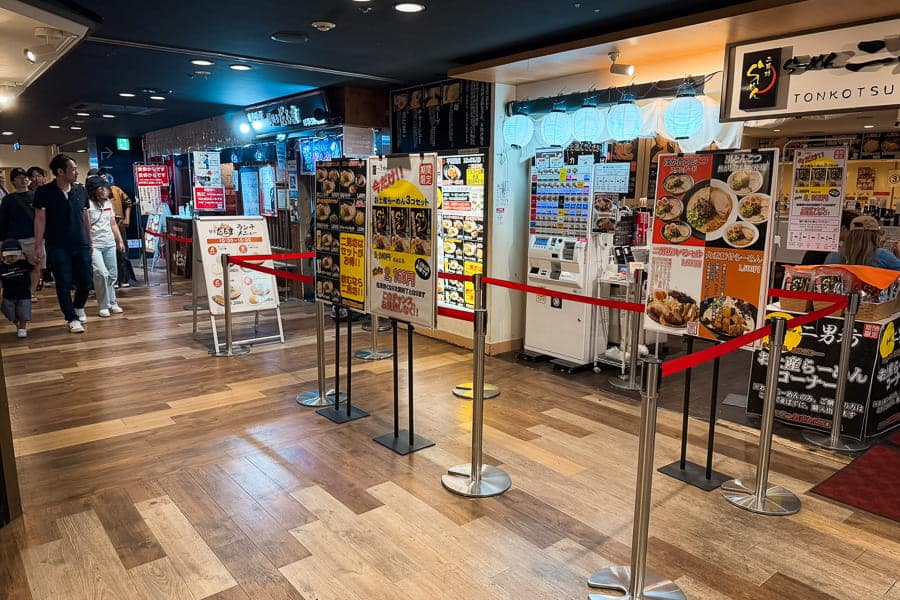
The shopping complex is enormous and home to Fukuoka’s Pokémon Centre. You’ll also find HMV Records, a huge gachapon store, and REC Coffee on the sixth floor of the same building as the Pokémon Centre. On Level 2, directly above the station, you’ll find Hakata Noodle Street, a bustling collection of ramen restaurants. Expect to queue during lunch and dinner hours.
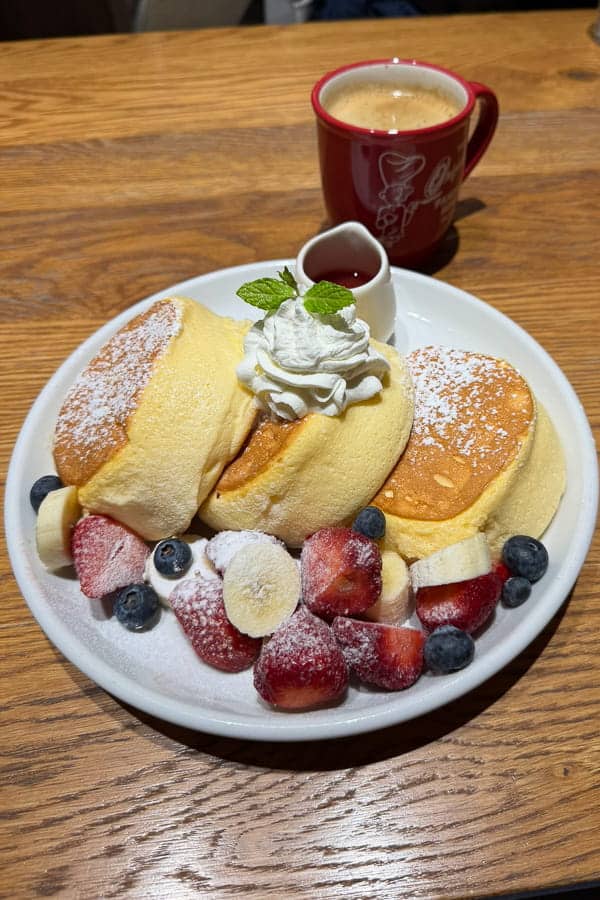
If your sweet tooth is calling, the soufflé pancakes at Pancake House hit the spot (takes the title of the first pancake specialty store in Hakata!).
Within AMU Plaza Hakata, there’s also a Nintendo Store, which we found far less hectic than the one in Shibuya, making for a much more relaxed shopping experience. Before you leave, don’t miss the gourmet basement food hall or the rooftop garden and observation deck.
Canal City Hakata
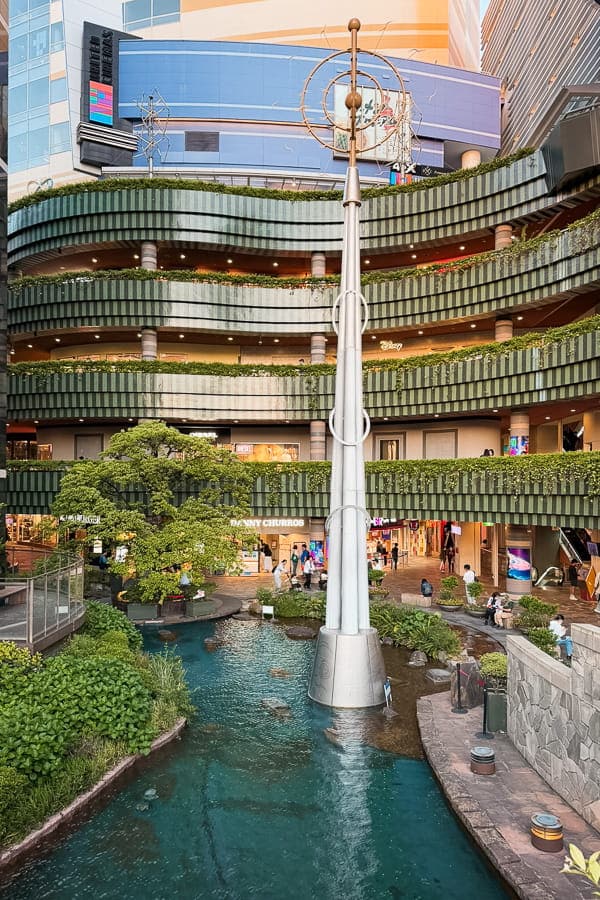
Canal City is home to a shopping mall, cinema, and even a hotel, with a canal running through its collection of brightly coloured buildings. There’s a fountain show roughly every 30 minutes throughout the day, making it one of the complex’s main attractions.
You’ll also find the Gundam Base here, the flagship Gundam store in Kyushu. While I personally preferred the shopping at JR Hakata City, Canal City is worth a walk-through for the atmosphere and fountain show if your schedule permits.
Daimo Area
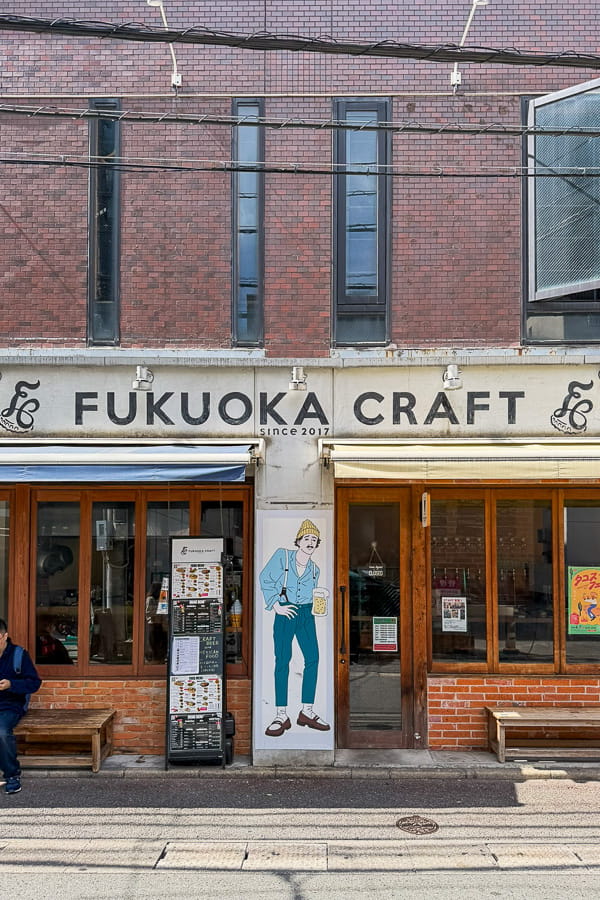
Daimyo is Fukuoka’s coolest neighbourhood, sitting between Tenjin and Nakasu and packed with vintage stores, independent boutiques, tiny cafés, and a constantly changing mix of concept stores and underground fashion labels.
The narrow, winding streets are perfect for getting delightfully lost as you browse second-hand stores, record shops, and indie boutiques that you won’t find elsewhere in the city. You’ll also discover craft beer bars, small galleries, and plenty of Instagram-worthy cafés.
It reminded me of Tokyo’s Shimokitazawa neighbourhood, with its trendy yet laid-back atmosphere, and it’s a fantastic place to spend an afternoon exploring.
Dazaifu Tenmangu Shrine
Dazaifu is best known for Dazaifu Tenmangu Shrine, one of Japan’s most important shrines dedicated to Sugawara Michizane, the deity of learning. It’s also one of the most popular day trips from Fukuoka.
The approach to the shrine is lined with stalls selling umegae mochi, souvenirs, and local snacks, while the shrine grounds feature beautiful ponds, historic buildings, and an impressive main hall.
It’s around 30 minutes from Tenjin by train and can become quite crowded on weekends, but the atmosphere, food, and traditional architecture make it well worth the visit.
Yatai Stalls
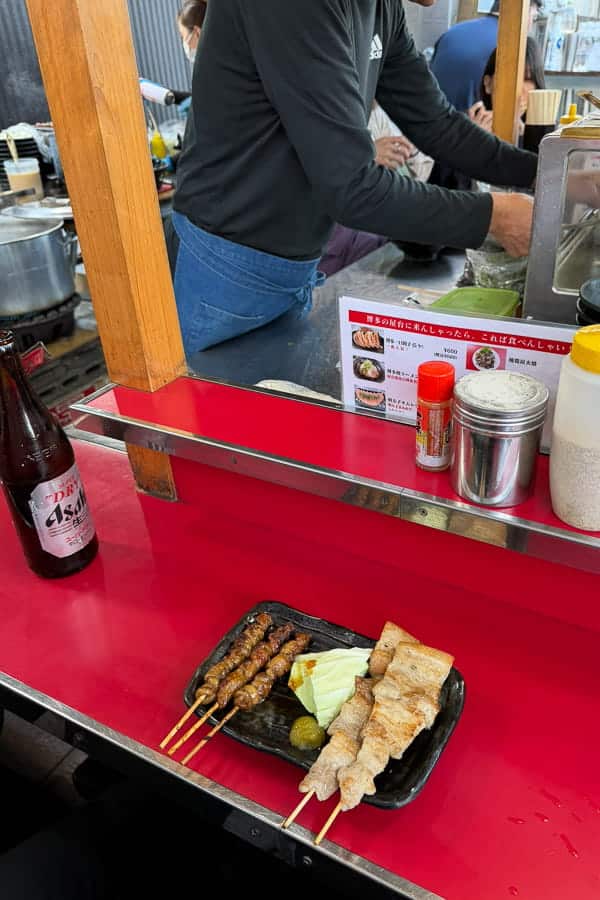
Yatai stalls are Fukuoka’s iconic street-food experience: small, brightly lit food carts that line the Nakasu River and a few other spots around the city, serving ramen, yakitori, oden, fried foods, and drinks late into the night.
They’re compact, communal, and a little bit chaotic in the best possible way, with narrow counter seating where you sit shoulder-to-shoulder with other diners and watch as the chefs cook right in front of you.
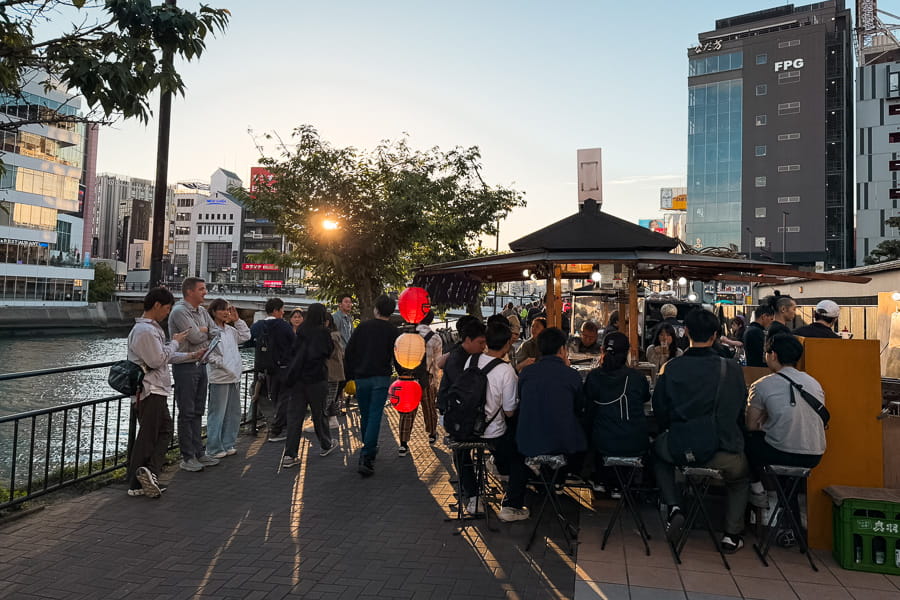
The most reliable area for yatai is Nakasu along the river between the bridges, where a cluster of stalls open from early evening until quite late. You’re more likely to be sitting next to other tourists here, but it’s a fun and easy way to have a meal and a few drinks.
We also spotted other yatai along the Tenjin area, which felt more authentic than the Nakasu Yatai. You can find them on Google Maps, such as the Yatai Bar Ebi-chan here and Nanshiyouya Ramen Yatai here.
Hakata Ramen
Hakata ramen, also known as tonkotsu ramen, is Fukuoka’s world-famous local speciality. The rich, milky-white pork bone broth is simmered for 8–12 hours until the collagen and fat dissolve into a thick, creamy soup, served with thin, straight noodles that are traditionally cooked firm.
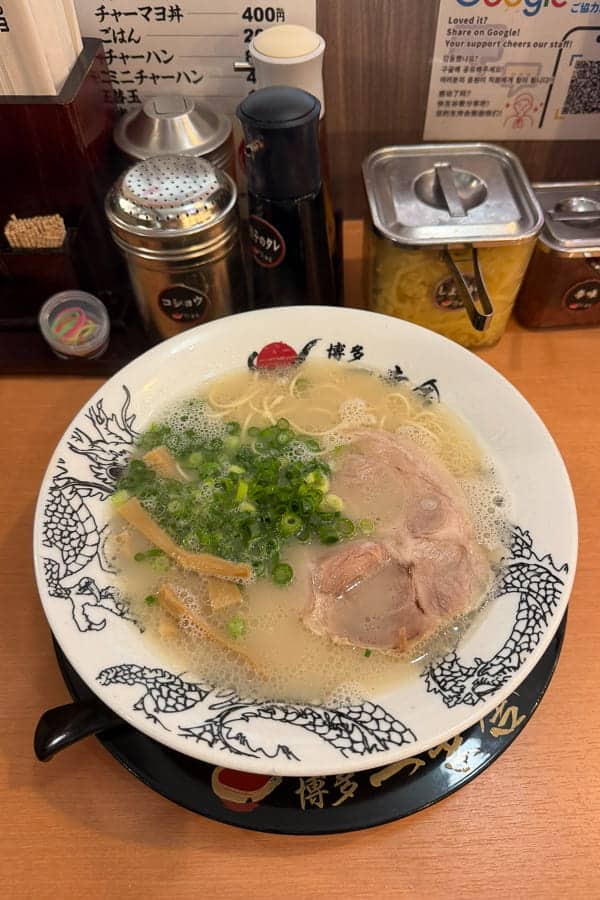
There’s no better place to try Hakata ramen than its birthplace. Fukuoka is home to both legendary chains and long-established local favourites.
Two of the most famous names are Ichiran and Ippudo, both of which started in Fukuoka before expanding around the world. We visited the original Ichiran Honten, a remarkable 12-storey building that houses both the restaurant and the company’s head office. Despite operating 24 hours a day, queues are common at most Ichiran locations throughout Japan.
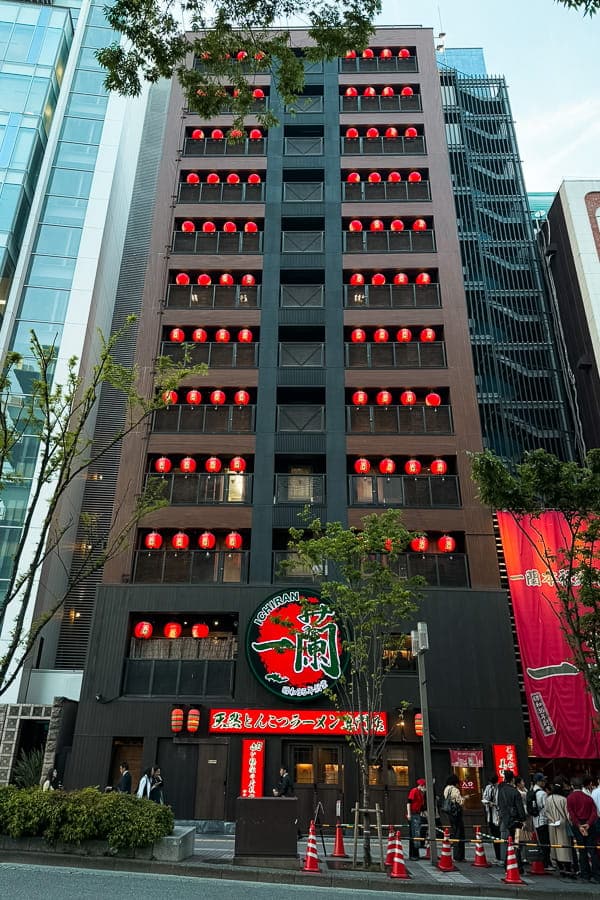
Another popular local favourite is ShinShin Ramen, with locations above Hakata Station as well as its original shop in Tenjin.
Tochoji Temple
Tochoji Temple is Fukuoka’s oldest temple and home to Japan’s largest wooden seated Buddha, an impressive 10.8-metre statue that leaves a lasting impression even if you’re not particularly interested in Buddhist history.
Located just a short walk from Hakata Station, the temple is easy to visit while exploring the city centre. Entry to the main grounds is free.
Kushida Shrine
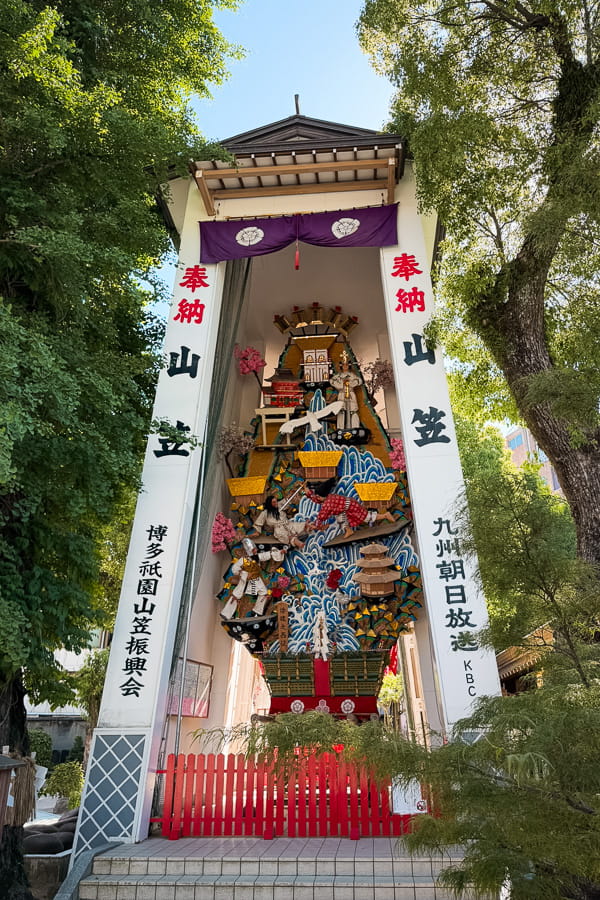
A short walk from Canal City, you’ll discover Kushida Shrine, the oldest Shinto shrine in Fukuoka. There are some great photo opportunities here, including a small tunnel of torii gates and a towering decorative float on display, one of eight used during the annual Hakata Gion Yamakasa Festival.
TeamLab Forest Fukuoka
You’ve probably heard of the hugely popular teamLab exhibitions in Tokyo, but teamLab Forest Fukuoka offers a slightly different experience.
Here, visitors can “catch” virtual animals using their phones, explore the interactive Athletic Forest filled with glowing installations and bouncing platforms, and move through immersive digital spaces that react to their movements in real time.
It’s also significantly less crowded than the Tokyo exhibitions. During our midweek visit in May, tickets were still available the day before, so there was no need to book weeks in advance.
Entrance Fee: 2400 Yen
Purchase tickets in advance here
Nanzo-in Temple
This is my top recommendation for an easy day trip from Fukuoka, located just 30 minutes by train from Hakata Station. It’s home to one of Japan’s most impressive bronze statues: a massive reclining Buddha measuring 41 metres long and 11.4 metres high, second only to the Nara Buddha in scale.
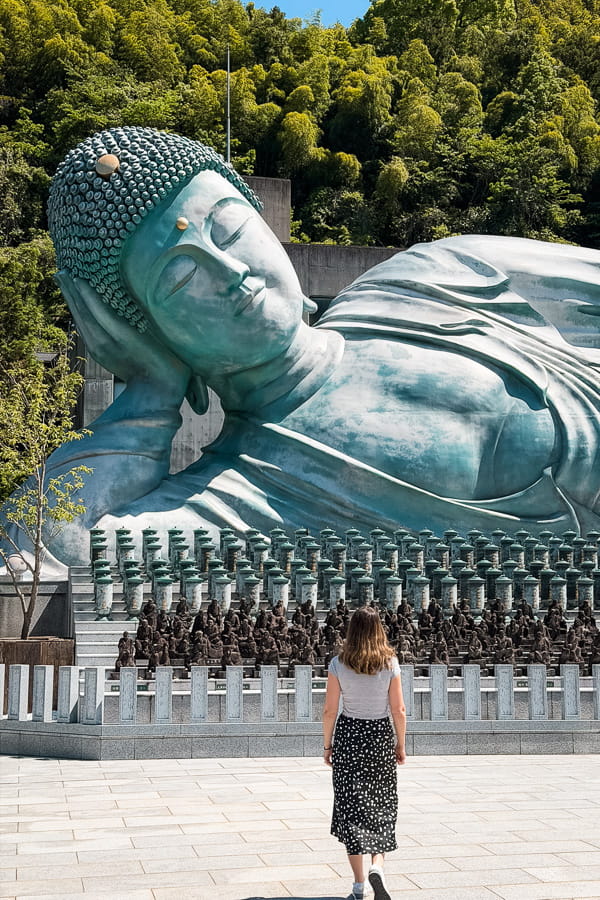
What surprised me most was that the temple grounds are an attraction in their own right, featuring a mystical tunnel, scenic gardens, a cave waterfall, and a giant statue of the fearsome Fudō Myōō.
As this is an active Buddhist temple, respectful attire is required. Make sure your shoulders are covered, and for women, skirts should be at or below knee length.
Entrance Fee: 500 Yen per person
Uminonakamichi Seaside Park
Uminonakamichi Seaside Park is a huge natural playground located on a narrow sandbar peninsula across Hakata Bay. The park is known for its seasonal flower displays, including the famous blue nemophila blooms in spring, as well as playgrounds, an aquarium, an amusement park, and a summer water park.
The park stretches almost four kilometres from end to end and includes 12 kilometres of cycling paths, making bike or electric scooter hire the easiest way to explore.
For a particularly scenic journey, catch the ferry from Hakata Port across the bay.
Days 4 – 5: Beppu
Beppu is one of Japan’s most famous hot spring resort towns, but it may not be quite what you’re expecting. Rather than a quaint traditional village, the city centre around Beppu Station is a surprisingly urban landscape of concrete buildings, packed with izakayas, bars, clubs, and late-night entertainment venues. While it might sound a little seedy on paper, it never felt unsafe to us – more like a much calmer, more laid-back version of Tokyo’s Kabukicho district.
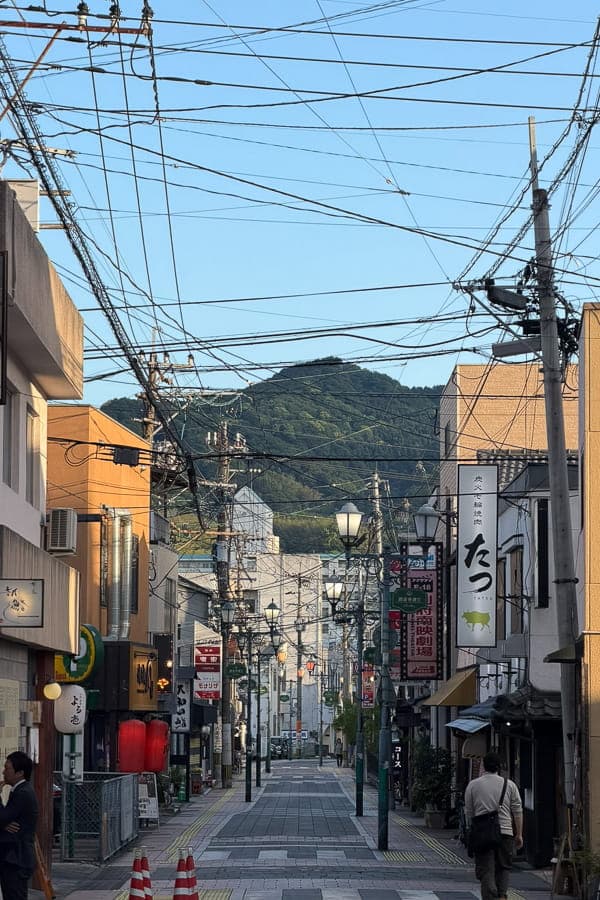
Head uphill to the Kannawa district, and the atmosphere changes completely. Here, steam rises from vents in the ground thanks to the area’s intense geothermal activity, creating an otherworldly feel. This is where you’ll find many of Beppu’s traditional ryokans, public bath houses, and the famous Hells of Beppu – a collection of colourful, bubbling hot springs that reach temperatures of over 100°C and are far too hot for bathing.
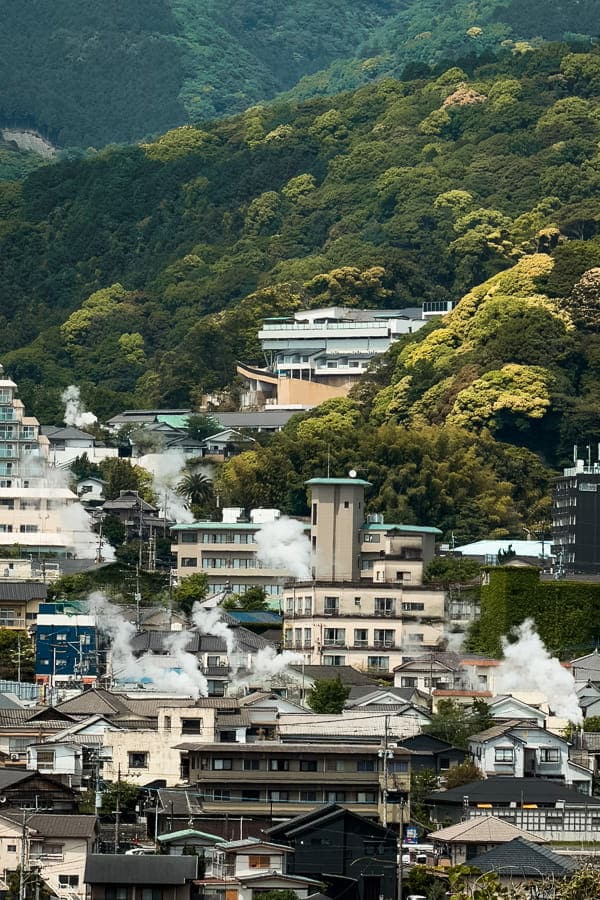
The main purpose of this stop is simple: slow down and relax. Spend a couple of days soaking in onsens, wandering the steaming streets of Kannawa, and enjoying a slower pace before the road trip portion of the itinerary begins.
Where to Stay
We found hotel accommodation to be surprisingly affordable in Beppu.
I loved our hotel Amanek Beppu Yula-Re, which came with the most amazing rooftop pool, spa and sauna, with public onsens located on the floor below – the perfect place to soak and admire the view of Beppu through the floor-to-ceiling length windows.

It’s just a short walk from Beppu Station, making it easy to get around Beppu if you haven’t picked up a rental car yet, like us.
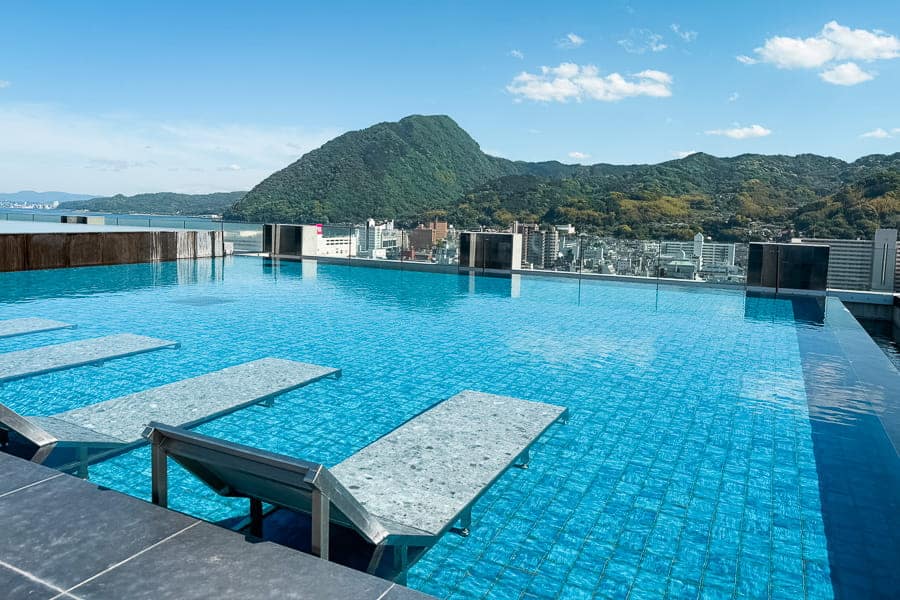
Alternatively, consider staying in a ryokan in the Kannawa area. It will be easier to visit the hells during the day. There aren’t as many restaurants in the area that are open at night, but most ryokan stays usually include dinner. This luxury ryokan offers rooms with private onsens, providing a traditional Japanese kaiseki dinner and breakfast.
Things to Do & See in Beppu
Explore the 7 Hells
The 7 Jigoku, or Hells, of Beppu are scattered across the Kannawa area. I recommend picking one or two to see, as they can feel a bit repetitive. It costs 500 Yen to visit each, or you can purchase a common admission pass which offers a discounted rate to individual tickets.
The 7 Hells of Beppu are:
- Umi Jigoku (Sea Hell)
- Chinoike Jigoku (Blood Pond Hell)
- Tatsumaki Jigoku (Tornado Hell)
- Shiraike Jigoku (White Pond Hell)
- Oniishi Bozu Jigoku (Monk’s Head Hell)
- Oniyama Jigoku (Crocodile Hell – see note below) and
- Kamado Jigoku (Cooking Pot Hell)
The Hells aren’t located in a single complex but are spread throughout the Kannawa district of Beppu. If you don’t have a car, you’ll need to catch a bus or taxi to reach them.

We chose to visit Umi Jigoku, one of the largest and most impressive sites. It features two vividly coloured hot springs, a free footbath, and a greenhouse. Seeing the neon-blue waters of the main pond contrasted against the iron-red hues of the nearby red pond was particularly memorable. While you’re there, be sure to try one of the onsen eggs, cooked using the geothermal waters of Umi Jigoku.

If I were to add a second Hell to the itinerary, I’d choose either Tatsumaki Jigoku, known for its natural steam geyser, or Oniishi Bozu Jigoku, famous for its bubbling mud pools. Of the two, Oniishi Bozu Jigoku is the easier option, located directly across the road from Umi Jigoku.

Tip: Skip Oniyama Jigoku (Crocodile Hell). The conditions for the animals are widely criticised, and many visitors find the experience quite distressing.
Onsen, onsen, onsen
If your hotel doesn’t have an onsen, or you want to try a private onsen experience, these are my recommendations.
- Hyotan Onsen: One of the more well-known larger bath houses, which offers private onsens (including outdoor open-air onsens) as well as a sand bath. After your bath, you can grab a meal from their restaurant or try an onsen steamed custard pudding.
- Sakura-yu: this lesser-known onsen offers 20 private onsens, crafted in a variety of materials from cypress wood to stone.
Admire the Steam Vents from the Yukemuri Observation Deck
After exploring Umi Jigoku, we set off on foot towards the Yukemuri Observation Deck (a 25-minute walk or 7-minute drive away). While the observation deck offers an impressive panorama of steam billowing across the city, with Mt Tsurumi rising in the background, some of our favourite views were actually along the walk itself.

As you wander through the Kannawa neighbourhood, you’ll pass steaming streets, traditional bathhouses, and countless vents releasing plumes of geothermal steam into the air. If you’re interested, you’ll also pass Kifune Castle, a small castle attraction known for its resident white python.
Wander Yufuin
Yufuin is a picturesque onsen town nestled amongst the rolling countryside around 40 minutes from Beppu. It may be best known on social media for Yufuin Floral Village, a fairytale-like collection of Cotswold-inspired buildings, but this tiny attraction is only a small part of what makes the town worth visiting. In fact, I found it one of the most touristy and commercialised parts of Yufuin.

For us, the real appeal lay in wandering along Yunotsubo Kaido, the town’s bustling main street, which stretches towards the tranquil shores of Lake Kinrin. Along the way, you’ll find countless cafés, coffee shops, restaurants, bakeries, and food stalls, making it almost impossible not to snack your way through town.
There are also plenty of craft and souvenir stores to browse, alongside quirky attractions such as the Miffy Bakery and SNOOPY Chocolate shop. I particularly loved the dedicated cat and dog souvenir stores near the end of the street.

Even though we visited midweek, the town was absolutely packed by 10 am, with tour buses and crowds of visitors unlike anything we’d encountered elsewhere in Kyushu. If you’d prefer a quieter experience, I’d strongly recommend arriving as early as possible.
You can reach Yufuin by public bus from Beppu Station in around 55 minutes. We visited after collecting our rental car on the day we departed Beppu, which worked particularly well with this itinerary.
African Safari
We didn’t personally visit, but Beppu is home to Japan’s largest safari park, where more than 1,000 animals – including lions, giraffes, elephants, and zebras – roam across large open enclosures.
Based on reviews, the park generally appears to maintain reasonable welfare standards, making it an option worth considering if you’re travelling with children or are particularly interested in wildlife experiences.
Day 6: Kurokawa Onsen
After checking out of our hotel in Beppu, we picked up our rental car near the station and spent the morning exploring Yufuin before continuing deeper into Kyushu’s mountainous ranges. Our final destination for the day was Kurokawa Onsen, where we’d spend the night in a traditional ryokan (one of my recommended Japan bucket list experiences!).
Kokonoe Yume Otsuribashi
On the drive between Yufuin and Kurokawa Onsen, I highly recommend stopping at Kokonoe Yume Otsuribashi. This underrated attraction completely exceeded our expectations.
Not only is it Japan’s tallest pedestrian suspension bridge, but it also offers spectacular views across a deep gorge dotted with multiple waterfalls cascading down the surrounding cliffs.

During our late-spring visit, the landscape was incredibly green and lush, creating a stunning backdrop from every angle. I can only imagine how beautiful it would be when the autumn foliage arrives later in the year.
Entrance Fee: 500 Yen

Kuju Flower Park
Unfortunately, we ran out of time to visit Kuju Flower Park, but it’s one stop I wish we’d managed to fit into our itinerary if I had my time again.
Located around 40 minutes from Kokonoe Yume Otsuribashi, the park is known for its vast seasonal flower displays set against a dramatic backdrop of mountain ranges. Depending on the time of year, you’ll find colourful fields stretching across the vast open landscape
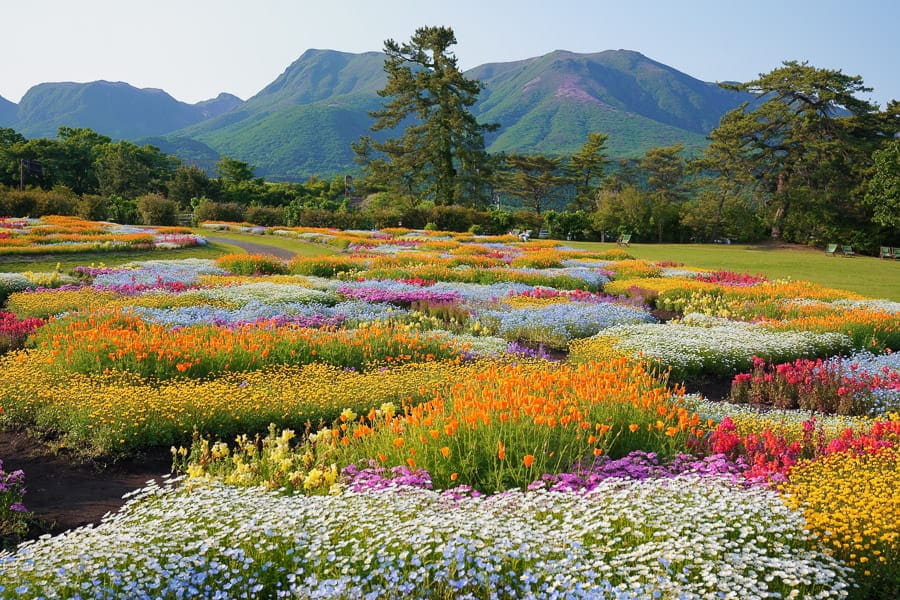
Before visiting, check the park’s website for current flowering conditions to ensure it’s the right season for the blooms you’re hoping to see.
Entrance Fee: 650 Yen
Where to Stay
With only one night in Kurokawa Onsen, I’d recommend arriving as close to check-in time as possible so you can make the most of the ryokan experience.
Nestled within the Kuju mountain ranges, this picturesque hot spring town is built around a small river and is home to 28 different onsens. Many visitors purchase an onsen-hopping pass that allows access to multiple bathhouses throughout town, but we opted for a ryokan stay with a private onsen and have no regrets.
We stayed at Ryokan Kono-Yu, located at the end of the main street. The staff were exceptional, our two-storey room was enormous by Japanese standards, and the highlight was undoubtedly the private open-air onsen overlooking lush greenery and the surrounding forest.

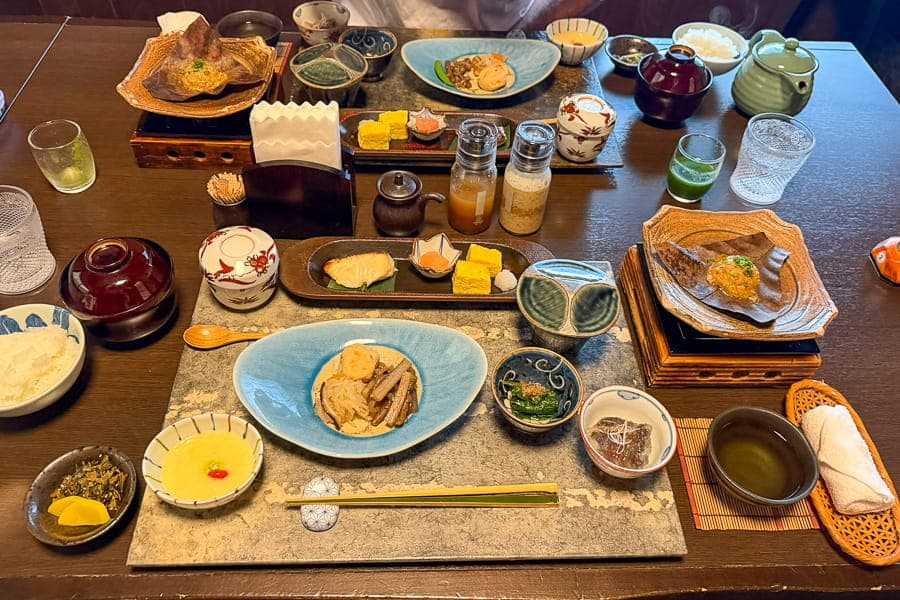
Dinner was a beautifully presented kaiseki meal, with each dish carefully explained by the staff as it was served. Both dinner and the traditional Japanese breakfast the following morning were enjoyed in a private dining room, making the experience feel even more special.
Despite having access to the ryokan’s public baths, we never actually used them. Instead, we spent our stay soaking in our private onsen, enjoying the peaceful surroundings and making the most of our one night in Kurokawa Onsen.
Day 7 – 10: Aso
After checking out of our ryokan, we spent the next couple of hours wandering through the quiet streets of Kurokawa Onsen – there are really only two, the main road and the smaller street running alongside the river.

We spotted a few other tourists in yukatas onsen hopping, before sitting down at this little cafe to enjoy traditional Japanese mochi sweets before continuing our road trip adventures.
Nabegataki Falls
The next stop is a scenic waterfall complex, where you can walk behind the falls through a cave (30-minute drive from Kurokawa Onsen). Online reservations are recommended as there are only so many tickets sold per hour; however, we winged it and were able to purchase a ticket on the spot, given it was mid-week.
After descending a series of wooden steps through the forest, you’ll emerge at the base of the 10-metre waterfall. Being able to walk behind the cascading water was a unique experience and made for some fantastic photo opportunities. The site itself is relatively compact, and you’ll likely only need around 30 minutes to explore.

Daikanbo Lookout
From Nabegataki Falls, continue towards Daikanbo Lookout, one of the most spectacular viewpoints in the Aso region.
Perched on the rim of the enormous Aso caldera, the lookout offers sweeping views across the patchwork of farmland below, with the volcanic peaks of Mount Aso rising in the distance. On a clear day, you can even spot steam drifting from Nakadake Crater.
It’s the perfect introduction to the dramatic volcanic landscapes you’ll spend the next few days exploring.

Where to Stay
Our base for our three nights was Kamenoi Hotel Aso (not to be confused with its sister property, Kamnoi Hotel Park Resort). This ended up being the perfect base to explore the Aso region. The property has been recently renovated, with comfortable, large and modern rooms, with breathtaking views of the mountains from the window to boot.

The public onsen facilities were some of the best I’ve experienced – there were four different indoor onsens of different temperatures, an open-air outdoor onsen, a steam room and even a mud pack station where you cover yourself in onsen mud, known for its exfoliating and blood-circulating properties.

A buffet breakfast and dinner were included in our room rate, which included live cooking stations such as chargrilled local trout, Wagyu beef skewers (delicious!) and a smorgasbord of fresh sashimi and nigiri. They even have the famous Aso milk on tap! (and don’t get me started on the dessert selection – drool)
Even though the food choices didn’t change over our 3 nights, we didn’t tire thanks to the abundance of choices available. As a small town, there aren’t many dinner options at night, so having dinner included at our hotel was perfect after a long day of exploring, followed by relaxing in the onsen before feasting at dinner.
Things to Do & See in Aso
Mount Aso is one of Kyushu’s most dramatic landscapes: a huge active volcanic caldera, steaming craters, wide grasslands, hot springs, and scenery that feels a world away from the skyscraper city I’d come to associate with Japan. This was my personal highlight of our time in Kyushu, and 3 nights felt like the perfect amount of time to explore this spectacularly scenic region without feeling rushed.
One Piece Statues
Throughout the Kumamoto Aso Region, there is a series of One Piece statues (the creator of One Piece was born in Kumamoto!). You’ll discover the Usopp Statue at Aso Station in town. You’ll pass a few others if you follow my exact itinerary, but for the entire list of locations, you can check them out here.

Sensuikyo Gorge
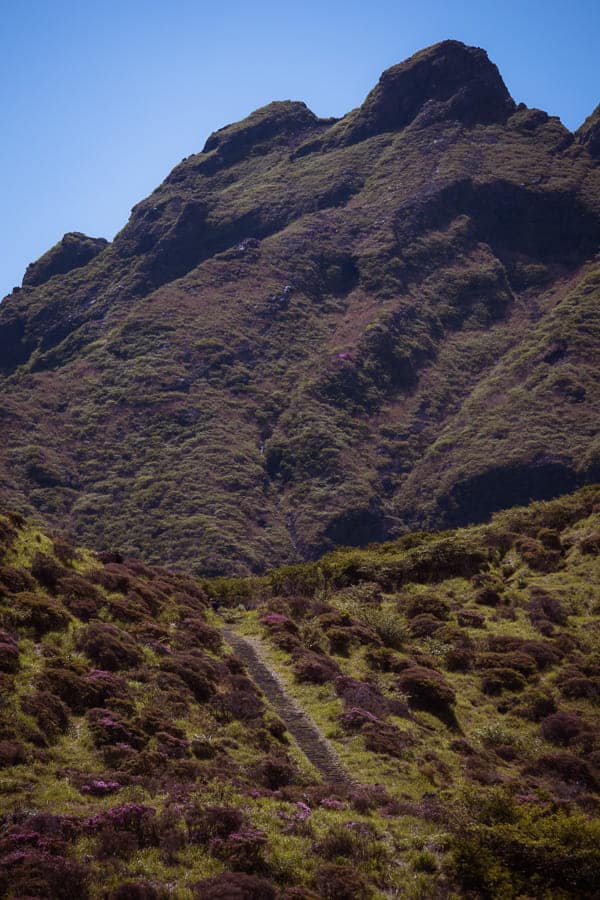
The timing of our visit to Aso in mid-May coincided with the blooming of the vivid pink azaleas in the region. Sensuikyo Gorge is a great spot to see them blanketing the hillside – it’s a very scenic short hike, with views looking back across the caldera (the opposite view that we saw at Daikanbo Lookout the day before!).

The gorge is located an easy 10-minute drive behind Kamenoi Hotel. The blooming season for the azaleas is usually from mid-May to late June. We were probably a week away from full bloom, but they were still a stunning sight. We saw more in full bloom, scattering the hillside with bright pops of colour at Kusasenrigahama.
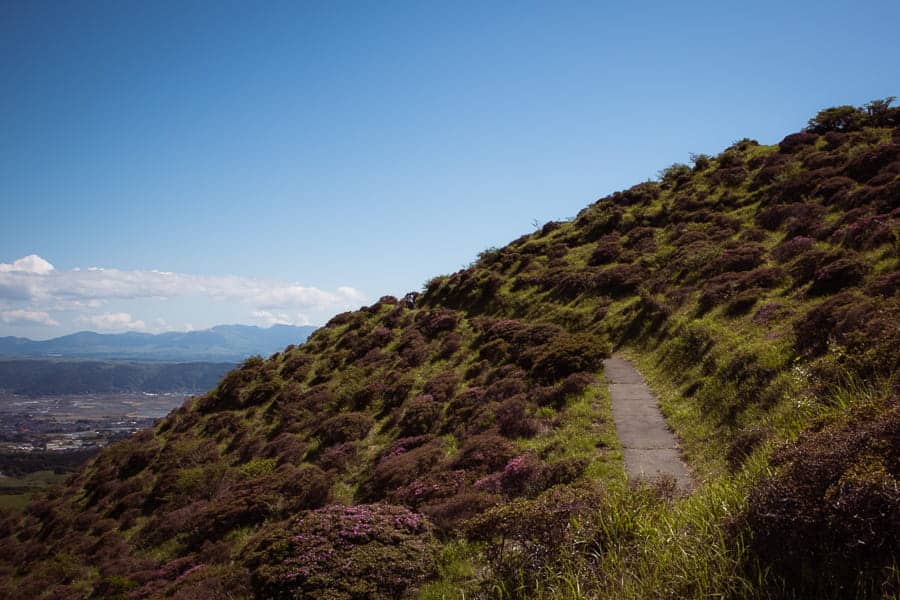
Kusasenri and Nakadake Crater
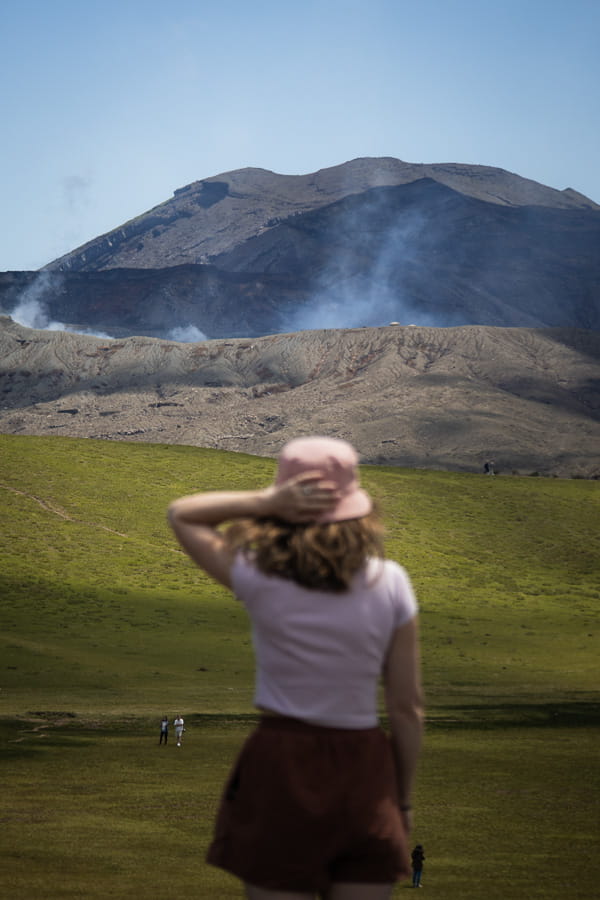
Most visitors head up the mountain range to catch a glimpse of the active Nakadake Crater up-close. From across Aso, you’re likely to spot the plumes of smoke rising from the huge crater in the distance.

At the time of our visit in May 2026, the road into the Nakadake Crater area was closed to road traffic after a fatal helicopter crash in January 2026. Currently, the furthest point you can reach by car is the Asosanjo Terminal.
However, you can still reach the area on foot if you’re up for an uphill hike (full disclaimer: we only made it about halfway up before deciding to turn around as it was late in the afternoon, we were travelling with a baby and the hotel onsen was calling our names).

The trail entrance isn’t well signed, and it took us a bit of hunting to find it, but you can set off for the trail at the end of the car park, starting here.
Tip: There are restrictions in place on days that the volcano is particularly active, and there is a risk of dangerous gases. You can check live conditions here.
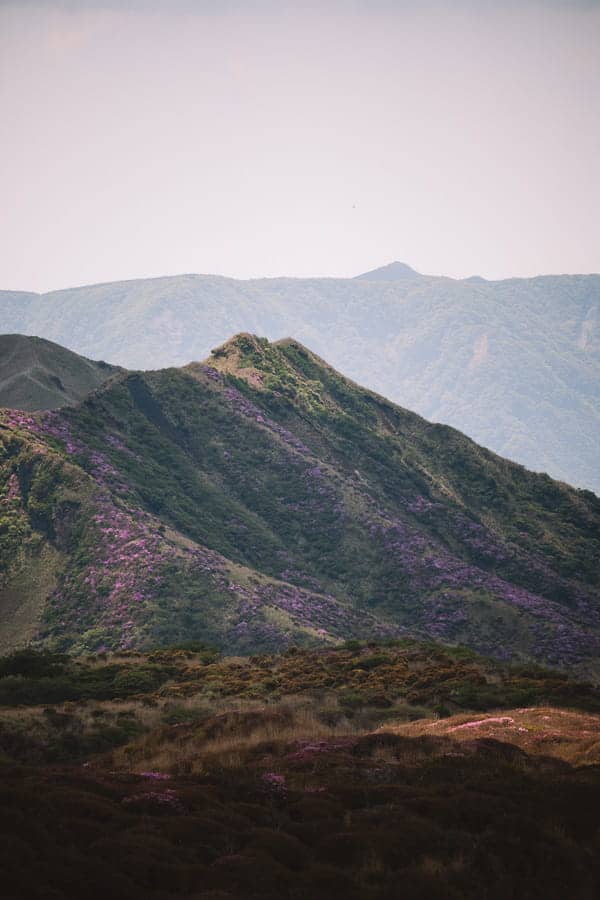
It’s still worth a visit to the area to explore the Kusasenri grasslands regardless. These vast sweeping grasslands have a great view of the steam plume escaping the crater.
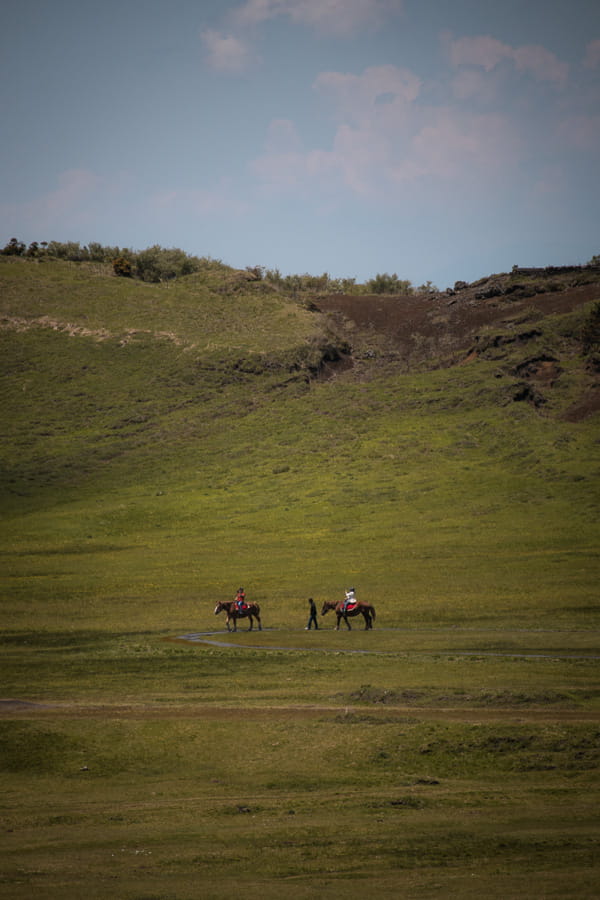
If it’s your thing, you can even go on a leisurely horse trail ride through the grasslands.
At the parking lot, you’ll find a small museum and a few cafes for coffee or lunch.
Komezuka
You’ll pass this dome grass-covered hill on your way up the windy mountain roads towards Kusasenri, with a few pullover bays to stop and get photos of this unusually shaped hill.

Day Trip to Takachiho Gorge
We used our second full day in Aso to take a day trip to see the famous Takachiho Gorge. An incredibly scenic 75-minute drive from Aso, I felt like my jaw was open half the time while traversing the windy mountain roads, with lush green foliage and dramatic green hills dotted with cows.
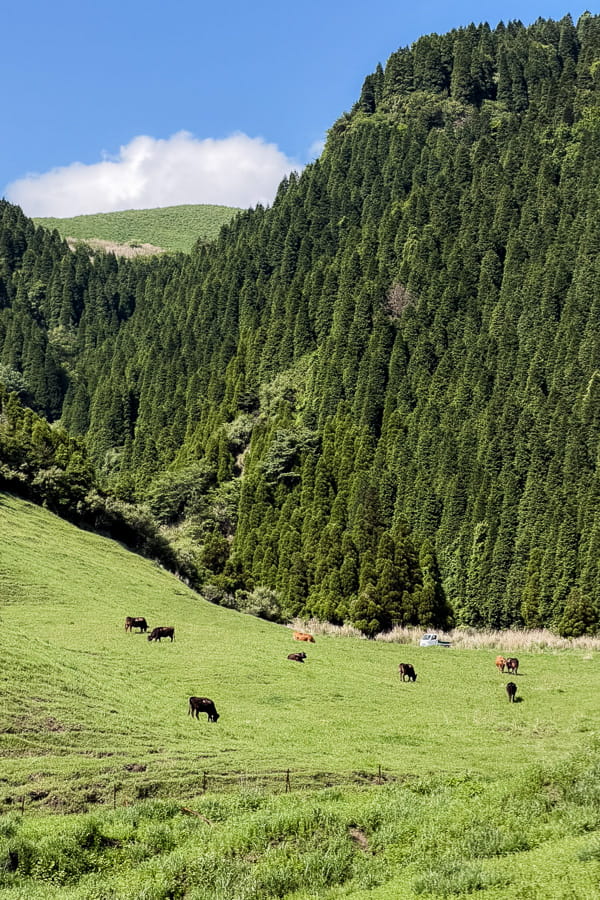
There are a few shrines and other sights worth seeing on the journey, making this a day trip to remember. As Takachiho Gorge can get quite busy with day trippers, we headed directly there first.
If you want to rent a row boat, you’ll need to make advance reservations online, which are quite tricky to get. But honestly, I think it’s better just to relax and enjoy the view as a spectator from above anyway.
Traffic attendants are on-site to direct you to the available parking lots, and while the gorge is free to enter and visit, there’s a 1000 Yen parking fee payable.
For everything else you need to know about visiting Takachiho Gorge on a day trip, read my full guide here.

After exploring the busy gorge area, we drove to the nearby Amanoiwato Shrine Nishi Hongu. There’s the main shrine building; however, we visited specifically to check out the unique cave shrine temple – it’s a bit confusing on Google Maps, but you’ll find the cave shrine here.

It’s a remarkably scenic walk through the forest, following the river until you reach the damp and mossy shrine cave, surrounded by hundreds of stacks of pebbles. We grabbed a small but tasty lunch from this riverside cafe near the entrance path leading to the cave before jumping back in the car.
Tip: If you’re up for a short detour on the way to the next stop, you’ll discover the Franky One Piece Statue near Takamori Station here
Kamishikimi Kumanoimasu Shrine
Kamishikimi Kumanoimasu Shrine is worth visiting for its atmospheric stone staircase, lined with hundreds of lanterns and shaded by towering cypress trees. The setting feels almost mystical, and it’s easy to see why the shrine has become one of Aso’s most photographed spots.

Unfortunately, we arrived at the same time as several tour buses, which took away some of the peaceful, moody atmosphere the shrine is known for. However, as we were leaving, the crowds had largely disappeared, and we finally got to experience the tranquillity of the shrine. It felt like a completely different place.
If possible, try to visit early in the morning or later in the afternoon when tour groups are less common, and the atmosphere is at its best.
Day 11 – 12: Kumamoto
Kumamoto was the final stop on our Northern Kyushu road trip. As Kyushu’s third-largest city, it’s best known for two things: the impressive Kumamoto Castle and Kumamon, the cheeky black bear mascot with bright red cheeks who has become an unlikely celebrity across Japan and much of Asia.
It’s almost impossible to spend time in Kumamoto without spotting Kumamon. He’s everywhere – from shopfronts and train stations to food packaging, souvenirs, and even adorning public benches. What could have been a simple tourism mascot has become a beloved symbol of the region.

Despite being one of Kyushu’s largest cities, Kumamoto feels surprisingly relaxed and down-to-earth compared to many Japanese cities of a similar size. It has all the conveniences of a major urban centre without the crowds and fast pace of places like Osaka or Tokyo.
We also found accommodation to be remarkably affordable. While many travellers pass through Kumamoto as a gateway to Mount Aso, the city has enough attractions and local character to justify spending a night or two here. It’s the kind of place that’s best enjoyed at a slower pace: we spent a leisurely couple of days wandering the shopping arcades, discovering local eateries, and meandering through tranquil traditional gardens.
Where to Stay
I recommend staying in the Sakura Machi downtown area – we were within walking distance of the Kumamoto Castle, with easy access to shopping and dining on your doorstep, and convenient access to the tram and also the bus terminal to get to the Airport if you’re flying onwards to Tokyo like us.
- Budget – Mitsui Garden Hotel Kumamoto: A modern Mitsui Garden hotel just a short walk from the tram line and about a 20-minute stroll from Kumamoto Castle, with clean, comfortable rooms
- Mid Range – Candeo Hotels Kumamoto Shinshigai: We stayed at this modern hotel, in an excellent location, mere steps from the popular Sunroad Shinshigai and Shimotori Shopping Arcades with large (for Japanese standards), modern and clean rooms. The rooftop onsen is a bonus!
- Luxury – OMO5 Kumamoto by Hoshino Resorts: A stylish modern hotel with sleek rooms and a rooftop terrace with views over the city – some rooms offer views of the Castle too.
Things to Do & See in Kumamoto
Monkey D. Luffy statue
We had to hunt down the main man himself! You’ll find him out the front of the Kumamoto Prefectural Government office, in an avenue of bright gold ginkgo trees. We combined our visit with a trip to the nearby Suizenji Park.

Sakura Machi Kumamoto
This large shopping complex is worth visiting for the rooftop terrace alone – you can get a great view of the castle, and visit a giant Kumamoto!

The basement food court also has a great selection of restaurants. We had a sake tasting and bought a bottle to take home at the liquor store, followed by dinner at an izakaya-style restaurant.

Suizenji Park
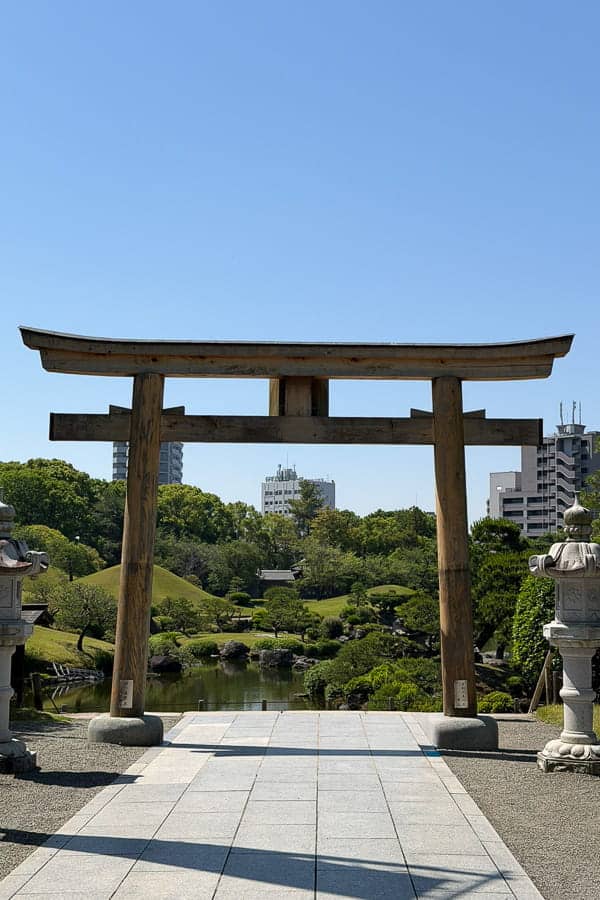
Suizenji Park is a beautiful example of a traditional garden, centred on a large pond, with an artificial hill modelled after Mount Fuji to boot.

Grab a matcha and dessert at the traditional teahouse after strolling through the gardens, including ponds filled with carp and turtles, cobblestoned paths, a herb garden, cherry blossom trees and grand wooden torii gates.
Entrance Fee: 500 Yen
Kumamoto Castle and Sakura-no-baba Josaien
Kumamoto Castle is one of Japan’s most famous castle sites, known for its dramatic stone walls, intimidating granite bastions, and the reconstructed main keep that now serves as a modern museum.
Although much of the original complex was damaged in a 2016 earthquake and the keep is still partially under reconstruction, visitors can still walk the grounds, explore the East and West Gardens, and see the castle’s impressive stone ramparts, which are considered some of the most beautiful in Japan.

The reconstructed main keep offers interactive exhibits on the castle’s history, samurai life, and the 2016 earthquake, and the view from the top of the keep provides a panoramic view over the city and its mountainous surroundings.

Entrance Fee: 800 Yen
Near the South Gate entrance, you’ll find Sakura no Baba Josaien, a large, covered samurai-style shopping and food arcade, built to recreate the atmosphere of a feudal-era samurai town. Inside, there are over 40 shops and restaurants selling local crafts, souvenirs, snacks, and food, including Kumamoto specialties like chicken nanban, mentaiko, and fresh sushi.
Catch an old-school Tram
Kumamoto is one of the few cities in Japan that still operates a tram network. The system is a charming mix of modern trams alongside older, more traditional carriages with wooden floors and a slightly nostalgic feel.
It’s a fun (if slightly slow) way to get around the city, especially for short distances between major sights. We were able to use our IC cards to tap on and off easily, just like on the subway.

Shimotori and Shinshigai Shopping Arcade
We spent many hours wandering the grid-like maze of undercover shopping arcades at the doorstep of our hotel. Teeming with boutiques, izakayas, bars, coffee shops and cafes, it’s the perfect spot to get lost for a few hours.

We grabbed breakfast and coffee most mornings at the Komeda’s Coffee nearby.
If you haven’t visited before, Komeda is chain kissaten (traditional cafe) that offers a “morning service” where you can get thick, fluffy toast with an egg or red bean paste for free with your coffee. It’s a bargain uniquely Japanese breakfast!
Day trip to Yanagawa Canals
Unfortunately, we ran out of time, but we had originally planned to take a day trip from Kumamoto to Yanagawa. It’s an easy excursion from either Kumamoto or Fukuoka by train.
Often referred to as the “Venice of Kyushu”, Yanagawa is famous for its network of historic canals that once served as defensive moats and irrigation channels for the old castle town. Today, the main attraction is a donkobune punt boat cruise through the willow-lined waterways. A boatman poles the flat-bottomed boat along the canals, singing traditional nursery rhymes and sharing snippets of the town’s history as you drift through the quiet streets.
Yanagawa is also well known for its local specialty, unagi (freshwater eel). The eel is grilled with a sweet and savoury soy-based sauce, then served over a bed of seasoned rice in a lacquered box, often topped with shredded egg and gently steamed together for extra flavour.
Final Thoughts
While waiting for our domestic flight from Kumamoto to Tokyo, I found myself reflecting on the past two weeks of road tripping through Kyushu. Exploring this incredibly scenic and awe-inspiring region has been one of my favourite experiences across all my trips to Japan.
Kyushu feels noticeably less visited by mainstream Western tourists compared to the busy Golden Route, making it a more relaxed way to experience a different, more rural side of Japan.
In two weeks, we only really scratched the surface of what the island has to offer. I’m already planning a return trip to explore the southern and western regions of this wonderfully diverse part of Japan. Watch this space!
Check out my other Kyushu and Japan travel guides below
Japan Itineraries:
- Nagoya Travel Guide: How to Spend 1 Day in Japan’s Underrated City
- The Perfect 3 Day Kyoto Itinerary: How to Avoid the Crowds
- Exploring Fuji Five Lakes: 3 Days in Kawaguchiko Itinerary
- An Exciting 4 Days in Osaka Itinerary: Perfect for First-Timers!
- A Fun 7 Day Tokyo Itinerary: Ultimate 1 Week in Tokyo Guide
- 2 Days in Takayama: Discovering Traditional Japan
- An Efficient 4 Weeks in Japan Itinerary (Perfect for First-Timers)