
With its towering basalt cliffs, gleaming emerald-green water and misty waterfall cascading into the river below, Takachiho Gorge is undoubtedly one of the most beautiful natural attractions in Kyushu, and one of the things I was most excited to visit on our Kyushu road trip.
Tucked away in the mountains of Miyazaki Prefecture, this spectacular gorge was formed more than 100,000 years ago by volcanic activity from nearby Mount Aso. Over time, the Gokase River carved its way through the hardened lava flows, creating the dramatic chiselled canyon walls that we see today.
While photos of the famous rowboats beneath Manai Falls have made Takachiho Gorge one of Kyushu’s most recognisable landmarks, there’s far more to experience here than simply renting a boat. We didn’t even rent a boat, and it was still one of the highlights of our trip! Many other unique attractions close by make it well worth spending a day exploring the area.
Here’s everything you need to know before visiting Takachiho Gorge.
Getting There
By Car
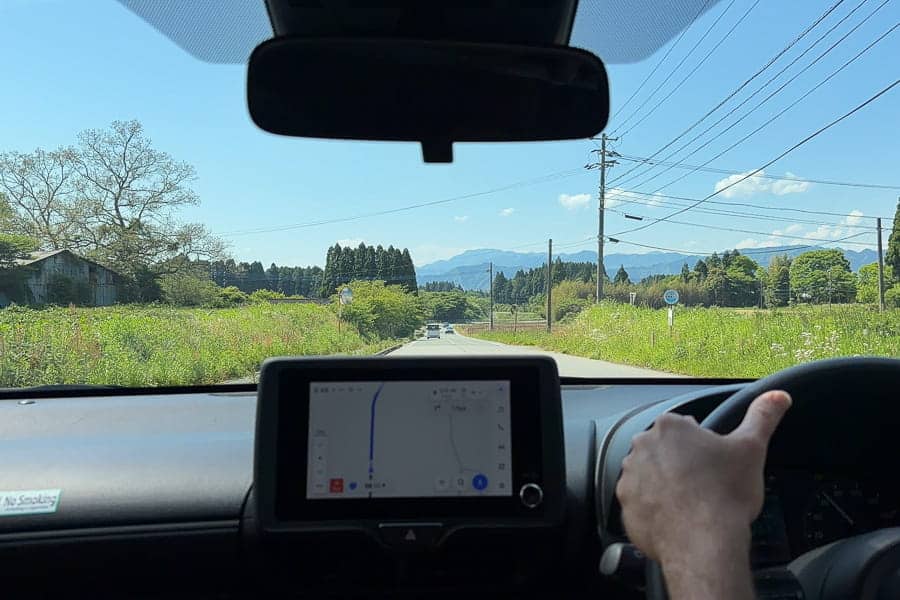
Takachiho isn’t particularly easy to reach by public transport, making driving by far the easiest and most flexible way to visit. Having your own vehicle also allows you to explore the wider region, including nearby attractions such as Takachiho Shrine, Amano Iwato Shrine and the Amaterasu Railway.
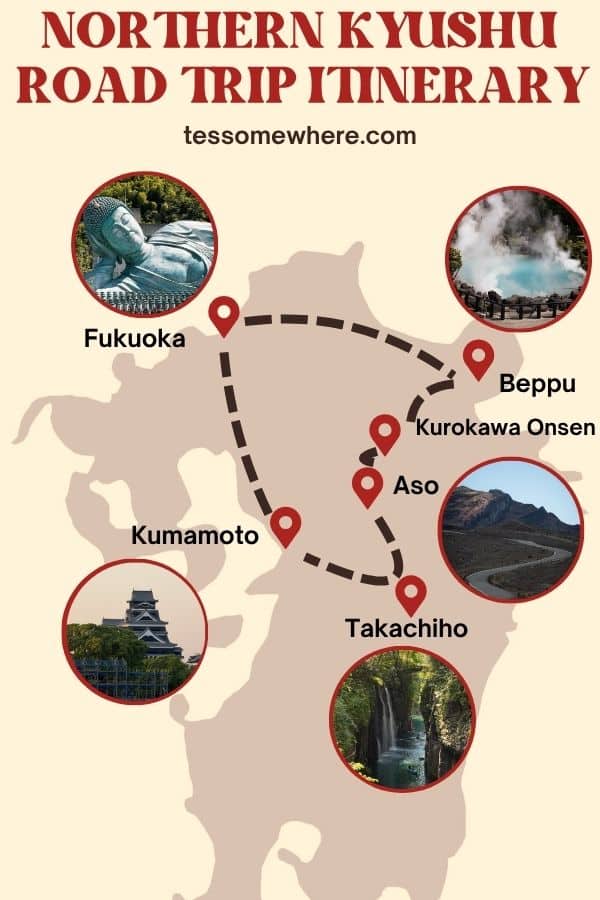
We spent two weeks road-tripping around northern and central Kyushu (you can grab my full itinerary here) and visited Takachiho as a day trip from Aso, where we were staying.
The gorge is located approximately:
- 1 hour 10 minutes from Aso
- 1 hour 30 minutes from Kumamoto
- 3 hours from Fukuoka
Parking
Given Takachiho’s popularity and remote mountainous location, I was half expecting parking to be a bit of a nightmare. Fortunately, like most other things in Japan, the system is very well organised.
As you approach the gorge, parking attendants direct vehicles to the nearest available space across five different parking areas. We arrived at around 10 am and had no trouble securing a spot in Parking Lot 2.
Parking fees are as follows:
- 1st Oshioi Parking Lot: 1,000 Yen
- 2nd Araragi Parking Lot: 1,000 Yen
- 3rd Ohashi Parking: 800 yen
- 4th Oshikata Parking Lot: 500 yen
- 5th Taguchino Parking Lot: Free
For real-time parking congestion updates, check this website before your visit.

The third parking lot is also conveniently located near several restaurants and cafés, and this is where the tour buses stop.
If possible, I’d recommend parking in Lot 2 or 3 rather than Lot 1. While they’re slightly further away, they allow you to walk the scenic gorge trail hugging the river before reaching the main viewpoint.
Tip: The walk includes a few sets of stairs. If you’d prefer to avoid them, a shuttle taxi bus operates between the paid parking lots and the main gorge area for ¥300 per adult. It only seats 9, so you may face a bit of a wait during busy periods. Or, you can get to the main gorge area by walking on the road (we did this on the way back to the car park).

By Public Transport
While it is possible, visiting Takachiho by public transport is limited and requires a bit more planning.
From Kumamoto, there is one direct bus per day to Takachiho Bus Centre. The journey takes approximately three hours and costs ¥2,700 each way. Tickets can be reserved here.
From the bus centre, it’s approximately a 30 to 40-minute walk to the gorge.
By Tour
For travellers staying in Fukuoka or Kumamoto, joining a guided day tour is often the easiest – and one of the most cost-effective – ways to visit Takachiho.
Many tours combine the gorge with nearby attractions such as Mount Aso and Amaterasu Railway.
Not only does a tour remove the stress of driving or navigating limited public transport, but having a guide also provides valuable insight into the area’s rich mythology, history and cultural significance.
It makes for a long day if coming from Fukuoka, but it’s a fantastic way to experience one of Kyushu’s most scenic regions.
Check out my recommended tours below.
From Fukuoka:
- Mt. Aso & Takachiho Gorge Tour with Optional Boat Ride
- Takachiho Gorge & Amaterasu Railway with Optional Boat Ride
From Kumamoto:
Walking Trail and View Points
We parked our rental car in Parking Lot 2, which was a 15-minute walk from the main gorge area – but this was actually one of my favourite parts of the gorge! Following the river beneath towering basalt cliffs, you’ll get some great photo opportunities of the jade-green river and dramatic, carved charcoal cliffs.

When you reach the Yaritobashi Bridge, make sure to turn behind you for a unique view of the Three Bridges of Takachiho, showcasing three distinct eras of Japanese bridge engineering stacked vertically over the Gokase River.

Continue to follow the river, passing the Kihachi-no-chikaraishi Rock, a 200-tonne stone that legend says was hurled by a fearsome demon. Shortly after, you’ll reach the iconic viewpoint overlooking the rowboats, Manai Falls and the striking bridge spanning the gorge above (Waterfall Viewpoint on the map below).

Tip: As the best photo spot, this is also unsurprisingly the most crowded spot. We found a tucked-away viewpoint higher up with no one there! Arguably, it’s not as good a view, but hey, you’re likely to have it all to yourself! To get there, follow the path past the Onokoro Pond on the upper level (Barrier free Viewpoint on the map below).

After you’ve finished exploring the central gorge area, you can continue back to the car park on the walking path that you took to get here, or mix it up and walk back on the road like we did.
There’s plenty of room for cars to pass, and we enjoyed avoiding the uphill climb back up the stairs – there’s also a cool tunnel that you pass through in the lead up to Car Park 2.
Map
You can also download a copy here.

Best Time to Visit
Takachiho Gorge can be visited year-round, but the most popular times to visit are during spring and autumn.
Spring and early summer (April to June) bring vibrant greenery, with the steep canyon walls cloaked in lush foliage that contrasts beautifully against the emerald water below. This is when I visited, and the gorge looked exactly like the photos that had inspired me to add it to my Kyushu itinerary in the first place.
Autumn (late October to November) is another spectacular time to visit, as the surrounding trees transform into shades of red, orange and gold, creating one of Kyushu’s most picturesque autumn landscapes.

Winter offers a quieter experience with fewer crowds, although the scenery is less vibrant once the leaves have fallen.
If you’re planning a summer visit, keep in mind that heavy rainfall and typhoons can occasionally cause boat operations to be suspended due to high water levels.
Whenever you visit, be sure to check whether your trip coincides with Golden Week (typically late April to early May). This is one of Japan’s busiest holiday periods, so be prepared for extra crowds.
Boat Rental
One of the most iconic experiences at Takachiho Gorge is renting a rowboat and paddling through the jade-green waters beneath the towering cliffs. From the water, you’ll get a completely different perspective of the gorge, with the opportunity to get up close to the spray of the 17-metre-high Manai Falls.
If renting a boat is high on your Takachiho bucket list, you’ll need to plan ahead. Reservations open online two weeks in advance at 9 am Japan time and can sell out within minutes, particularly during weekends, public holidays and peak travel seasons.

Boat hire costs ¥5,100 per boat for up to three adults (or four passengers if one is a small child), with each session lasting 30 minutes.
If this feels too tricky, or if you miss out on reservations, many guided day tours include an optional boat rental add-on, making it much easier to book the experience.
And if you do miss out (like we did), don’t let it deter you from visiting. Some of the best views of Takachiho Gorge are actually from the walking trails and viewpoints above, where you can admire the dramatic canyon walls, waterfall and colourful rowboats from afar.
Restaurants
Around the southern end of the gorge area, you’ll find a small cluster of attractions and facilities, including a freshwater aquarium, fishing pond, souvenir shops and a handful of casual restaurants.
One of the most popular spots here is the nagashi somen restaurant, where thin noodles are sent flowing down bamboo chutes of water for you to catch with your chopsticks before eating. It’s a fun, slightly chaotic experience that has become a bit of a novelty for tourists.

Keep an eye out for the lucky yellow mailbox, just one of a handful you’ll find scattered across Japan!
June 2026 update: Unfortunately, after a typhoon and heavy rain, part of the cliff area near the Nagashi Somen restaurant collapsed and is currently closed while repairs are made. One restaurant, the ice cream stand and the souvenir shop are still open.
Other Things to Do
Takachiho Shrine
Located a short drive or walk from the gorge, Takachiho Shrine is one of the region’s most important spiritual sites.
Surrounded by towering cedar trees, the shrine is believed to be more than 1,900 years old and plays a central role in many of Japan’s creation myths.
Amanoiwato Shrine
According to Japanese mythology, this is the site where the sun goddess Amaterasu hid herself inside a cave, plunging the world into darkness.
Near the main Amano Iwato Shrine, follow the meandering river and cross a small bridge to reach the moss-covered cave, surrounded by hundreds of stacks of pebbles.
We grabbed a small but tasty lunch from this riverside cafe near the entrance path leading to the cave before jumping back in the car.

Kawanobori Rice Terraces
Carved into the hillside, these picturesque terraces have been cultivated for generations and make for a great photo stop of the lush terraced fields surrounded by mountains.
It’s an easy stop to pull over on the side of the road on the drive between Takachiho Gorge and Amanoiwato Shrine.
Kamishikimi Kumanoimasu Shrine
Kamishikimi Kumanoimasu Shrine is worth visiting for its atmospheric stone staircase, lined with hundreds of lanterns and shaded by towering cedar trees. The setting feels almost mystical, and it’s easy to see why the shrine has become one of Aso’s most photographed spots.
We stopped here on the drive back to our accommodation in Aso, and it only required a small detour from the main route.

Ride the Amaterasu Railway
For something a little different, the Amaterasu Railway offers a fun and scenic way to experience the surrounding countryside.
This open-air sightseeing train runs along a former railway line that was damaged by a typhoon and never fully restored. Rather than being abandoned, it has been transformed into a unique attraction showcasing sweeping views of Kyushu’s rural landscapes.
One of the highlights is crossing the Takachiho Railway Bridge, where the train pauses high above the valley floor. From here, you’ll get panoramic views of mountains, rivers and forested hills stretching into the distance.
The return journey takes around 30 minutes, making it an easy addition to a Takachiho itinerary. While less well-known than the gorge itself, it’s one of the most memorable experiences in the region and well worth fitting in if you have extra time.
Final Thoughts
Takachiho Gorge was one of the busiest and most touristy spots we visited during our two weeks in Kyushu, but in my opinion, it still lives up to the hype.
It’s one of the most beautiful landscapes I’ve seen across all my trips to Japan (up there with Mt Fuji!). Even now, looking back at photos, I still find myself thinking “wow” – it’s just that striking, and feels completely different from anywhere else in the country.
Whether you explore on a self-drive road trip or join a guided tour, you’re guaranteed to have a memorable day experiencing the magic of Takachiho Gorge.