
South Korea has always been on my mind – we love Japan, and I thought there would be a lot of similarities between the two countries. In May 2026, we finally spent five days there, and I was surprised by not only how different it was from Japan, but how much I loved it.
5 days felt like the perfect amount of time to see the highlights, and I’m already plotting how I can get back there to continue exploring this vibrant and lively city (and more of South Korea!).
Like Tokyo, Seoul is huge, with a long list of neighbourhoods that each feel quite different, so this isn’t a city where you can turn up and wing it if you want to see a lot.
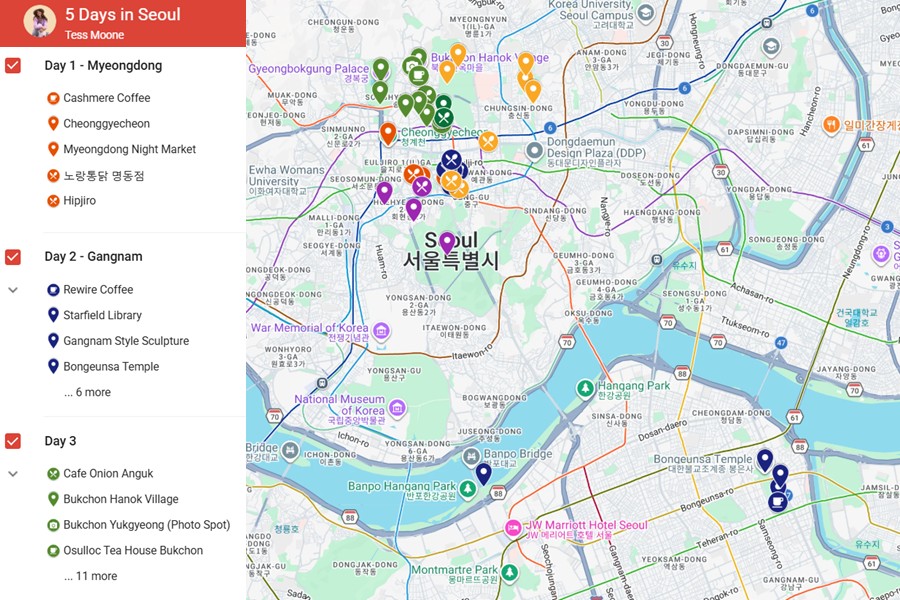
This itinerary groups each day by area to keep travel time down. It’s based on exactly what we did, with optional additions and notes on what I’d change if I did it again.
Just a quick note – this was my first overseas trip travelling with our 6-month-old daughter. We moved at a slightly slower pace than our pre-baby adventures, so I’ve highlighted in my itinerary where we didn’t get to a few places I had saved on my itinerary.
This is my perfected 5-day Seoul itinerary, ideal for first-time visitors and designed to reduce the overwhelm.
At a Glance: 5 Day Seoul Itinerary
- Day 1 (half day): Myeongdong & Cheonggyecheon Stream
- Day 2: Gangnam and Euljiro
- Day 3: Bukchon Hanok Village, Ikseon-dong, Insadong and Gyeongbokgung Palace
- Day 4: Namdaemun Market, Namsan Cable Car and Hongdae
- Day 5: Gwangjang Market and Changdeokgung Secret Garden
Tips for First-Timers
Download Naver Map: Google Maps has limited functionality in South Korea, particularly for walking and driving directions. We used Naver Map for getting around instead. I found this does take some getting used to, as it isn’t as easy to use as Google Maps.
Tip: We found that it was best to copy and paste the Korean name for places like restaurants, etc from Google Maps into Naver Maps in order for it to work accurately (it had issues sometimes with the English versions of names).
However, this may change soon. In February 2026, the Korean government conditionally approved Google’s request to use high-precision Korean map data. Google is reportedly aiming to launch in 2027, but that date isn’t confirmed.
Get a Transport Card: For the subway and buses, pick up a T-money card from a convenience store such as GS25, CU or 7-Eleven. We grabbed one from GS25 on our first day. You top them up at machines in the subway station – we had read they only accepted cash, but we found some newer machines could also accept card for top-ups. It can also be used for payment in some places like convenience stores, which was handy for using up our remaining balance.
Ride-share apps: We used Uber whenever we needed a taxi, and it worked completely fine. Ubers in Seoul feel more like taxis, as the cars were standardised and had Uber signage on them. Kakao T is Korea’s main taxi and ride-hailing app and is worth downloading as a backup, although we never ended up needing it.
Wear comfortable shoes: Just like Japan, you’ll walk a lot. What I didn’t expect was how hilly Seoul is! We regularly clocked up 15,000–20,000 steps a day.

Get an eSIM: You’ll be relying on maps and ride-share apps constantly. Google Translate was also super handy to translate menus. We used AirAlo, and it worked perfectly in South Korea. Check out eSIM plans & pricing for South Korea here.
Check whether you need a K-ETA: Australian passport holders can visit as tourists for stays of up to 90 days without applying for a K-ETA (or visa waiver). You will, however, need to complete a free e-Arrival Card on the official website (e-arrivalcard.go.kr) within three days before arrival. Note: Australian passport holders are currently exempt until 31 December 2026; check if travelling after this date.
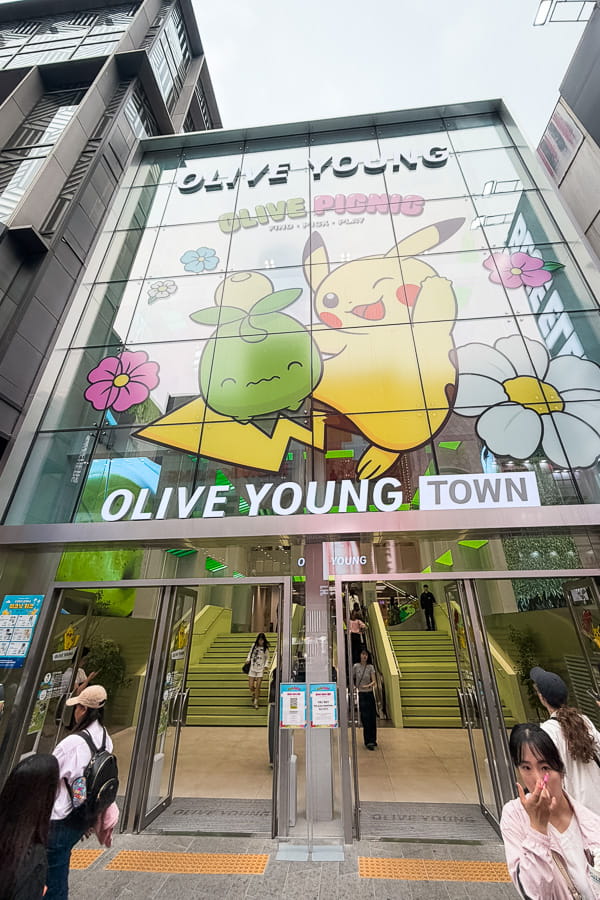
Olive Young is on every corner: I’m not personally into K-beauty, but it’s hard not to get sucked into the hype when there seems to be an Olive Young on every second corner! No matter what time of day we visited, every store was busy.
You don’t need restaurant reservations everywhere. We didn’t book a single restaurant and walked into every place mentioned in this article.
Cash or Card: Cards are widely accepted, but you’ll need some cash for street food, markets and potentially for topping up your transport card.
Palace closures and advance bookings: Most palaces close one day a week: Gyeongbokgung on Tuesdays and Changdeokgung on Mondays. The Secret Garden tour at Changdeokgung is the main ticket that sells out, but keep reading for my tips on securing your slot.
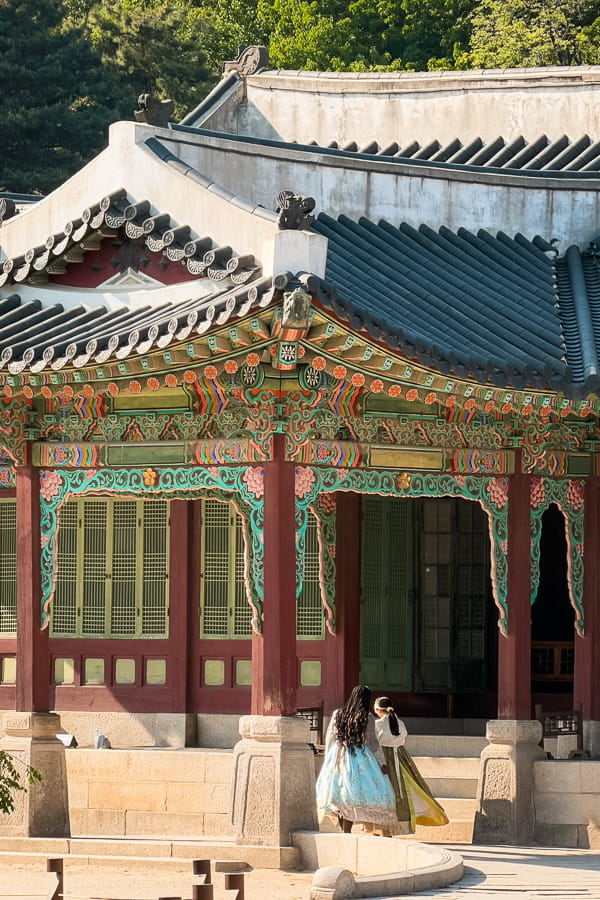
Hanbok: Entry to the palaces is free if you are wearing a Hanbok (traditional robe). There are lots of stores you can rent them from, or you can book in advance here.
Where to Stay in Seoul
Seoul is spread out, so choosing the right area makes a big difference to how much time you spend on the subway.
Here’s a quick comparison of the most popular areas for visitors:
| Area | Best for | Keep in mind |
| Myeongdong | First-timers, shopping, airport bus connections | The main shopping streets are touristy and very busy |
| Insadong / Jongno | Palaces, hanok villages, a more traditional feel | Quieter at night, with fewer late-night food options |
| Hongdae | Nightlife, street performers, a younger crowd | A bit further from the palaces and the old city |
| Gangnam | Upmarket shopping, COEX, business travel | A long way from most historic sights |
For a first visit, I’d stay in Myeongdong or Insadong. Both are central and well connected by subway, and they’re close to most of the places in this itinerary. We stayed in Myeongdong and would happily stay there again, mostly because of how easy it made getting around. Insadong was my second choice.
Where we stayed: Nine Tree by Parnas Seoul Myeongdong II
Some people say Myeongdong is gimmicky and only caters to foreign visitors. That’s partly true of the main shopping streets, but as a base, the location is hard to beat.
Our hotel was close to two subway lines, which made it easy to reach every part of this itinerary.
What I liked most was that it was in Myeongdong but in a quiet section away from the crowded shopping and night market streets. It’s also right on the doorstep of Euljiro, nicknamed “Hipjiro”, one of Seoul’s coolest neighbourhoods for eating and drinking. We ended up eating there most nights.

There was a small but well-stocked convenience store in the lobby, which was really handy, and they had laundry facilities in the basement, which we used before we flew to Japan for 2 weeks after our time in Seoul.
The one and only downside was that the hotel turned the air conditioning off overnight, and we woke up sweating most nights! We later found out this is common in Korean hotels, so just an FYI since we didn’t know about this beforehand.
Where to stay in Myeongdong:
- Budget – OYO Hostel Myeongdong 2: A simple budget option with private bathrooms, just a few minutes’ walk from Myeongdong Station and the shopping streets
- Mid-Range – Nine Tree by Parnas Seoul Myeongdong II: Our pick for a comfortable, central stay, with a quieter location near Euljiro’s restaurants, handy subway connections and self-service laundry.
- Luxury – The Grand Lotte Seoul: A luxury option with an indoor pool, multiple restaurants and direct connections to Lotte Department Store and Euljiro 1-ga Station.
How to Get Around Seoul
Getting from Incheon Airport to Myeongdong
Limousine Bus
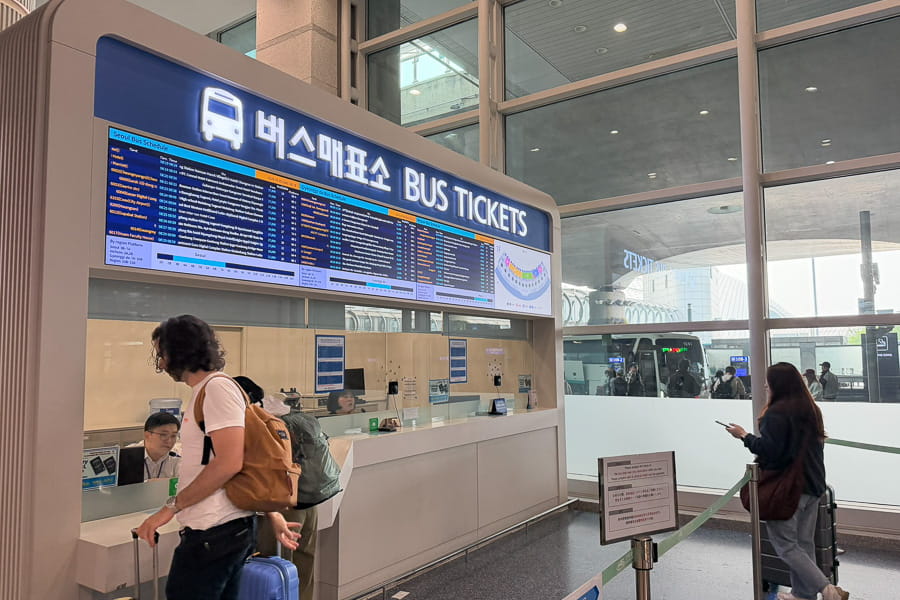
We landed at Incheon International Airport early in the morning and took the airport limousine bus straight to Myeongdong, which cost us KRW 17,000 each.
The route we took was 6015, and the trip takes around 70–90 minutes, longer in peak-hour traffic. You can buy tickets from the self-serve machines or the limousine bus counter in the arrivals hall. There are five to six buses an hour, so you just line up and wait for the next one.
This is the most convenient option if your hotel is on or near the limousine bus route, as you can get from the arrivals hall to your hotel door without changing. They were clean, cheap and comfortable. You can check the routes here.
Train (AREX)
The Airport Railroad (AREX) runs from both terminals to Seoul Station, and from there you can catch the subway to your hotel (e.g. it’s two stops on subway Line 4 to Myeongdong).
There are two services:
- Express train: about 43 minutes from Terminal 1 to Seoul Station, with no stops. Tickets cost around KRW 13,000, or a little less if you buy a discounted voucher online in advance.
- All-stop train: about an hour to Seoul Station, for roughly KRW 4,500–5,000. You can tap on with a T-money card.
The train is the cheapest option and avoids traffic, but you’ll need to manage your luggage through Seoul Station and change to the subway. If you’re arriving tired after a red-eye like we were, the bus is the much easier choice.
Uber/ Taxi
On our last morning, we decided to pay a bit extra and took an Uber to the airport instead. It cost us KRW 56,000 and took 50 minutes. It’s the most expensive option, but door-to-door with luggage for only an extra ~KRW 20,000 compared to getting the Limousine Bus, it was worth it for us travelling with a baby.
Just a quick reminder not to leave home without travel insurance! There’s nothing worse than getting unwell overseas, let alone worrying about whether you can afford to pay for treatment. I use Covermore when I travel, and they’ve been fantastic – from delayed flights in Kuala Lumpur to getting stuck on an island in the Philippines due to the weather, I’ve had no issues the few times I’ve needed to make a claim. Get a quote here!
Getting around the city
We used a mix of the subway, Uber and walking. The subway is cheap, clean and easy to navigate, with English signage at every station. We tapped on with the T-money card we’d picked up on our first day. For longer trips across the city, or when we were tired at the end of the day, Uber was a quick and affordable alternative.
5 Day Seoul Itinerary
Day 1: Myeongdong
After a red-eye flight, the first priority was coffee, and Seoul has a serious coffee culture with cafés everywhere. We got a much-needed coffee at Cashmere Coffee before exploring the colourful streets of Myeongdong and getting our first taste of what Seoul has to offer.
With shops and cafés everywhere, it’s an easy neighbourhood to wander around while finding your feet. It was an easy introduction to Seoul without needing much of a plan: grab a coffee, browse a few shops and see what catches your eye.
If I had my time again, though, I’d also walk over to Cheonggyecheon Stream before returning to Myeongdong for the evening.
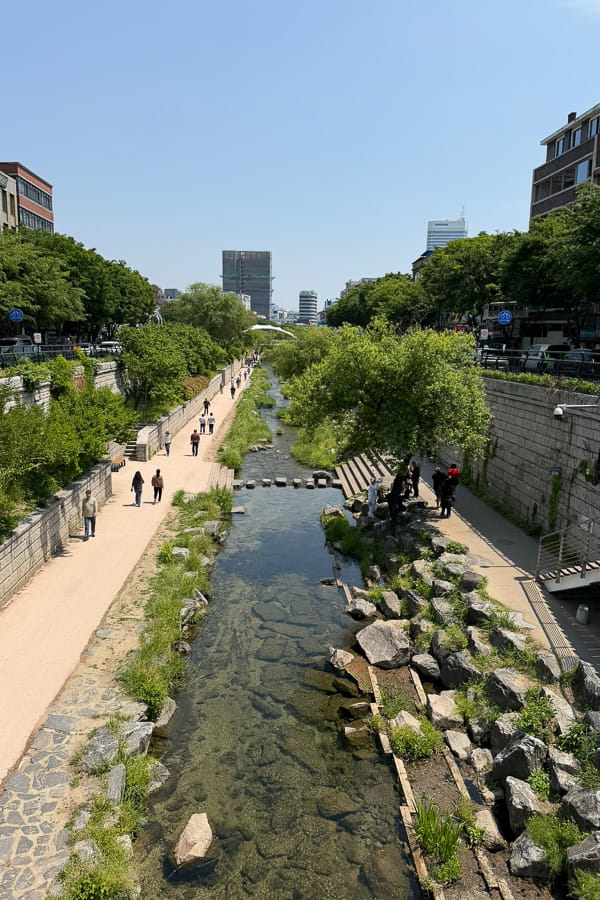
Cheonggyecheon Stream
Running below street level through downtown Seoul, this landscaped waterway has walking paths, small bridges and stepping stones where you can cross the water.
There’s no need to plan much here: stroll beside the water, stop for photos or find somewhere to sit and people-watch. Cheonggye Plaza is a good starting point, with a waterfall marking the beginning of the stream. You can follow a short section before heading back up to explore the surrounding streets.
We went for a stroll along the stream further along on our way back from Gwangjang Food Market (Day 5 of this itinerary), but didn’t make it all the way up to see the waterfall of this more popular section of the stream, so it fits in well if you do it on your first day.
Myeongdong Shopping Street
Myeongdong is one of Seoul’s best-known shopping districts, with streets packed with Korean skincare stores, fashion brands, shoe shops and accessories.
Despite the name, Myeongdong Shopping Street is really a whole network of shopping streets and smaller lanes. The main pedestrian street is Myeongdong-gil, but make sure to branch out and explore the side streets and alleys.
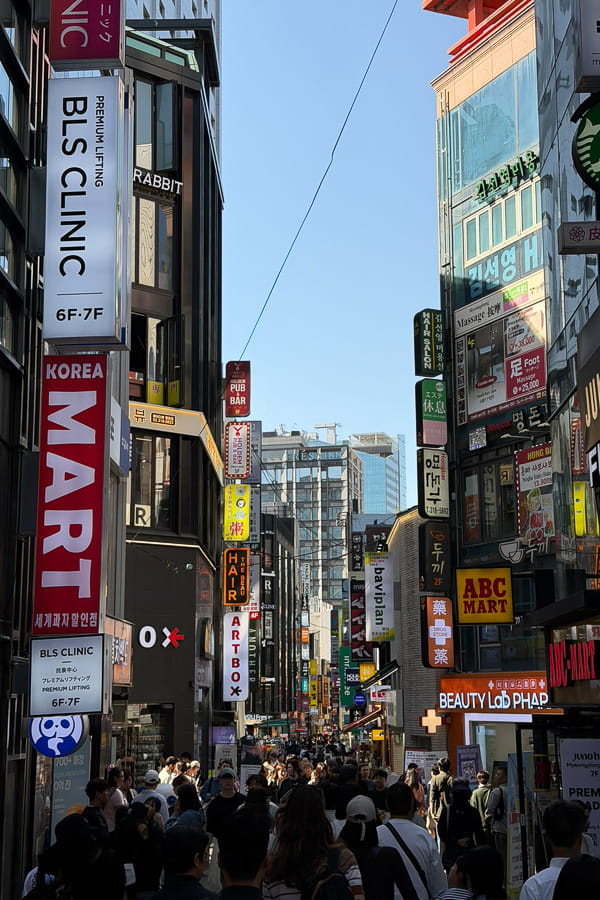
If you’re keen to stock up on Korean skincare or cosmetics, this is a good place to browse, with plenty of stores close together. Myeongdong is also where you’ll find some of the biggest Olive Young stores. The Olive Young Town branch was decked out in a Pokémon collaboration when we visited, and was absolutely pumping.
Even if shopping isn’t high on your agenda, there are cafés everywhere for a coffee break between exploring.
The atmosphere is busy and lively, particularly as the evening street-food stalls get going. I’d time your visit for late afternoon so you can combine some shopping with Myeongdong Night Market, stopping for snacks and getting your first taste of the delicious South Korean cuisine as you explore.
Tip: Many shops offer tax-free shopping for tourists. Bring your passport, look for the “Tax Free” sign, and ask at the counter. At participating stores, you can often get the refund taken off on the spot, rather than queuing at the airport. The minimum spend is KRW 15,000.
Myeongdong Night Market
As evening drew close, we headed to the Myeongdong Night Market.
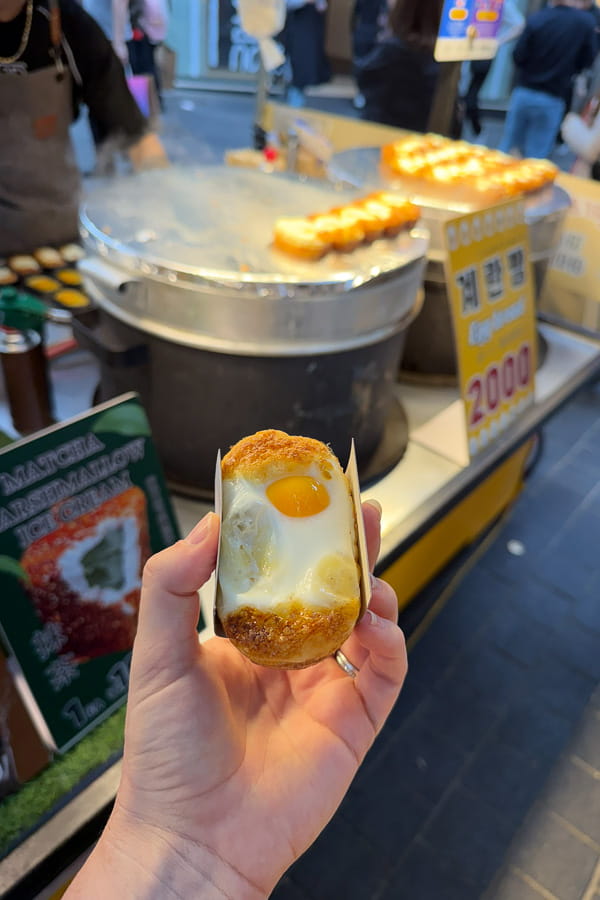
Each evening, the main streets of Myeongdong fill with food stalls from around 5 pm, selling everything from cheese and kimchi grilled pork belly skewers (delicious, highly recommended) and cheese-and-egg buns to purple sweet potatoes and fish-shaped bungeoppang. I couldn’t resist gyeran-ppang, a sweet egg bread with a whole egg baked on top.
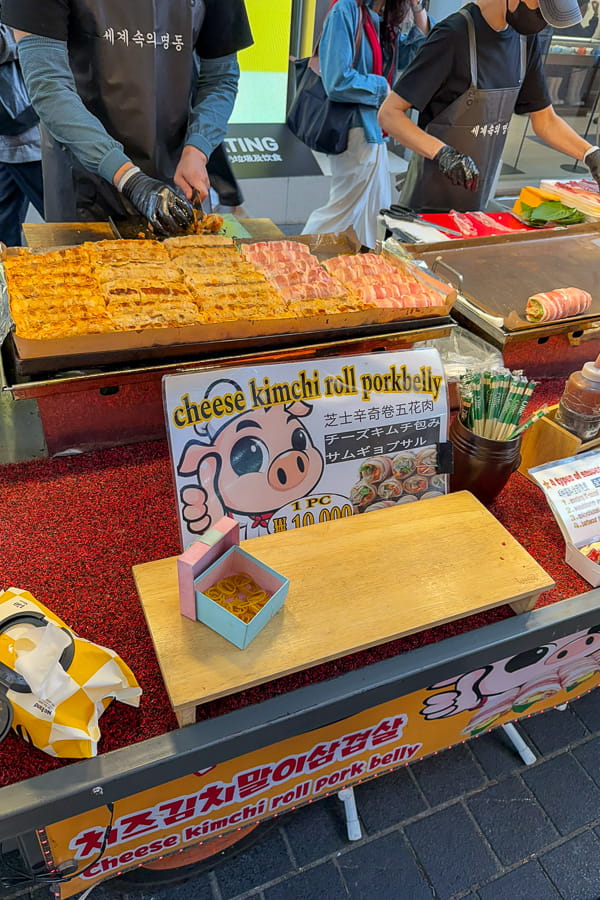
Most items cost around KRW 2,000–15,000, and most vendors only take cash. It’s very busy, and it only got busier as the night went on, so expect to shuffle along with the crowd.
Fried Chicken & Beer
In search of more substantial food, we headed to Myeondong 7-gil where you’ll find a row of restaurants specialising in fried chicken and beer – the ultimate combo if you ask me!
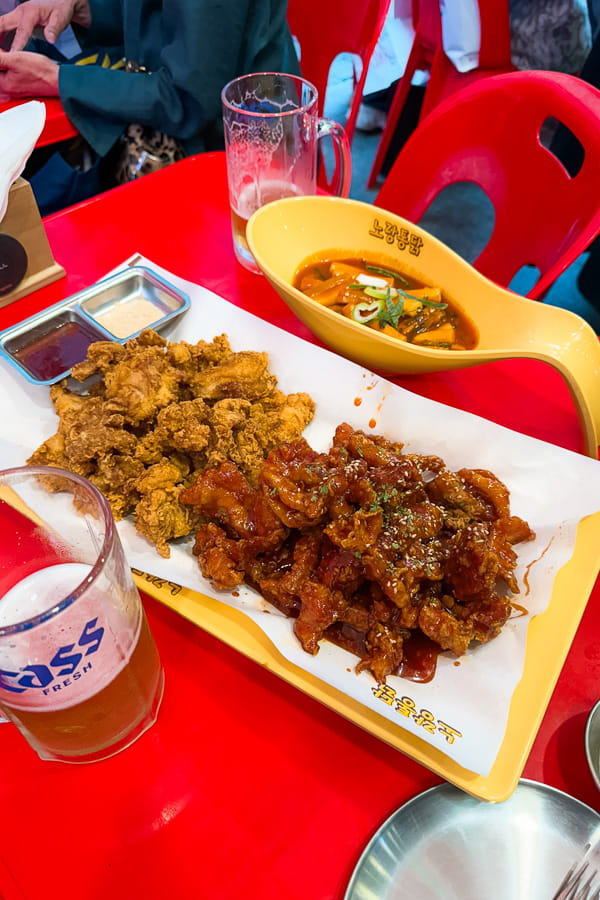
They were already packed when we got there around 6 pm on a Saturday night. We ended up snagging a table at Norang Tongdak.
It was such a fun experience in the crowded dining area, shoulder to shoulder with other diners while dining on a mix of crispy fried and sticky glazed chicken. Of course, best washed down with a cold Cass beer, sitting on the classic red plastic chairs.
Not our healthiest dinner, but one that made for a great start to our 5 days in Seoul.
Day 2: Gangnam and Euljiro
We started with coffee and an egg tart at Rewire Coffee. As it was a rainy day, we decided to head to Gangnam, where a lot of the sights are indoors.
Starfield Library and COEX Mall
We hopped on the subway Line 2 to COEX Mall. Inside this massive shopping complex, Starfield Library is one of Seoul’s most photographed spots, with 13-metre-tall bookshelves holding more than 50,000 books and magazines. It’s free to visit and sits right in the middle of the mall, so it’s an easy rainy-day stop.
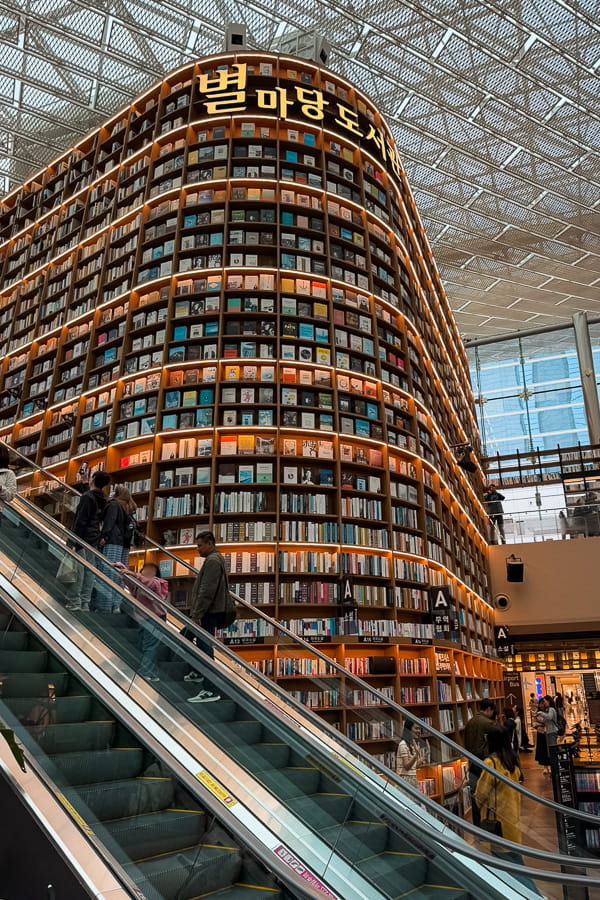
Unsurprisingly, it was super busy. But this didn’t detract from what is one of the most unique libraries I’ve ever seen.
We explored the mall, with pit stops to check out the flagship Baskin Robbins with over 100 flavours of ice cream, browsed the exclusive graphic tee range at Uniqlo and cute souvenirs at Kakao Friends. There’s even an aquarium inside the mall, if you fancy a visit.
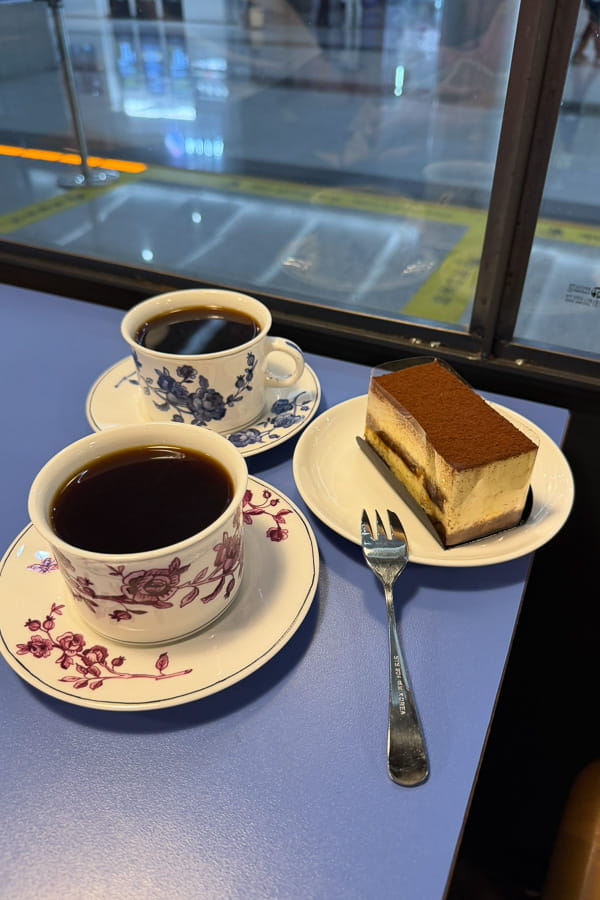
We grabbed a sit-down lunch in one of the basement food streets, eating traditional oxtail soup and beef bulgogi, but there’s a huge range of food options from casual bites to more formal and even high-end dining options. We followed our lunch with coffee and cake from Terarosa.
Gangnam Style statue
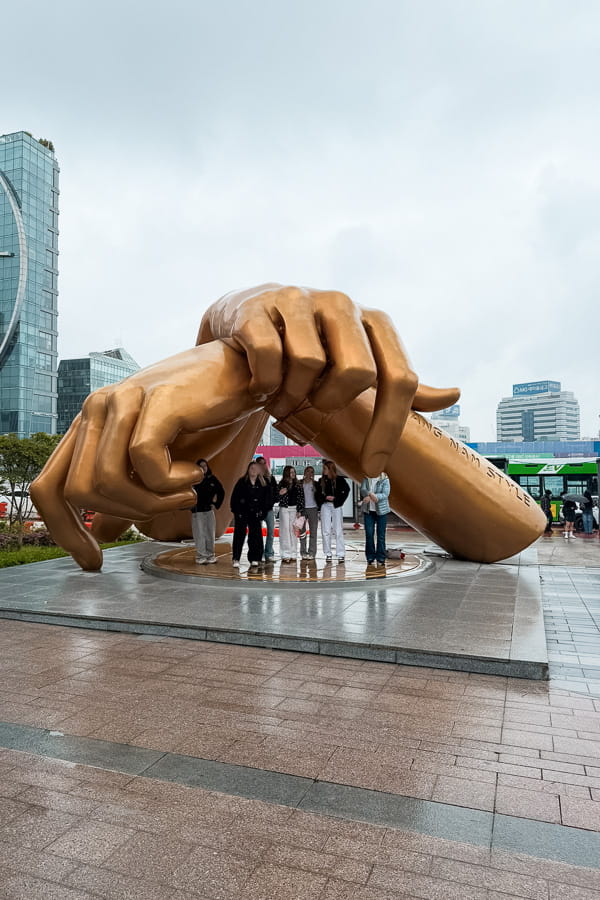
Of course, it wouldn’t be a visit to Gangnam without visiting the iconic Gangnam Style statue. The giant hands statue plays music 24/7, and it was entertaining watching everyone do the dance! This is located just outside the COEX Mall.
Bongeunsa Temple
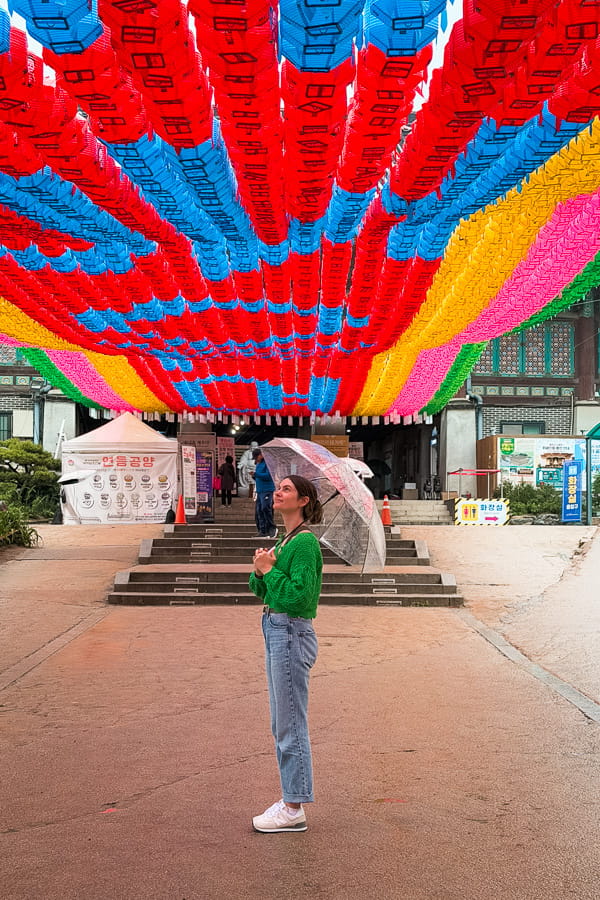
Bongeunsa is a Buddhist temple founded in 794, surrounded by Gangnam’s office towers, just across the road from COEX, making it an easy additional stop on your itinerary.
Entry to the temple grounds is free. Visiting in early May meant the courtyards were covered in thousands of colourful lanterns for Buddha’s Birthday. Even in the rain, it was one of the prettiest stops of the trip.
Banpo Bridge Light Show
Depending on how long you shop, if you stick around in the area until the evening, you can see the Banpo Bridge Moonlight Rainbow Fountain. 200 lights illuminate the fountain as it shoots jets of rainbow coloured water in the air in time with music.
It runs from April to October, with the first evening display at 7.30 pm. It’s roughly 40 minutes on public transport from COEX Mall, or only a 15-minute taxi ride.
Evening in Euljiro
We ended up spending most evenings in Euljiro as it was near our hotel.
I highly recommend you spend at least one of your evenings here as it’s such a cool area with lots to see and of course, lots to eat! In fact, this area has been nicknamed “Hipjiro”; it’s THAT cool!
On the way to dinner, we walked past the colourful Oldies Taco in Euljiro, which was on my “to-eat” list if we craved a change from Korean cuisine, but this never happened, so we didn’t make it there (but add to your list just in case!). It was pumping every time we walked past over the course of our 5 days in Seoul, which speaks to its popularity.

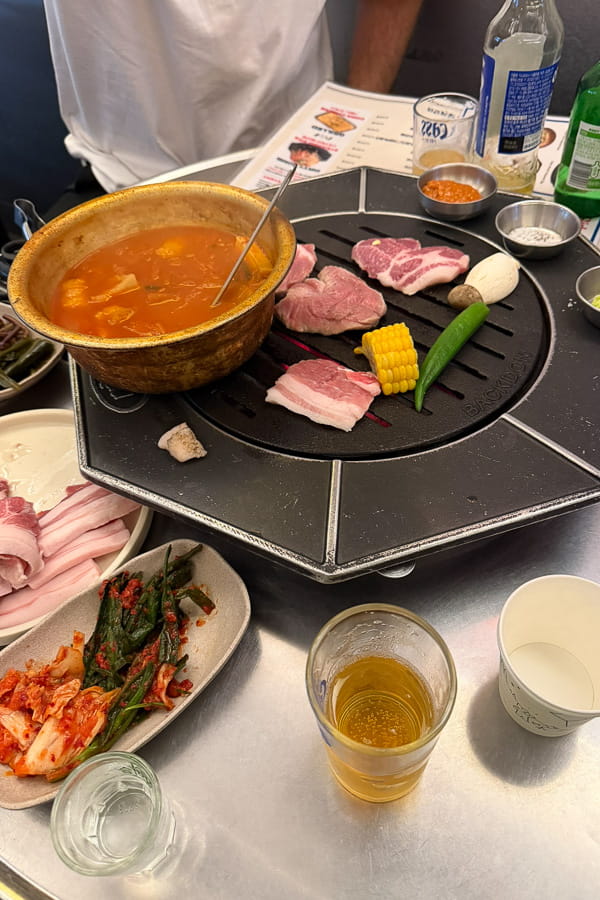
For dinner, we had our first Korean BBQ experience at Backdon. We had thick slices of pork belly on a round grill, with a bubbling kimchi stew cooking in the ring around the edge, plus banchan (side dishes), beer and soju.
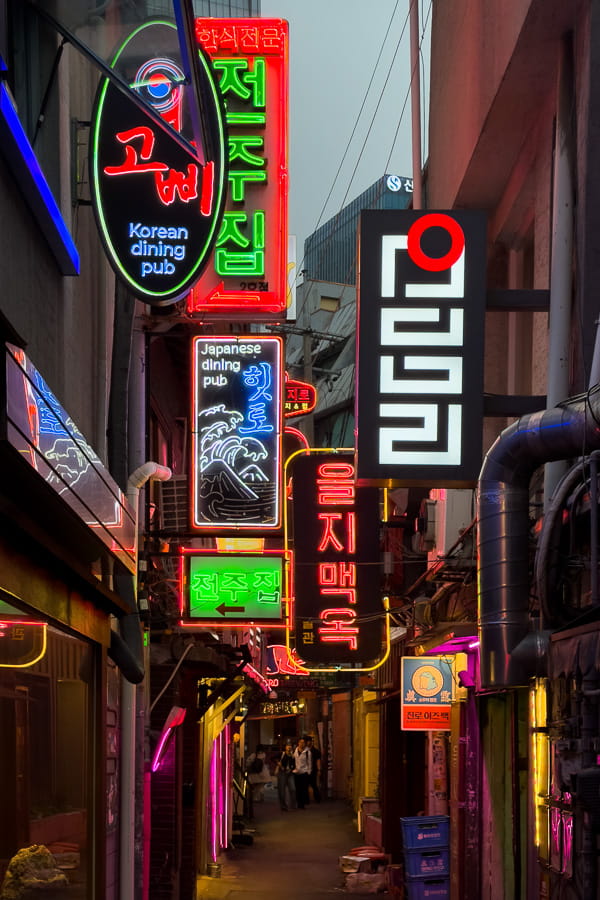
Spend the rest of your evening wandering the side streets and alleyways around Euljiro.
The old printing-shop backstreets are now full of neon-lit bars, cafés and restaurants, and people spill out onto plastic stools on the footpath. It’s grungy and a little bit chaotic, but a lot of fun. Nogari Alley is the area’s best-known drinking street, and makes for an excellent photo spot. Stop in at Euljiro Brewing for a craft beer before calling it a night.
Day 3: Bukchon, Ikseon-dong, Insadong and Gwanghwamun
We woke to beautiful sunshine and clear blue skies, making it the perfect day to explore some of the cultural spots in Seoul. We caught the subway to Anguk station before making our way up the gently sloping road towards Bukchon Hanok Village.
Bukchon Hanok Village
We didn’t make it far from the station before a little window stall, “Garlic Boy”, caught our eye, where we ate delicious warm fluffy bread filled with garlicky goodness. Turns out this is a very popular bakery, with its original location at Gwangjang Market drawing long lines!
Tip: Before exploring Bukchon, you could stop for breakfast at Café Onion Anguk. Set inside a restored 1920s hanok, this popular bakery café is known for its traditional courtyard, wooden interiors and photogenic displays of bread and pastries. The setting is a big part of the appeal, with floor seating in some areas where you can enjoy your coffee overlooking the courtyard. As a bonus, it opens unusually early for Seoul, from 7 am on weekdays and 9 am on weekends.
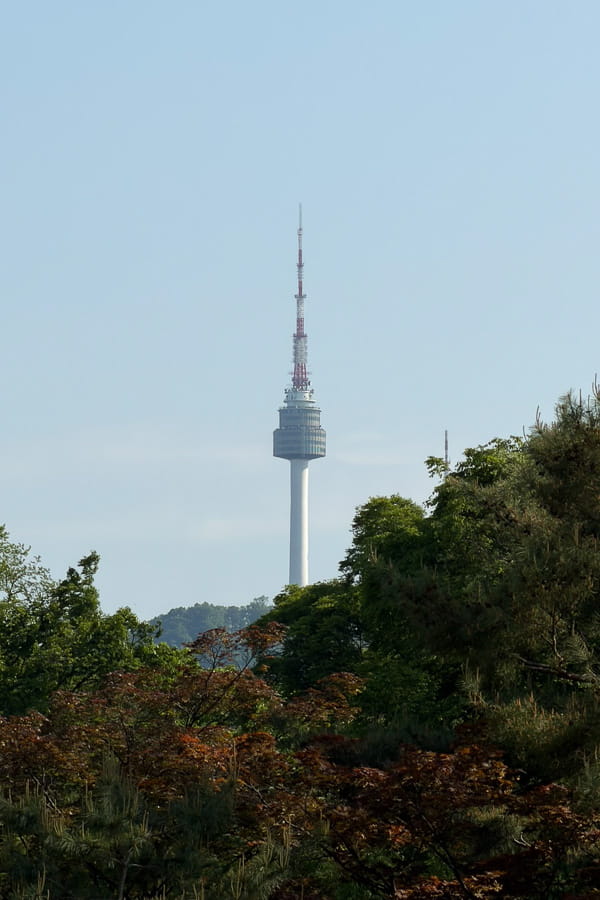
Bukchon Hanok Village is a neighbourhood of traditional Korean houses, with tiled roofs, narrow lanes and glimpses of modern Seoul beyond, including a great view of N Seoul Tower from the top of the sloping street.
If you’ve visited Kyoto, wandering here might remind you of exploring the historic streets around Higashiyama, particularly with visitors dressed in traditional clothing for photos.
But the hanok architecture gives Bukchon a distinctly Korean character, and these are residential streets where people still live. It’s worth taking your time to explore respectfully, although don’t expect to have the popular photo spots to yourself.
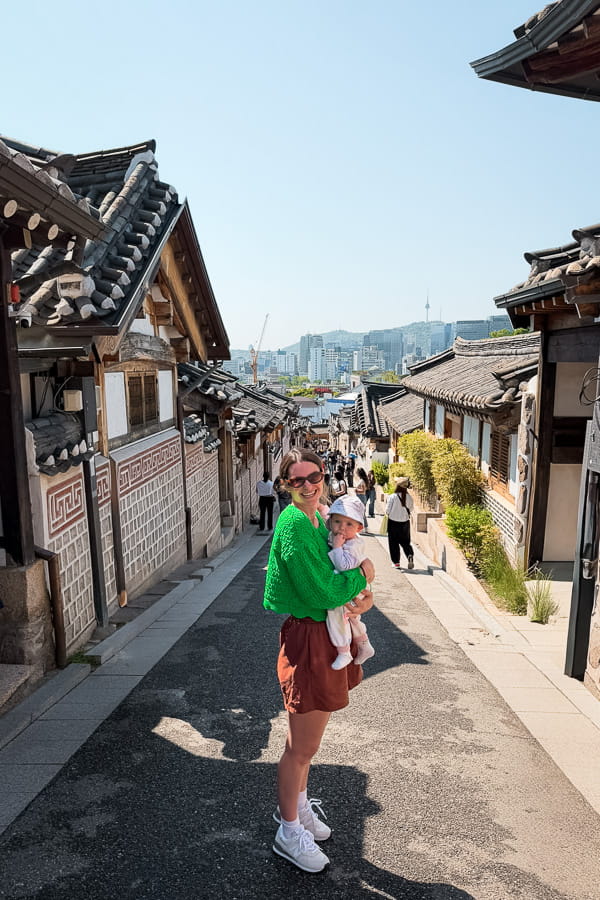
Tourists can only visit the main part of Bukchon Hanok Village between 10 am and 5 pm, because the area is a residential neighbourhood and the number of tourists caused the government to implement visitor restrictions in 2024.
We got there at 9:50 am and stood with a large crowd waiting for 10 am. After walking around and coming back at 10:30 am, the crowds had only slightly thinned out.
Having a set opening time actually seemed to make everyone arrive at once, so arriving at 10 am won’t get you a quiet street.
Good to know: The time restriction applies to the busiest “red zone” streets, and visitors outside these hours can be fined up to KRW 100,000. Residents, business owners and hanok stay guests are exempt.
There are lots of souvenir shops and hanbok rental places in the area.
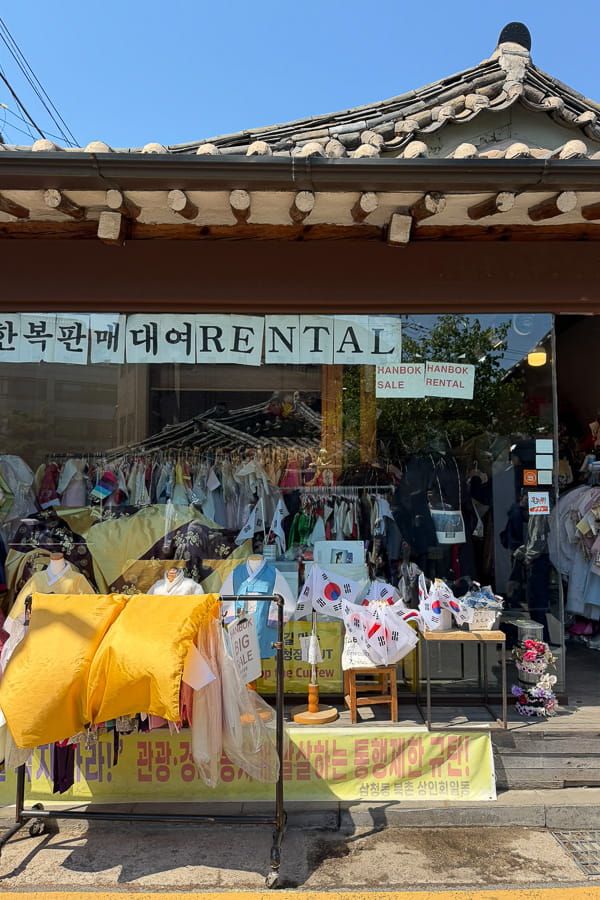
If you’re a tea drinker, Osulloc Tea House is worth a stop while exploring Bukchon. The Korean tea brand is known for its Jeju-grown teas, with tea-based drinks and desserts offering a tempting alternative to another coffee stop.
The Bukchon branch also has large windows overlooking the neighbourhood’s hanok rooftops, giving you a lovely setting for a break between sightseeing. It was still closed when we walked past, so we didn’t get to try it ourselves, but it’s on my list for next time.
Ikseon-dong Hanok Village
We then walked for about 20 minutes to our next stop of the day, the Ikseon-dong Hanok Village. You could spend a few hours just exploring the maze of narrow alleyways, jam-packed with cafes and shops.
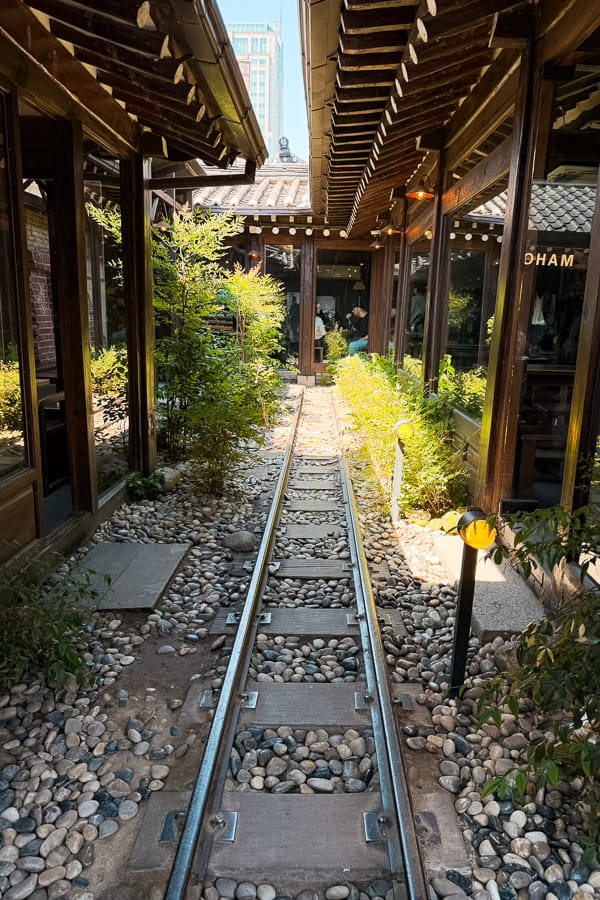
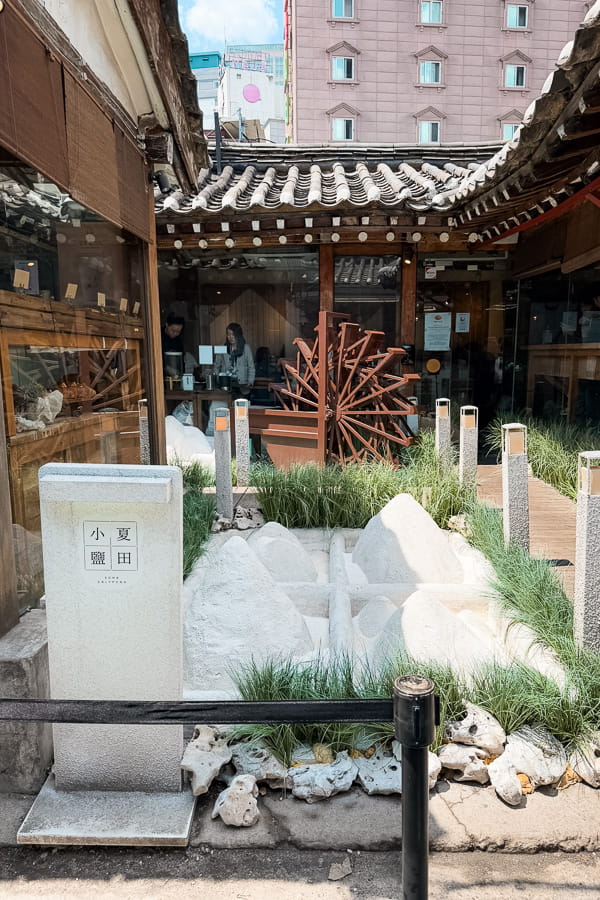
Highlights for us were:
- Nakwon train tracks café: A quirky railway-themed café with old train tracks running through its courtyard
- Soha Salt Pond: A stop to try the viral salt bread, with a little salt pond adding to the café’s character.
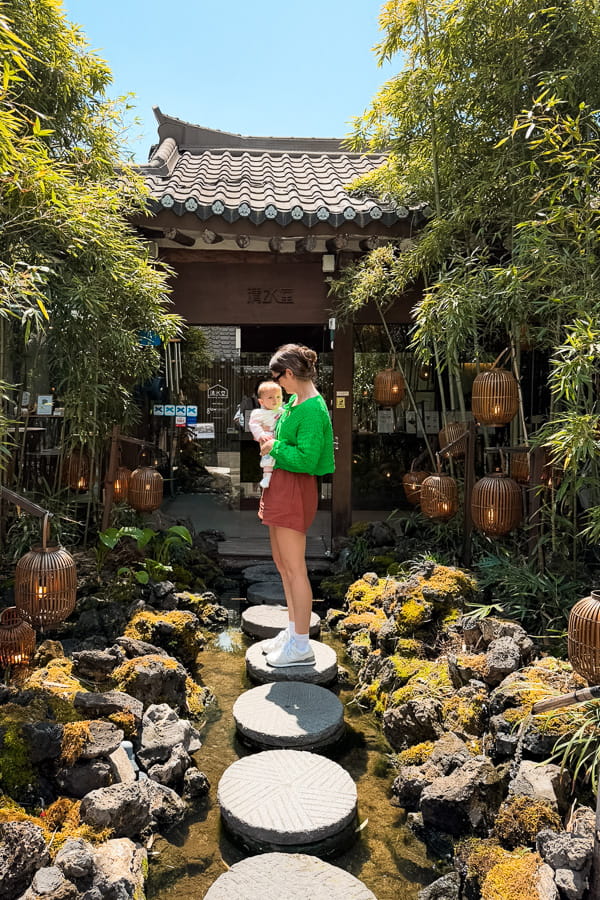
- Cheongsudang Bakery: A beautiful leafy café tucked among the hanok buildings, where we sat down for coffee and tea. The stone steps over a pond, fringed by bamboo trees, made the entrance very memorable!
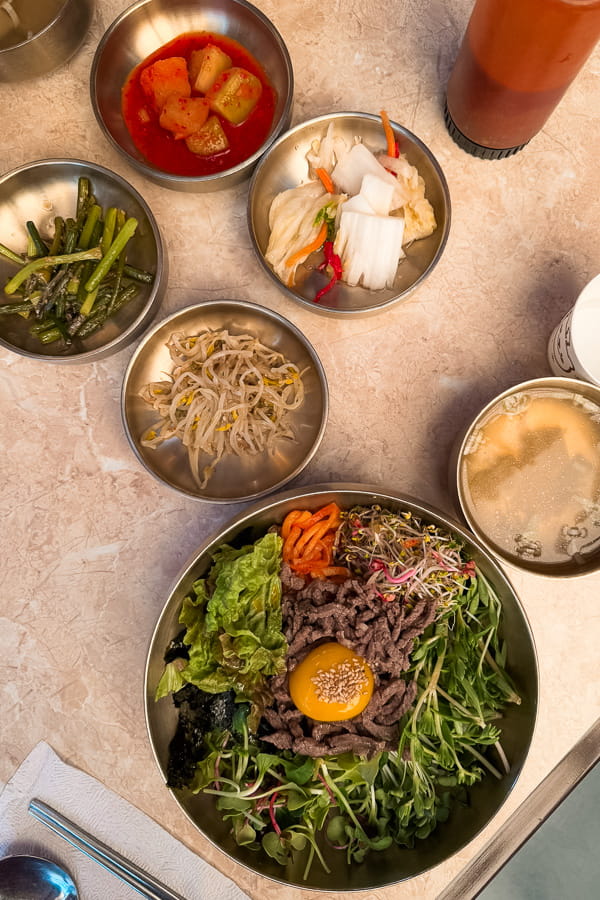
We had bibimbap for lunch at 익선동 연리지 (Yeonliji), where it was very simple to order on an iPad, and we finally tried our first bibimbap in Seoul, a mixed rice bowl topped with an egg.
Insadong and Ssamziegil
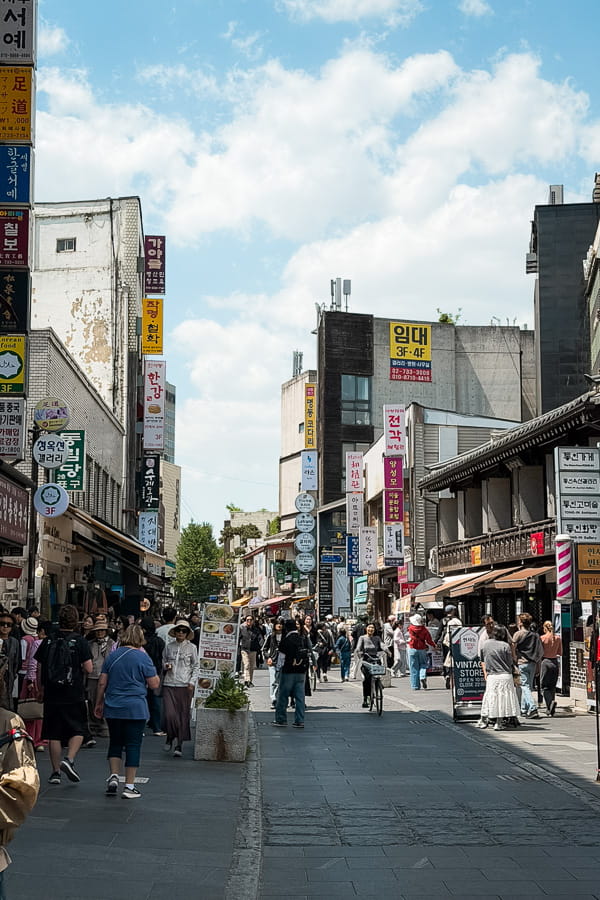
From Ikseon-dong, we walked over to Insadong Culture Street, where the cafés gave way to shops selling crafts, souvenirs and accessories. Insadong is known for traditional Korean arts and crafts, so alongside the souvenir stalls you’ll find galleries, tea houses and shops selling pottery and hanji (traditional Korean paper). The street was closed to cars when we visited, with plenty of people browsing on foot.
Make sure to pop into Ssamziegil, a four-level shopping complex filled with little stores selling cute crafts, knick-knacks and unusual accessories. Instead of stairs, a gently sloping spiral walkway winds up past the shops to a rooftop garden. Many of the shops sell handmade pieces by independent Korean designers. It’s worth a browse if you’re looking for something a little different to take home, or if you simply enjoy poking around small shops.
Nearby Jogyesa Temple is another stop you could add before continuing towards Gwanghwamun Gate. We didn’t visit, but it’s a good option to add to your itinerary, especially if you didn’t make it to Bongeunsa Temple the day before.
Gwanghwamun Gate and the Changing of the Guard
We kept walking (it’s a big step day!) and made it to Gwanghwamun Gate (the main entrance to Gyeongbokgung Palace), arriving just in time to see the Changing of the Guard ceremony.
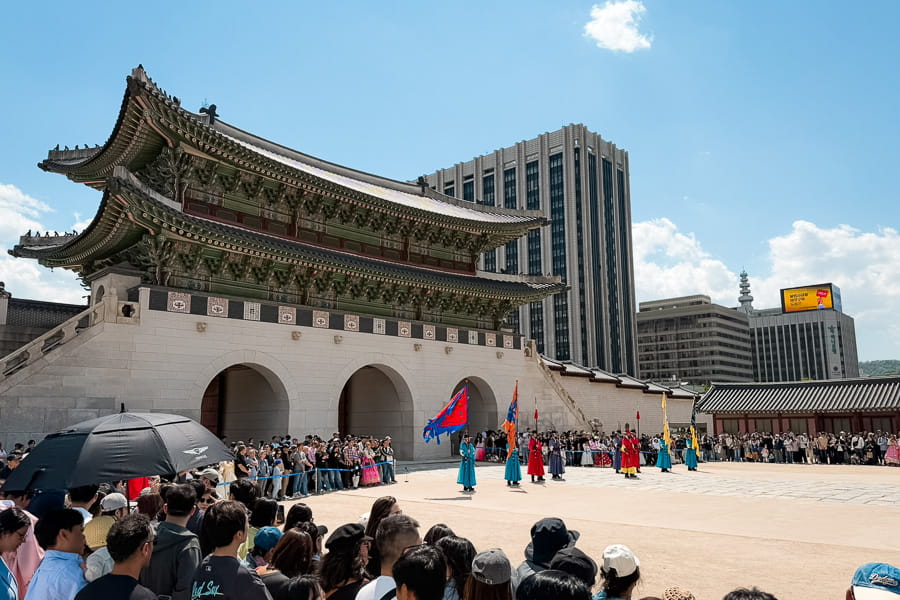
With guards in colourful uniforms, traditional weapons and accompanying music, it’s worth timing your visit to catch the ceremony. I also loved seeing so many visitors dressed in hanbok around the palace grounds.
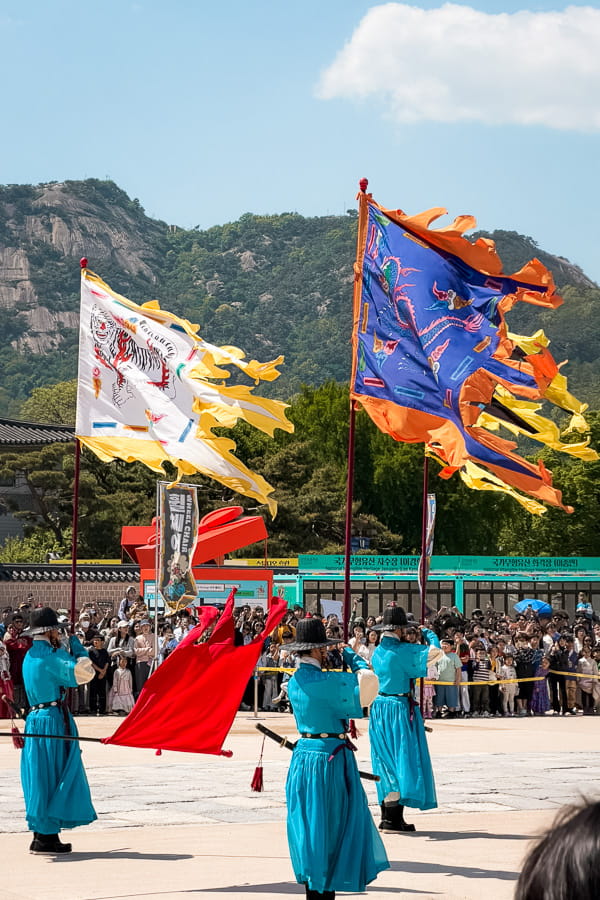
If you’d like to explore Gyeongbokgung Palace afterwards, allow some extra time here (1 – 2 hours).
Good to know: The Royal Guard Changing Ceremony takes place at 10 am and 2 pm, lasts about 20 minutes, and you can watch at the gate without buying a palace admission ticket. There’s no ceremony on Tuesdays, when Gyeongbokgung Palace is closed, and it can be cancelled in bad weather.
After all this, we were knackered after a big day, so we walked around Euljiro near our hotel and ended up at Menchuru Ramen for an easy dinner before calling it a day.
Day 4: Namdaemun Market, Namsan and Hongdae
Namdaemun Market
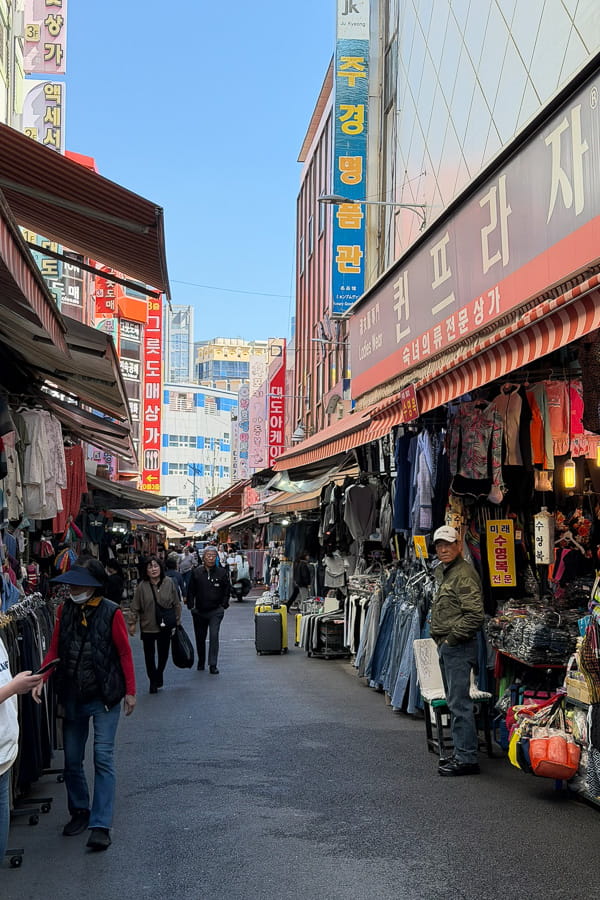
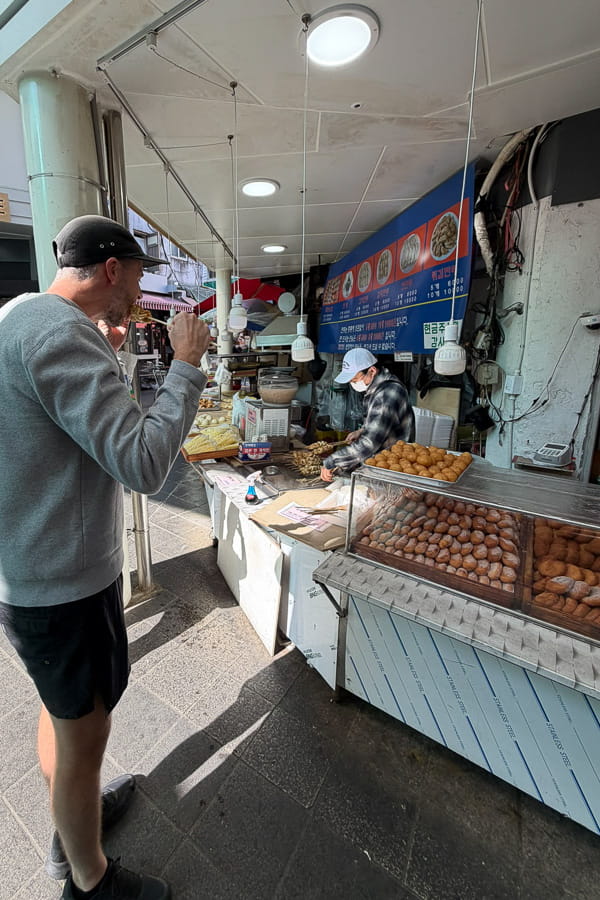
We started the day at Namdaemun Market, which is mostly clothing and accessories stalls, with lots of street food. We tried steamed dumplings, fish cake and sweet fried donuts (the breakfast of champions?) and browsed the clothing stalls (Dane finally bought a new cap after wearing his old one to near death!).
Namsan Cable Car and N Seoul Tower
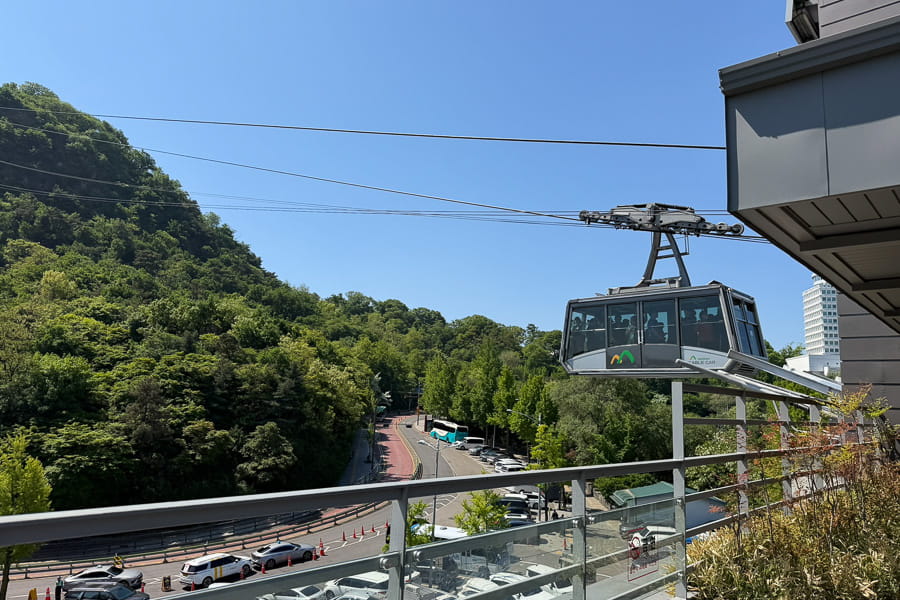
From the market, we walked to the Namsan Cable Car station. We visited on Children’s Day, a public holiday, so it was busy. Go early, especially on weekends and public holidays.
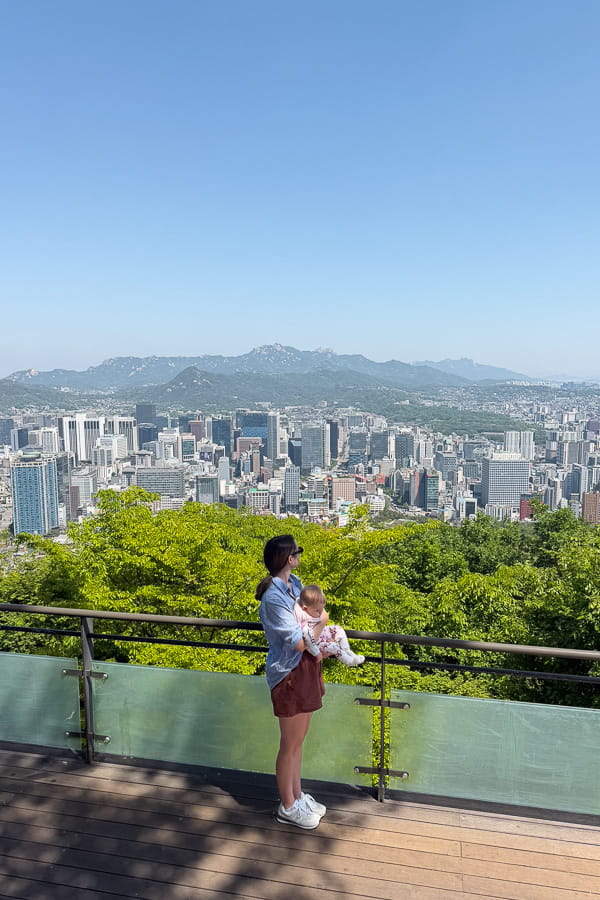
At the top, you’ll find the famous love locks and a great viewpoint over the city and mountains. There are food and drink options around the plaza at the base of the tower.
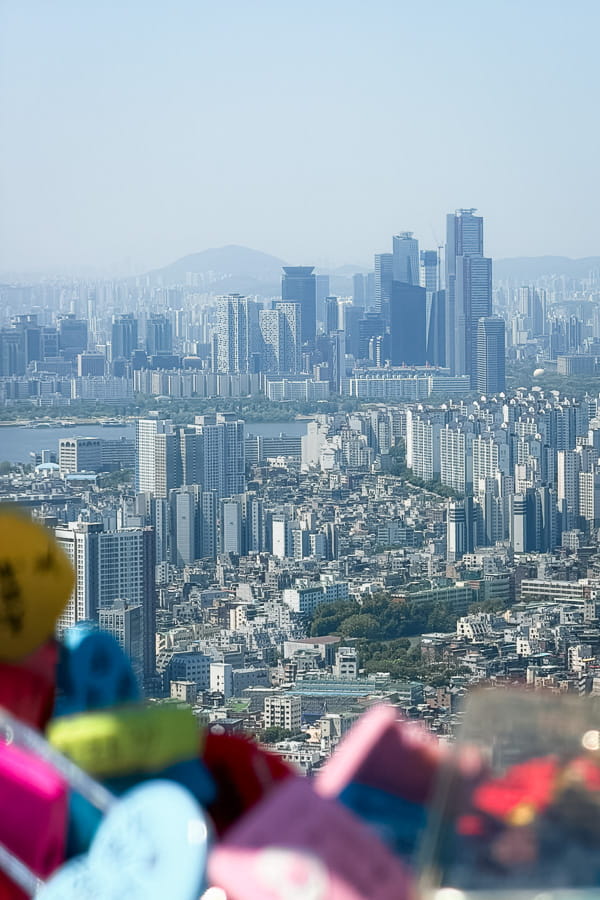
Head to the top of the N Seoul Tower for a spectacular 360-degree view of Seoul; you can purchase observatory tickets in advance here.
Good to know: The cable car runs from 10 am to 11 pm daily. You can purchase a round-trip ticket (KRW 15,000) or a one-way fare (KRW 12,000).
Alternative: Instead of taking the cable car, you can walk the Namsan Northern Forest Trail, or take the cable car one way and walk the other.
Lunch at Myeongdong Kyoja
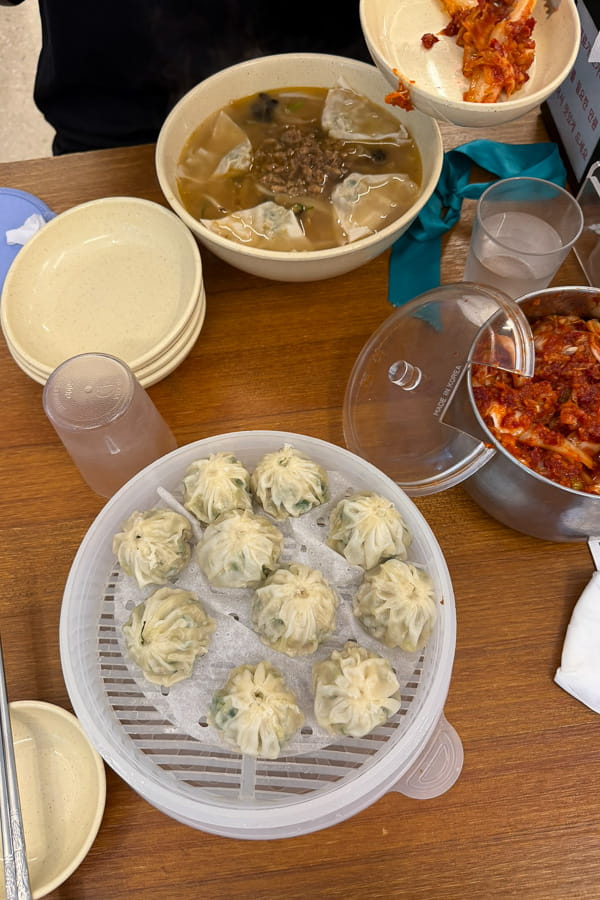
We ordered an Uber and headed back to Myeongdong for lunch at Myeongdong Kyoja, a family-run restaurant that’s been feeding hungry visitors since 1966 and holds a Michelin Bib Gourmand.
It’s best known for kalguksu, a comforting soup with knife-cut wheat noodles, alongside mandu dumplings and its famously garlicky kimchi. The menu is small, making it an easy choice between sightseeing stops. A serving robot delivered the food to our table – a modern touch at this long-established restaurant!
Afternoon and evening in Hongdae
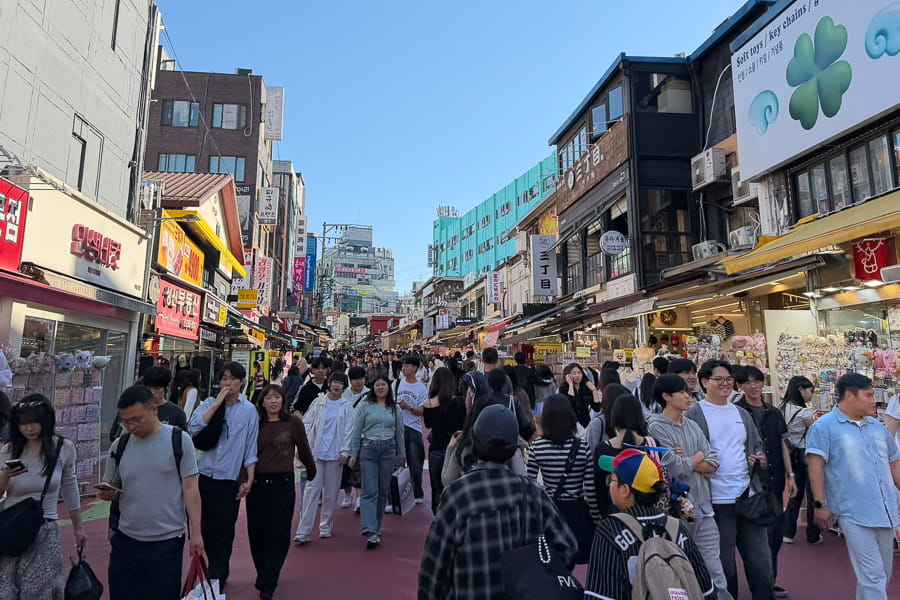
Hongdae is the area around Hongik University, known for its young crowd, street fashion, indie shops and buskers. It has a very different energy from Myeongdong and the palace areas, and it was packed on the public holiday. It felt more reminiscent of Tokyo’s Harajuku to me, with a noticeably younger crowd in the busy streets.
We had Korean BBQ for dinner at Saemaul Restaurant Hongdae Seogyo, followed by a craft beer at ArtMonster.
Keep an eye out for the street performers! We were treated to a K-Pop show after dinner, in the area just opposite the restaurant.
Day 5: Gwangjang Market, Changdeokgung Palace and the Secret Garden
Secret Garden tickets
This day involves some backtracking, but it’s worth it to get tickets to Changdeokgung’s Secret Garden. A separate section of Changdeokgung Palace, visitor numbers are capped, and You must book a timed-entry session.
You’ll need a separate timed-entry ticket for the Secret Garden, alongside admission to Changdeokgung Palace. We went to the ticket office first thing in the morning to secure places for an afternoon tour. You can also reserve online, with bookings opening at 10 am Korean time six days before your visit, but online ticket numbers are limited.
Good to know: You can only visit the Secret Garden on a guided tour. Each tour has 100 places: 50 are sold online from 10 am, six days before the visit date, and the other 50 are sold on the day from 9 am. When we arrived just before 10 am, the 10:30 am English tour had already sold out so we opted for a later afternoon tour.

Double-check in advance; but English tours run at 10:30 am, 11:30 am, 2:30 pm and 3:30 pm from March to November. Tickets cost KRW 5,000 for the garden plus KRW 3,000 for palace entry, and the palace is closed on Mondays. You don’t have to book an English tour; you could join one of the earlier tours in another language, but we opted for English for the full experience.
Tip: After entering the Secret Garden with your tour group, you can do self-guided exploration – following the guide isn’t mandatory.

Gwangjang Market
Gwangjang Market opened in 1905 and is one of Seoul’s oldest and best-known food markets. It’s become somewhat famous thanks to a feature of Gohyang Kalguksu, a stall serving kalguksu that appeared on Netflix’s Street Food: Asia.
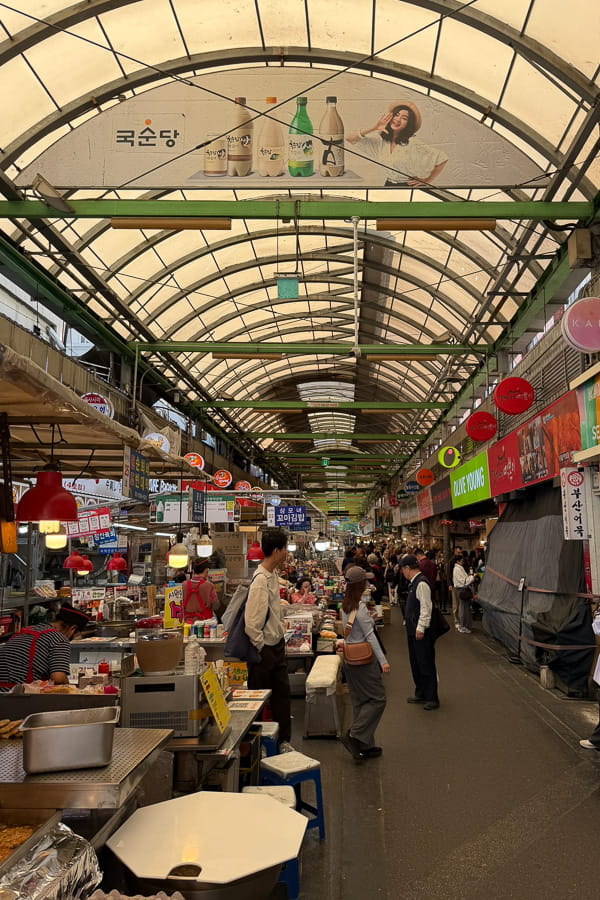
Of course we had to stop by! It wasn’t too busy when we visited just before 11 am, and we were served their famous hand-cut knife noodles by the lady who featured on the show herself.
We also visited the Onion café (sister cafe to the insta-famous Café Onion Anguk) for a coffee and sampled their handmade strawberry jam pie.
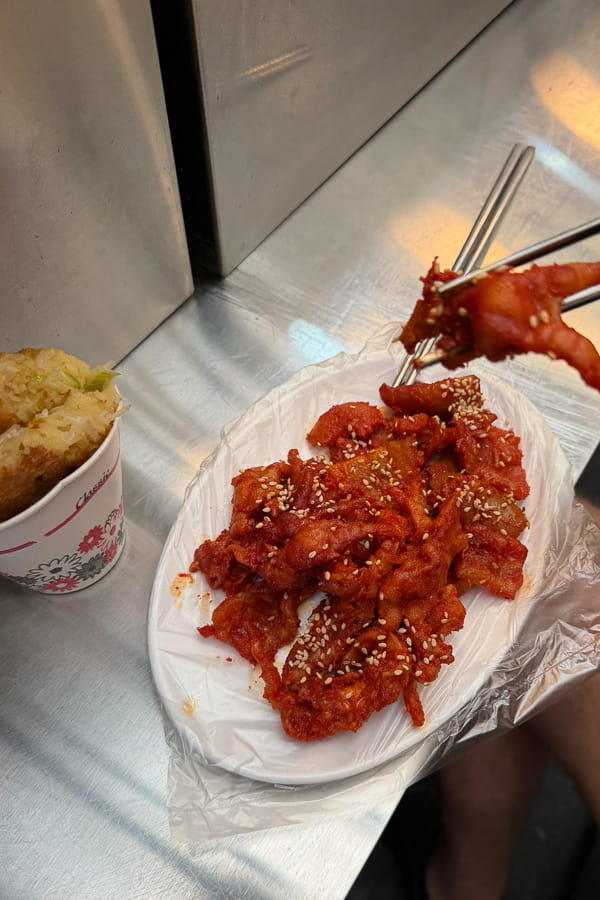
We then walked around and had lots of fun trying a bunch of different things, including:
- Sikhye: a sweet fermented rice drink
- Bindaetteok: mung bean savoury pancakes
- Chicken feet: served cold, and gross! But hey, we had to try it at least once

Optional Detour: Ihwa Mural Village and Naksan Park
If you have a late-afternoon Secret Garden booking and some energy after lunch, consider exploring Ihwa-dong Mural Village and Naksan Park. The village sits below the Naksan section of Seoul’s historic city wall, making it possible to combine colourful alleyways, city views and a short wall walk in one outing.
Start by wandering through Ihwa’s hillside lanes, looking out for murals and small cafés as you climb towards the park. Unfortunately, many of the best-known murals have been painted over, but there are still some to be found.
Continue up to Naksan Park, where viewpoints look out across Seoul’s rooftops. From here, follow a section of the Naksan Fortress Wall Trail, part of the Seoul City Wall, also known as Hanyangdoseong. The old stone walls winding along the hillside, with modern Seoul spreading out below, are the main attraction.
You don’t need to walk the whole trail to enjoy the setting. For this itinerary, I’d explore the village, visit the park’s viewpoints and walk a short section beside the wall before heading back towards Changdeokgung.
We didn’t manage to fit this detour into our own trip this time, so treat it as an optional addition depending on your garden booking and how much walking you feel like doing. Leave plenty of time to return: you’ll still need to walk through the palace grounds to reach the Secret Garden entrance.
The Secret Garden
When it’s time, head to Changdeokgung Palace to visit its Secret Garden. Once a retreat for the royal family, the garden combines ponds, traditional pavilions and wooded paths. It’s worth setting aside time for, especially if you’d like to see a greener side of Seoul’s palace grounds.
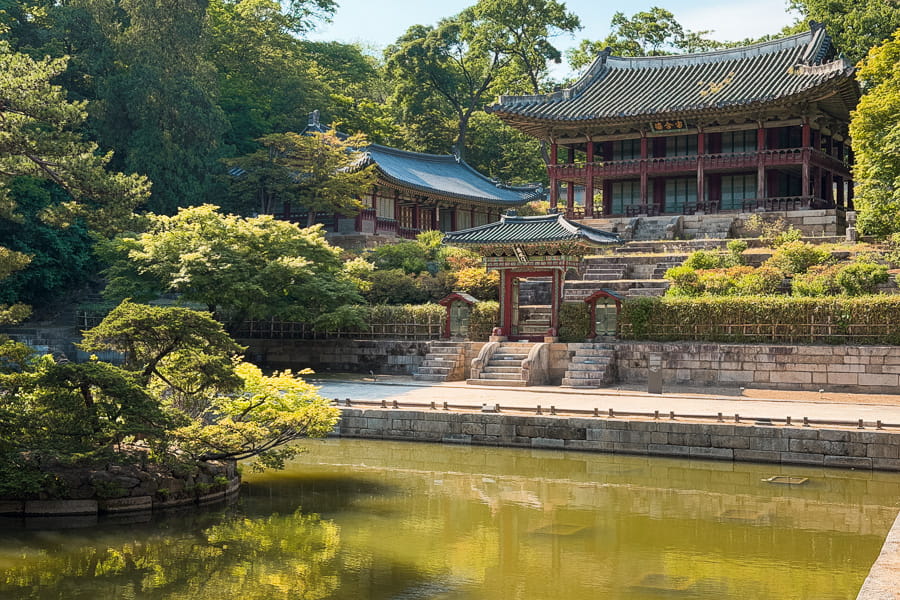
We thought the Secret Garden was well worth visiting. It was beautiful and shady, and the limited visitor numbers made it feel much quieter than the rest of the palace. It was a highlight for us, and well worth the effort to get tickets for.
Tip: Your entry time applies to the garden itself, so don’t arrive at the palace’s main gate at the last minute as we did – we were running a bit late, but luckily they took pity on us travelling with a baby (the reason we were late!) and let us in to catch up with the tour group. Allow at least 15 minutes to walk from the palace’s main gate to the garden entrance, as it is a lengthy walk.
Pre-dinner packet noodles
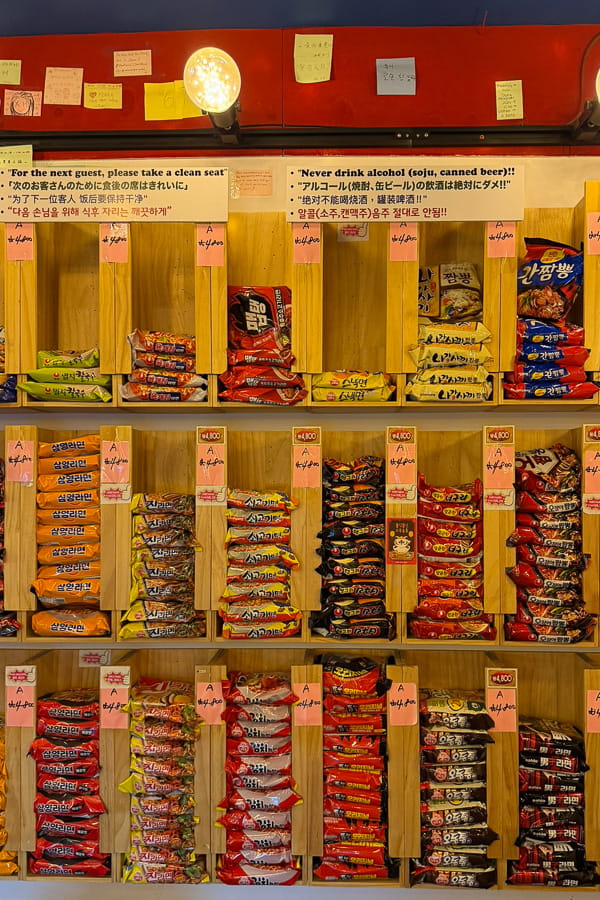
For a pre-dinner snack, we went to 24시 무인라면&카페 in Myeongdong mostly for the novelty: a self-service ramen shop that’s open 24 hours, with walls covered in Post-it notes.
You choose your packet noodles, then add toppings from the fresh self-serve selection. It was a fun novelty that is worth adding to the itinerary! There are a few ramen shops around like this, like CU Ramyun Library in Hongdae.

A final Korean BBQ in Euljiro
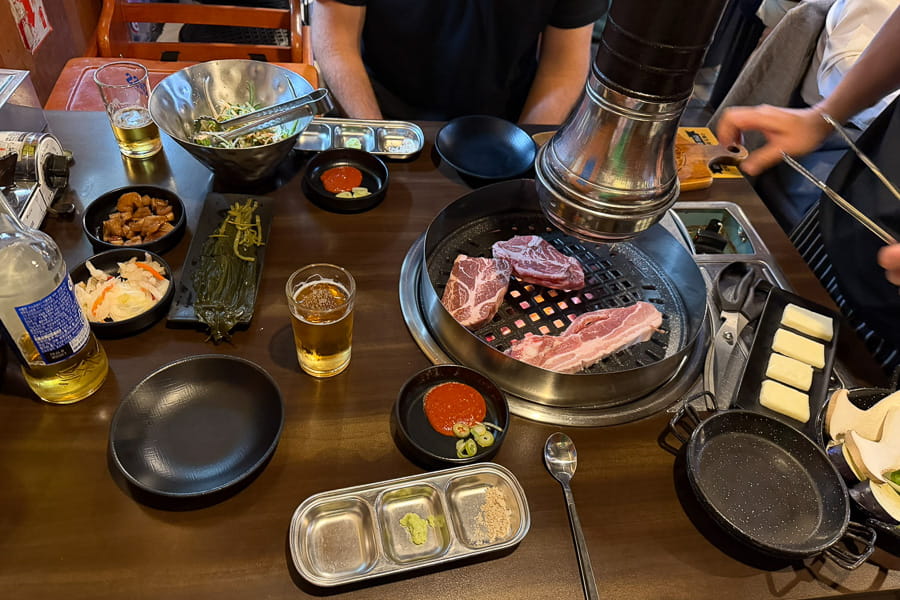
For our final dinner, we had one last Korean BBQ in Euljiro (surprise!) at Suwolga. The staff were very friendly and helped us cook the meat, which was the first time that had happened in five days in Seoul!
The next morning, we took an Uber to the airport and flew to Fukuoka in Japan to start our Kyushu itinerary.
Are 5 Days in Seoul Enough?
5 days in Seoul felt like a good balance to explore the highlights of the city. We managed to see and do just about everything on my list, and we still had some very big days with a lot of steps!
If I had one more day, I would do a day trip from Seoul. These were the ones that were top of my list, had we had more time.
Recommended Day Trips from Seoul
DMZ tour: The most popular option for a day trip from Seoul, the Demilitarised Zone between North and South Korea can only be visited on an organised tour. It makes a fascinating day trip from Seoul, where you can actually view North Korea through binoculars at the top of the observatory towers, so bring your passport, as you’ll need it on the day to enter the military zone.
Nami Island: A small river island known for its tree-lined avenues, which are especially pretty in autumn. It’s an easy day trip from Seoul, and most tours combine it with nearby spots like Petite France, Alpaca World or the Garden of Morning Calm. Here’s my top day tour recommendation.
Eunpyeong Hanok Village: A newer hanok village at the foot of Bukhansan National Park in northwest Seoul. It’s much quieter than Bukchon, and you can easily visit on your own by subway and bus, or join a day tour.
Final Thoughts
Seoul surprised me. Having been to Japan so many times, I expected a lot of similarities. Instead, I found a city with its own energy, and I loved it far more than I expected.
Five days in Seoul gave us time to explore its palaces and traditional neighbourhoods, browse busy shopping streets and fit in plenty of café stops along the way. Between the Korean BBQ dinners, market snacks and seemingly endless bakeries, food ended up shaping much of our itinerary! (Which tends to be a common theme, if you’ve read any of my Japan itineraries).
Five days felt like the bare minimum to see the highlights. Grouping each day by area made a big difference, especially as this was our first overseas trip with our daughter. We moved at a slightly slower pace than we used to, and that meant a few places on my list didn’t make the cut. Naksan Park, Jogyesa Temple, and a DMZ tour are all waiting for next time.
I hope this itinerary has been useful. I’m already plotting how to get back and keep exploring more of South Korea.
If you’re travelling with little ones, my guide to travelling Japan with a baby covers a lot of what worked for us on that trip.