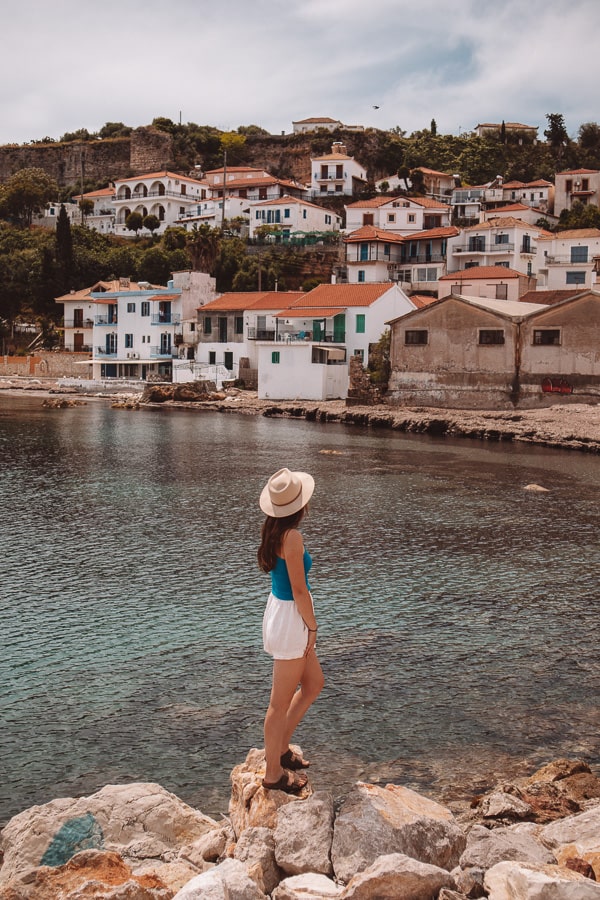
While the majority of overseas tourists flock to busy places in Greece like Santorini, Mykonos and Corfu, just a few hours’ drive from Athens awaits the Peloponnese – an underrated region in Greece teeming with ancient sites, remarkable natural wonders, stunning scenery and charming seaside towns.
And best of all, it comes without the crowds (and price tag!) of the more touristy Greek Islands. The best way to explore the region is on a road trip, Peloponnese style!
Read on for all you need to know to plan your Peloponnese road trip, including suggested itineraries and essential planning tips.
Planning your Peloponnese Road Trip Itinerary: Things to Consider
Best Time to Visit Peloponnese
The best time for a road trip through Peloponnese is from May to November. The weather is at its best, which is important as you’ll be spending a lot of time exploring outdoors. Plus, you’ll want to make the most of the idyllic coastline and stunning beaches in the area.
I went on our Peloponnese road trip in mid-May 2023, during this time we had a mix of beautiful sunny days with a few scattered rainy days (which we were told were unseasonal for this time of the year).
I would avoid peak summer months as temperatures commonly reach 40+ degrees Celsius (104 Fahrenheit), which would make for challenging conditions to explore the famed ancient archaeological sites.
Driving in the Peloponnese
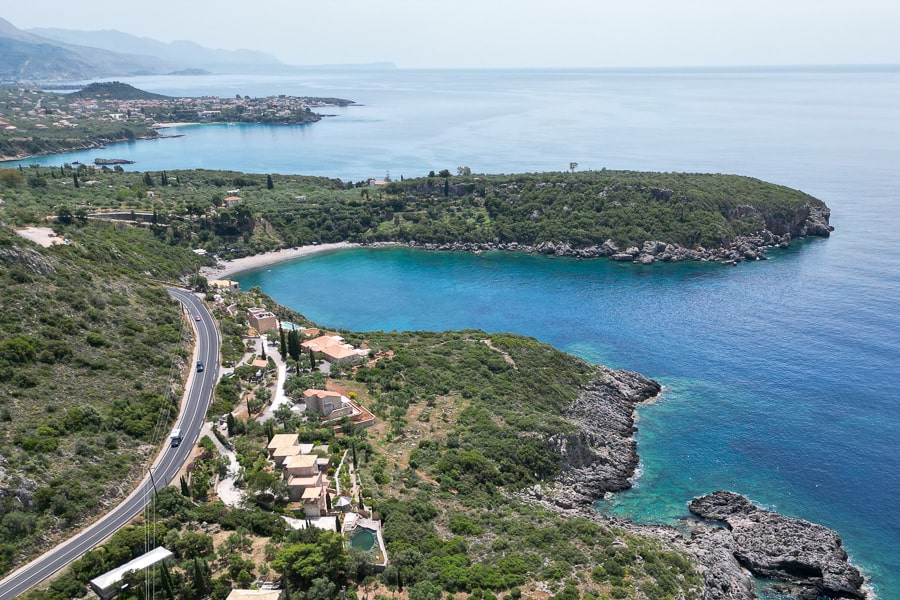
This was our first time driving in Greece, and we were a little bit nervous to begin with! We found the roads were in good condition for the most part, and the toll highways were easy to navigate and drive on.
As the Peloponnese is a mountainous area, there were a lot of windy roads and hills off the main highways. Parking can be challenging in the small towns, so we were thankful we had booked the smallest car possible through Rental Cars. Our car rental booked through Rental Cars cost €28/ day (including an additional €10/day for one-way drop-off).
Tip: We used Discover Cars for all our car hire during our 3 months in Europe. We found they had the largest range of suppliers and were cheaper than any other rental aggregator (including booking directly with the rental company!). Plus, all our bookings came with a free cancellation option.


Despite sticking to the speed limit, we were the slowest on the roads – local drivers don’t stick to the limit, but we were happy for them to overtake us and let us continue at our comfortable pace.
Peloponnese Driving Itinerary – How Many Days Do You Need?
The Peloponnese is a large area – just under 21,500 square kilometres! Our planned Peloponnese travel itinerary was 11 days; however, anywhere from 5 days in Peloponnese up to 2 weeks is doable given the number of things to do and see in the region.
Further below I break down in detail options for both a 7-day and 11-day itinerary – but of course, you can adjust as you see fit if you’d like to spend an extra night in some spots or do a shorter road trip.
This road trip assumes you start from Athens, or Athens International Airport (which offers the largest range of car rental options) as this is where most people will begin their journey from. However, you can start your road trip through the Peloponnese from Kalamata, which is home to its own smaller international airport.
Due to having an event in Kalamata the week before, we started our road trip from Kalamata (having caught the bus from Athens to Kalamata).
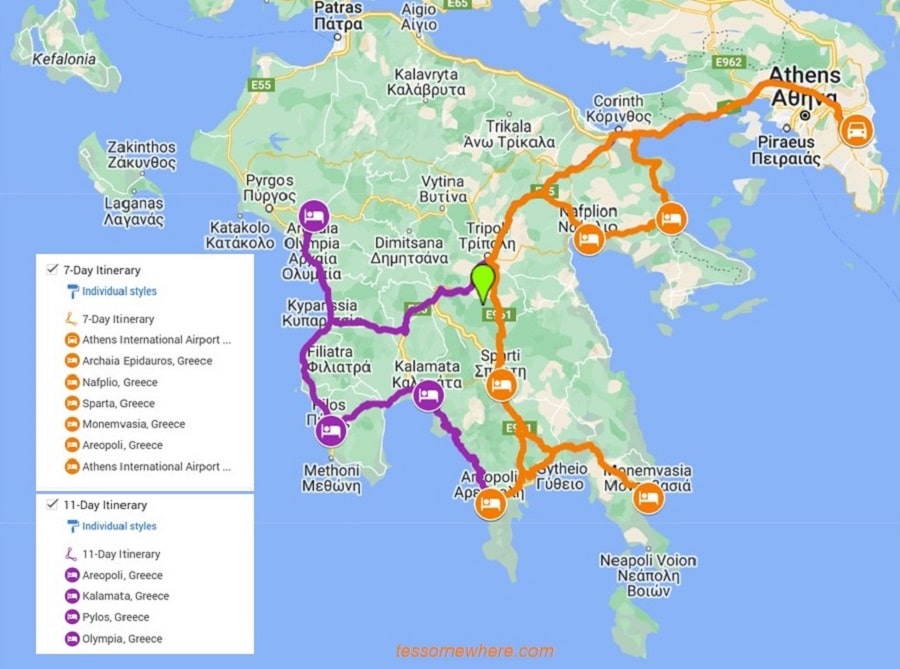
Peloponnese Road Trip Map
Click the map below for a link to an interactive version
Day 1: Athens to Ancient Epidaurus
Driving Time: 2 hours
The first stop on your Peloponnese itinerary is the Sanctuary of Asklepios at Epidaurus, home to the remarkable Ancient Theatre of Epidaurus. The Sanctuary of Asklepios was renowned as a sacred place used for ceremonial medical practices, dating as far back as 2 millennium BC.
Sanctuary of Asklepios & Ancient Theatre of Epidaurus
Regarded as one of the best preserved ancient theatres in Greece, this large theatre is claimed to have incredible acoustics that could reach all 12,000 spectators seated in the theatre.
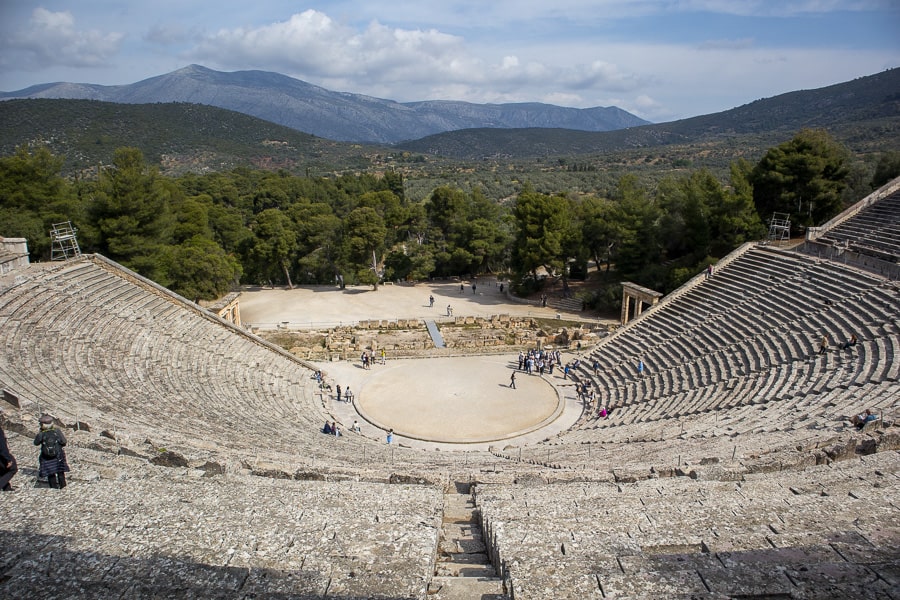
Of course, we had to test it out for ourselves by standing in the middle of the theatre and shouting out to the upper levels – after which, we can attest to the acoustics! The Theatre was used to host festivals that honoured the god of athletic games, as well as musical and dramatic contests.
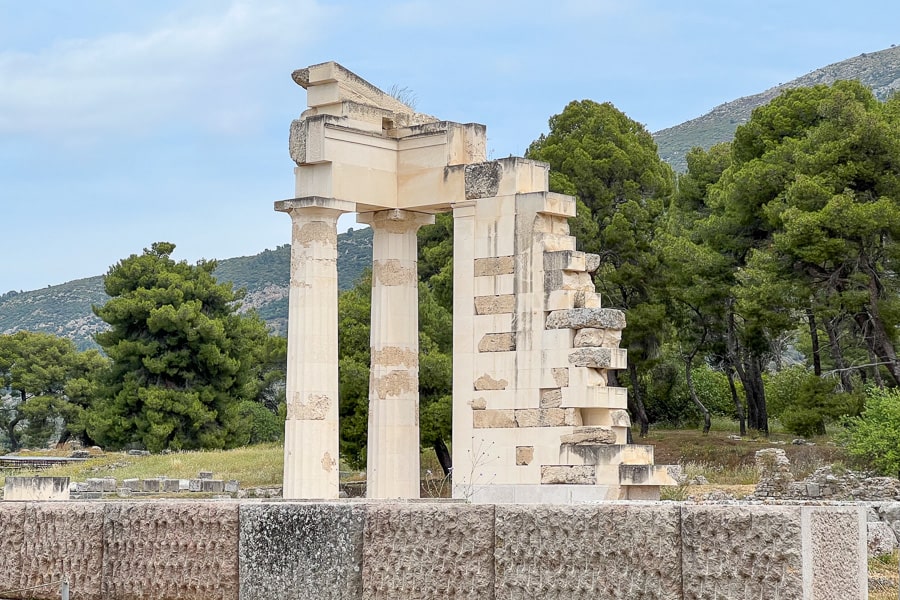
Walk to the peak of the theatre for a stunning view of the surrounding countryside and mountains. Make sure to explore the rest of the archaeological site, which includes a museum, the Temples of Artemis and Asklepios and an ancient stadium.
Ancient Epidaurus
After spending 1-2 hours exploring the Sanctuary of Asklepios, drive for 20 minutes to the charming seaside town of Achaia Epidauros (Ancient Epidaurus). This small fishing village is built around a harbour surrounded by restaurants serving fresh seafood, making a great lunch spot.
We chose to spend the night in Ancient Epidaurus, as we had an exciting activity booked for the next morning. If you prefer, you could also stay in Nafplio for an extra night after exploring Ancient Epidaurus town.
If you’re up for another theatre visit, take the short walk from the harbour to the Little Theatre of Ancient Epidaurus. Afterwards went for a short hike and came across a small, beautiful hidden church nestled on the hillside of the peninsula.
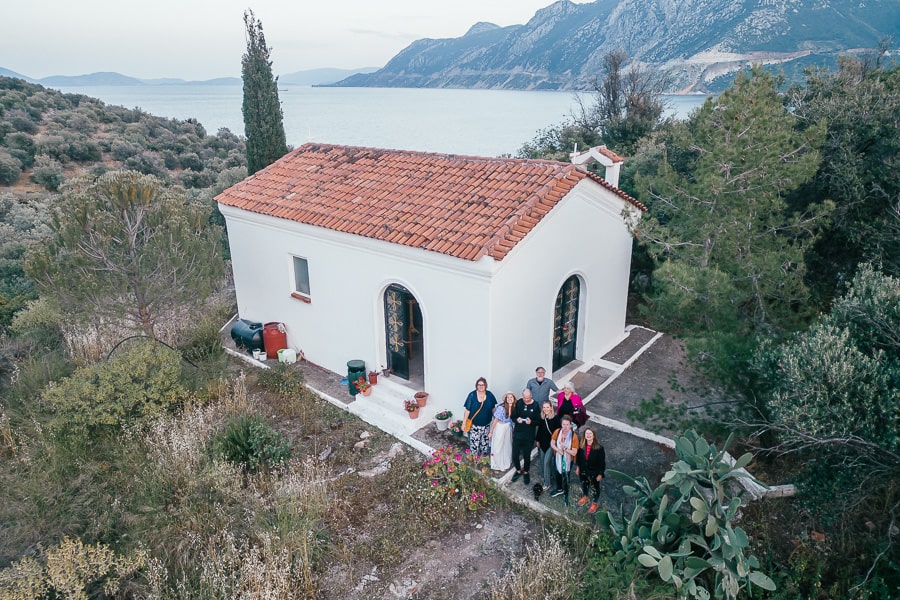
After exploring the peninsula, dinnertime was spent at the local Greek grill tavern, Mpólmpos. If you stroll along the harbourfront, you’ll find several other restaurants to choose from.
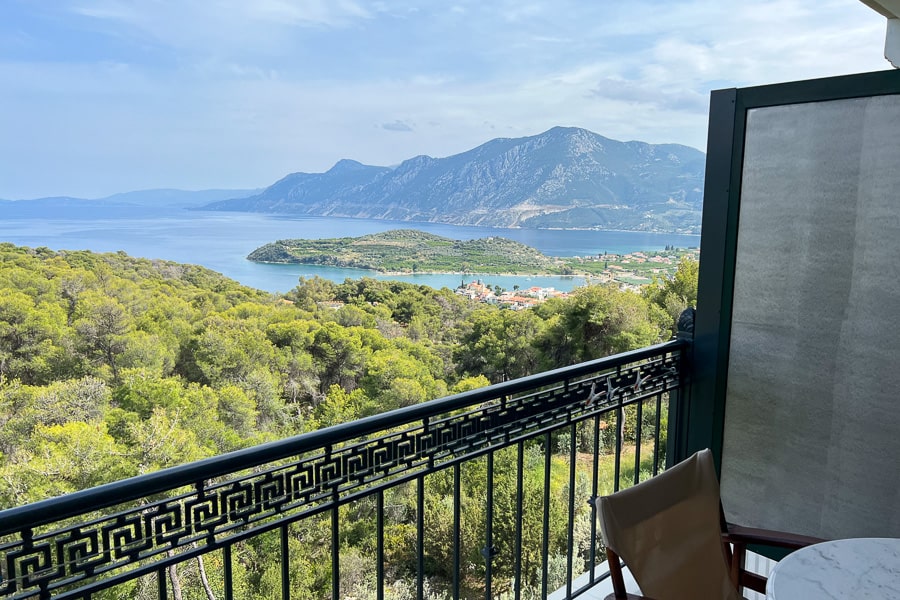
We spent the night at Akron Luxury Holidays, located on the hillside about a 10-minute drive from town. The views from the balcony of the village below were outstanding, as was the view at breakfast.
Where to Stay
- Budget – Epidavros Seascape
Situated a short drive from town, this value-for-money accommodation has an outdoor pool and sea views. - Mid-Range – AKRON Luxury Holidays
Modern rooms with unbeatable views from your balcony overlooking the bay - Luxury – Yialasi Hotel
Featuring panoramic views of the bay, sea and islands with an infinity pool.
Day 2: Ancient Epidaurus to Nafplio
Driving Time: 35 minutes
Sunken City of Ancient Epidaurus
Day two of our Peloponnese road trip begins with exploring the Sunken City of Ancient Epidaurus on a kayak & snorkelling tour. We met our guide down on the beach, and after a short safety briefing, we were off on our tandem kayaks across the bay!
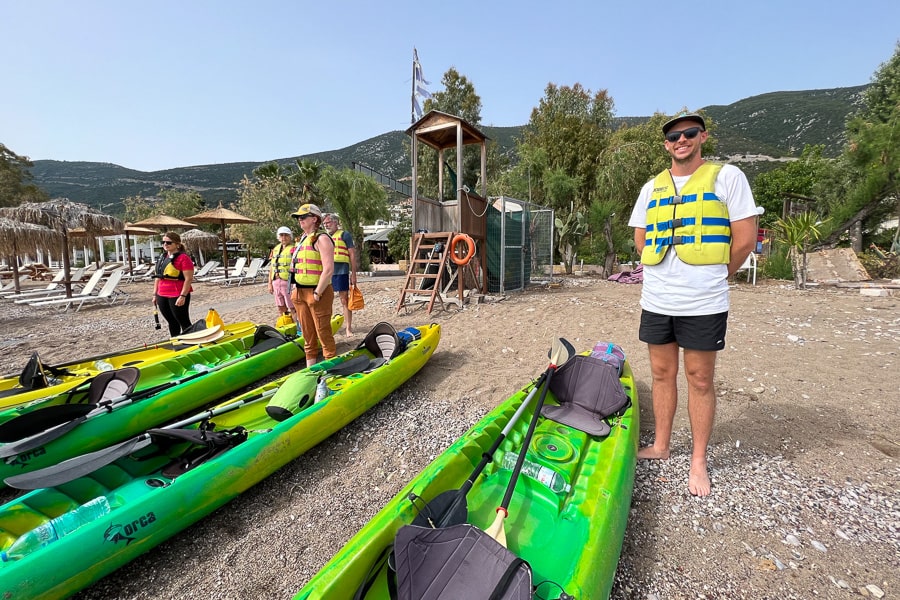
The water was crystal clear and smooth, making for a very cruisy kayak as we headed over to a sea cave, learning about the history of the town along the way. We then paddled our way over to the ancient sunken city. Surprisingly, this spectacular sight was only discovered 50 years ago by observers above in a hot air balloon!
These well-preserved ruins are suspected to be the remains of an ancient Roman villa that was part of a trading settlement, as evidenced by the remains of clay amphoras (used to store trading goods). Kayaking over the ruins, you can see the outlines of the ancient building walls, delineating different rooms of the building.
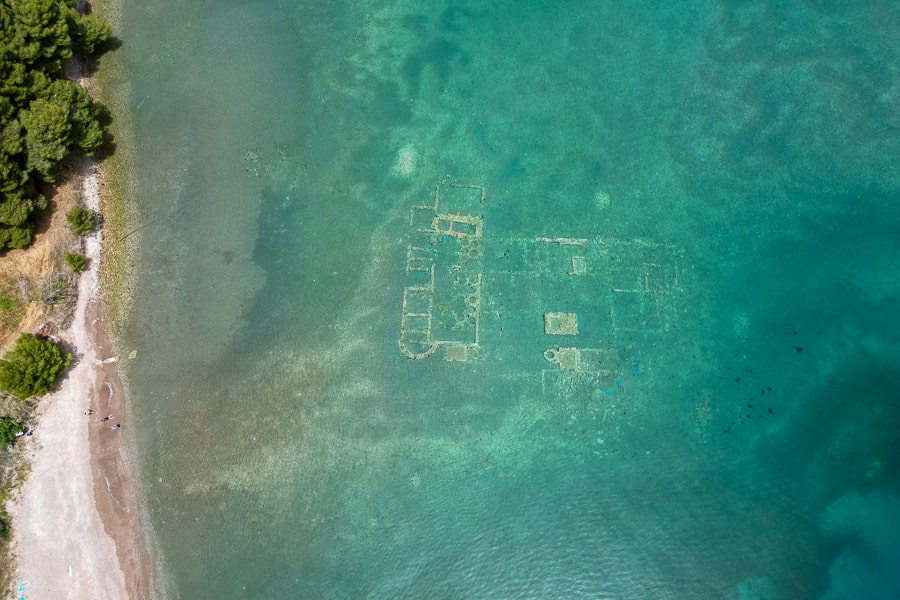
Bringing our kayaks to shore nearby, we were given masks and snorkels to swim out over the ruins, offering another unique perspective of the underwater city. If you don’t join an organised tour, watch out for the many sea urchins which cover the shallows near the ruins. Water shoes are highly recommended!
Nafplio
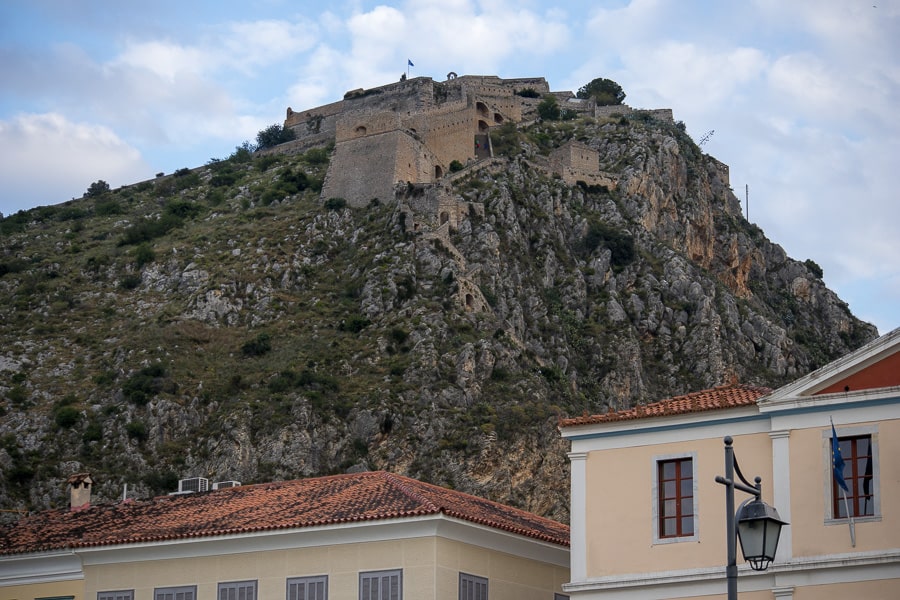
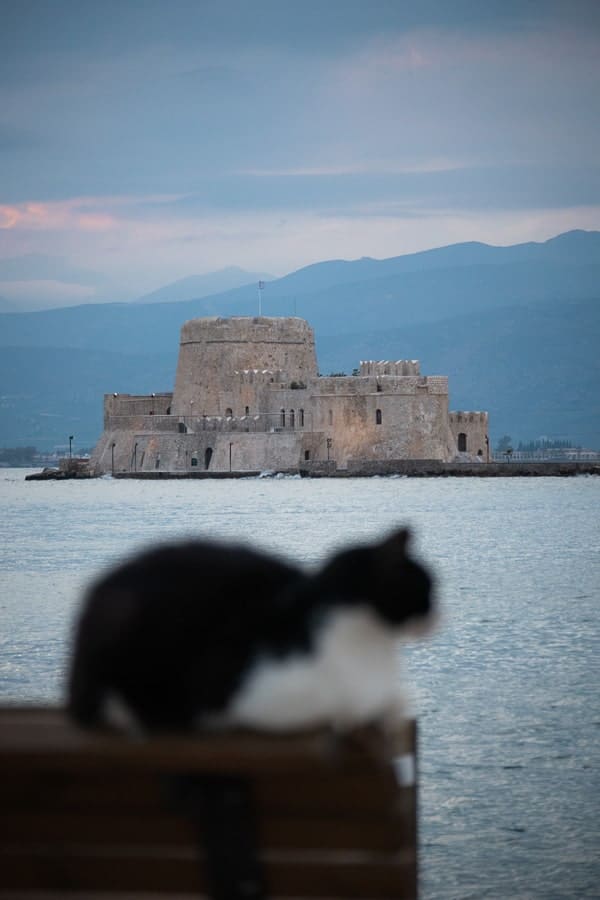
It’s time to continue your journey onto Nafplio, another coastal town teeming with rich history, picturesque architecture and stunning coastal views. Upon nearing the town, you’ll immediately notice the towering Palamidi Fortress, situated on the hillside above the town.
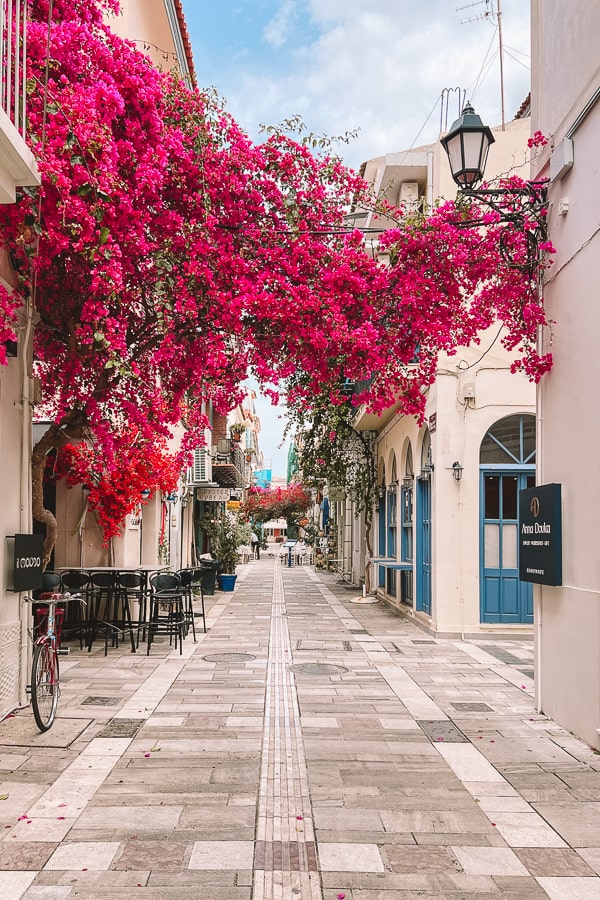
As for the town itself, Nafplio is considered one of Greece’s most romantic cities due to its cobblestoned streets, vibrant pink bougainvillea scattering walls and colourful Venetian architecture.
Nafplio Walking Tour
We began our afternoon in Nafplio on a walking tour with a local guide to learn about the fascinating history of the town. We wandered small alleyways, visited a surprising replica of Da Vinci’s Last Supper in an unsuspecting church, and saw bullet holes from a famous political assassination from two centuries ago.
This tour was a fantastic way to learn more about Nafplio, the first capital of modern Greece.
Palamidi Fortress
Before departing Nafplio, make sure to spend at least a couple of hours exploring Palamidi Fortress – it offers one of the best viewpoints of Nafplio! Whilst you can drive to the entrance on top of the hill, there is a walking path from town… but be warned, the 900-odd steps are challenging!
The fortress is a stunningly preserved example of a fortress stronghold built to protect the town below. It was built by the Venetians in the 18th century, but shortly after was conquered by the Ottomans.
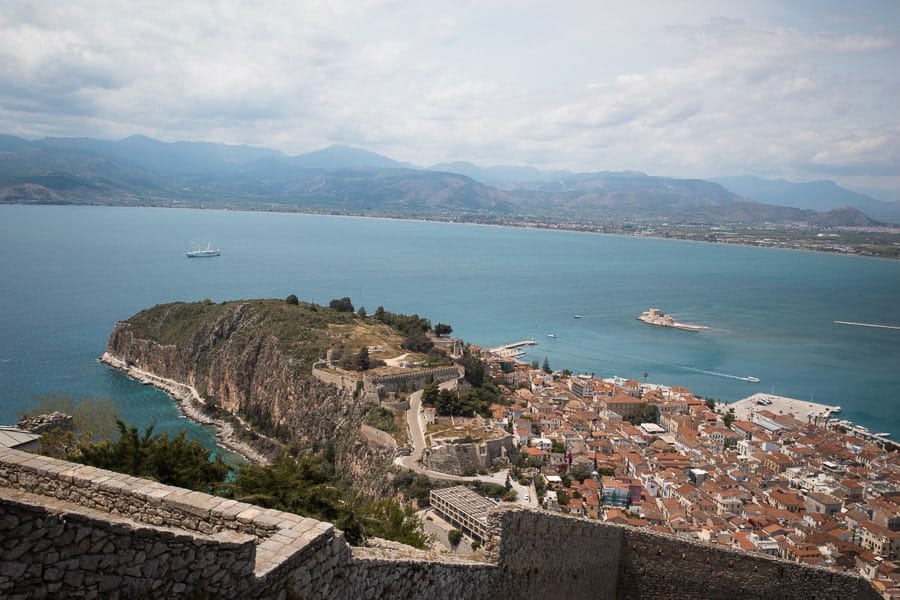
Once inside the fortress, you’ll be surprised at how big the entire complex is. There are many passageways and different areas to explore – not all are well-signed so it’s worth wandering and getting a little lost to see where you end up.
Head to the westernmost fortress wall for the best view of Nafplio town and Bourtzi Castle in the middle of the harbour.
Other Things to Do in Nafplio
Check out some more ideas below for interesting and unique activities to do in Nafplio.
Where to Eat
- We had the most incredible modern Greek lunch with paired wines at 3 Sixty Restaurant. Bookings are recommended for this highly-rated restaurant in the hotel of 3 Sixty.
- There are many seafood restaurants along the harbourfront street “Boumpoulinas”. Check out Arapakos or The Nest.
Where to Stay
- Budget – Agamemnon Hotel
On the edge of the old town, this affordable three-star hotel has rooms with sea views of the Bourtzi. - Mid-Range – Kastello Hotel or Xenon Inn
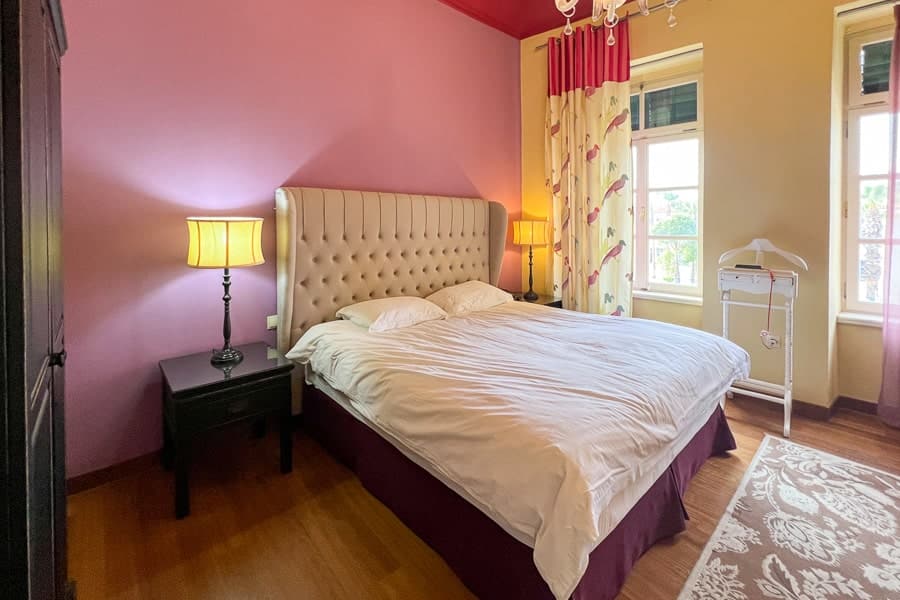
We stayed in Kastello Hotel, right on the main square in the old town. The rooms were charming, we had a huge junior suite with a separate living room! Some of the rooms have a view of the Palamidi Fortress. Note this is an older-style accommodation without a lift. Another great option nearby is the Xenon Inn – some of our friends stayed here and had rave reviews. - Luxury – 3 Sixty Hotel & Suites
One of the most highly rated hotels in Nafplio Old Town, with comfortable rooms in a beautifully renovated neoclassical hotel.
Day 3: Nafplio to Sparta & Mystras
Driving time: 2 hours
Today you’ll be making your way to the legendary city of Sparta, stopping by one of Greece’s most famous and important archaeological sites along the way, Mycenae.
Mycenae
From Nafplio, it is a 30-minute drive to the fascinating Mycenae. The ruins of this ancient city were one of the major centres of the Mycenaean civilisation, flourishing between the 15th and 12th centuries BC (making it over 3500 years old!). It is renowned for its sprawling fortified citadel, impressive walls and grand Lion Gate.
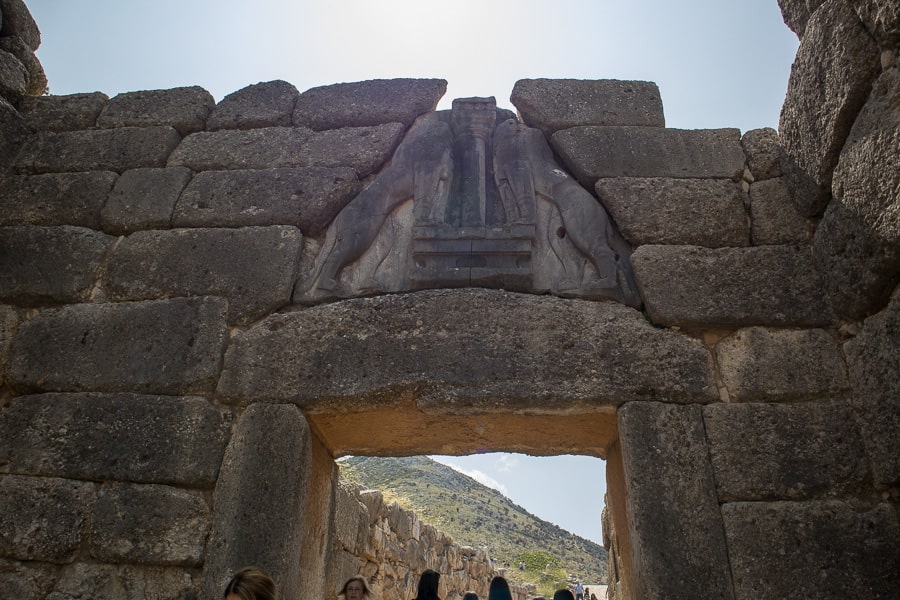
According to Greek mythology, Mycenae was founded by Perseus. It later became the seat of the powerful King Agamemnon, who led the Greeks in the Trojan War.
Archaeological excavations at Mycenae, led by Heinrich Schliemann in the 19th century, unearthed remarkable artefacts, including golden death masks, weapons, pottery, and tombs from two major grave sites located at the complex.
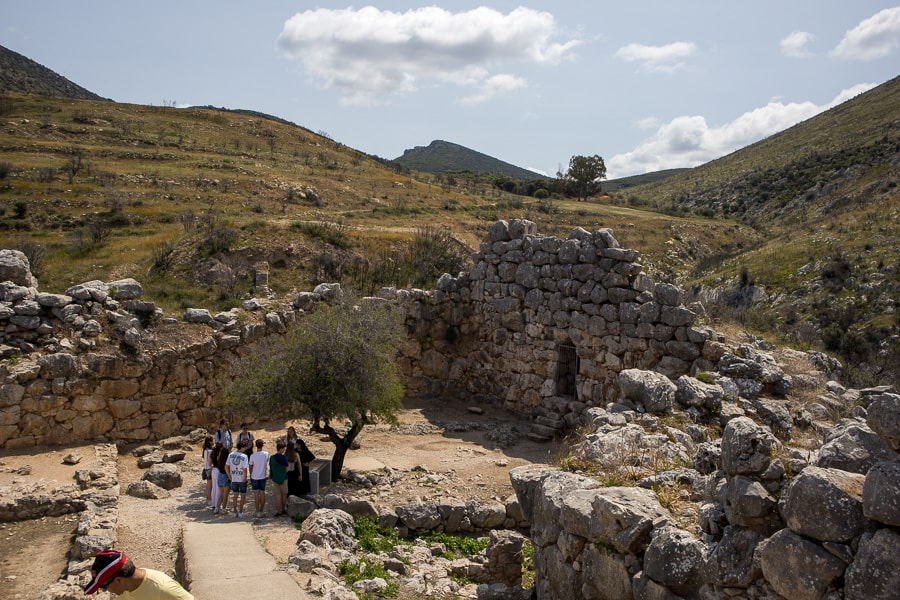
Luckily, we had visited the National Archaeological Museum in Athens the week before, where many of the artefacts recovered are kept on display. There is a small museum on-site at the archaeological site that is included in your ticket cost that displays some of these discoveries.
Tip: After touring Mycenae, use your ticket to enter the beehive-shaped Tomb of Agamemnon down the road. This will only add 15 minutes to your visit but is well worth the quick visit!
The architectural wonders and historical significance have earned Mycenae recognition as a UNESCO World Heritage Site. Being so close to Athens, it attracts thousands of domestic and foreign tourists alike – it is worth visiting early to beat the crowds and avoid the worst of the heat in summer.
Pre-purchase your skip-the-line ticket here
Sparta & Mystras
Departing Mycenae, continue to the city of Sparta (1.5-hour drive).
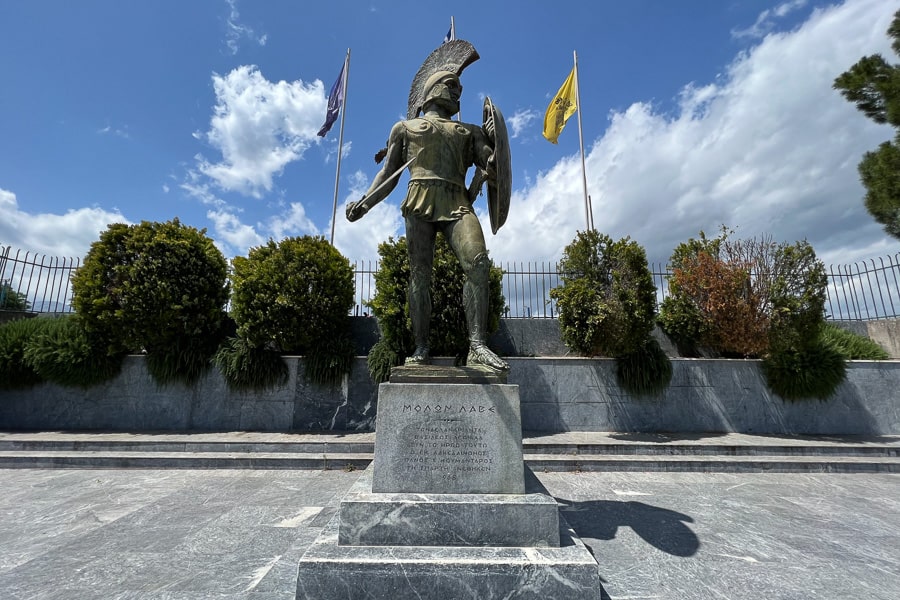
We chose to stay in Sparta as it was close to Mystras, and accommodation was more affordable when booking last minute. Despite the legends and interesting history behind the Spartan empire, the modern-day city isn’t as exciting as one might expect.
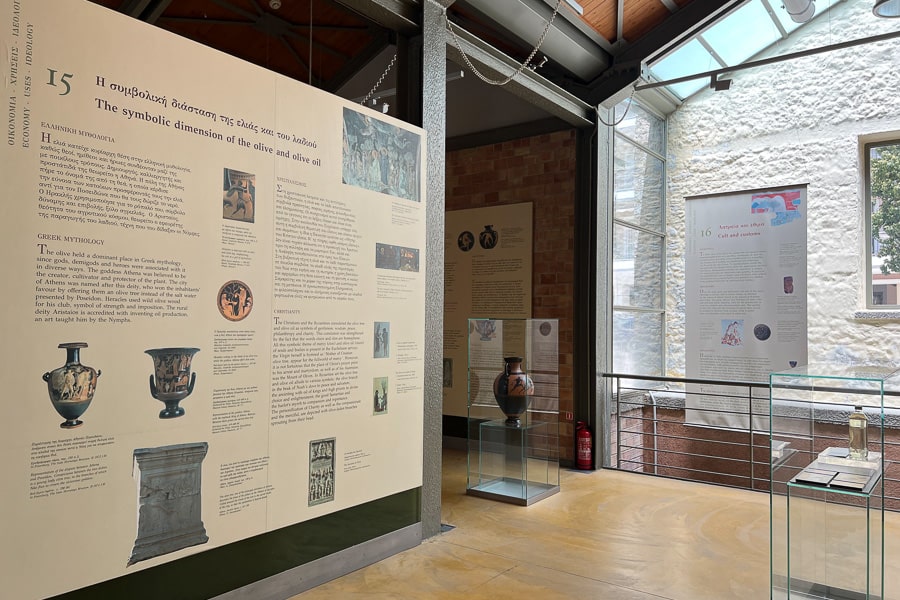
However, an unexpected gem worth visiting in the city is the Museum of the Olive and Greek Olive Oil. The modern museum was fascinating, with extensive information and interactive displays detailing the culture, history and technology of olive oil production in Greece. Plus, tickets are only €4! (as at May 2023).
If you are staying in Mystras, it’s worth stopping on the way.
Where to Stay:
- Budget (Sparta) – Hamaretou Apartment
We spent our 1-night in Sparti in this renovated modern apartment with a full kitchen and thought it was fantastic value-for-money accommodation with self-check-in. - Mid-Range (Sparta) – Menelaion Hotel
A renovated hotel in the centre of Sparta with a swimming pool - Mid-Range (Mystras) – Pyrgos of Mystras
A small luxury hotel and former mansion with charming guest rooms - Luxury (Mystras) – Euphoria Retreat
Day 4: Mystras to Monemvasia
Driving time: 1.5 hours
Today you will be visiting the Archaeological Site of Mystras before making your way to Monemvasia.
Archaeological Site of Mystras
I hadn’t heard of Mystras before beginning to plan our road trip, but my Greek mythology-loving husband was adamant we needed to visit – and he was right.
Mystras is like no other archaeological site we visited during our one month in Greece – it truly looks like something out of a mediaeval fairy tale. The UNESCO World Heritage Site stretches across the hillside, with crumbling vine-covered ruins, remnants of palaces and impressive churches and even a working monastery.
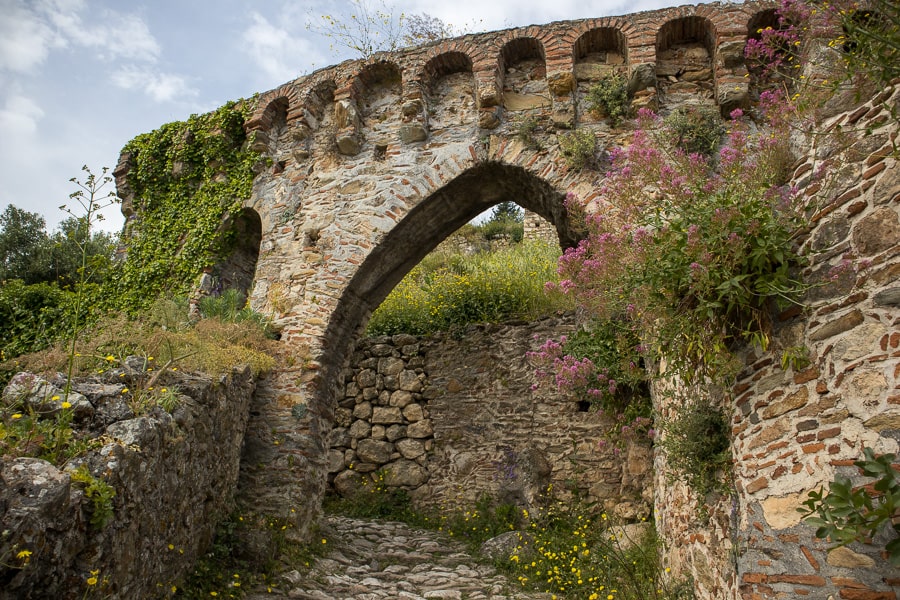
As you wander through the remnants of this once-thriving Byzantine-era city, you feel transported back to another age entirely.
Beginning at the entrance of the site at the bottom of the hill, slowly work your way upwards as you explore the winding narrow streets, stopping to read the informative plaques detailing the history and workings of the city.
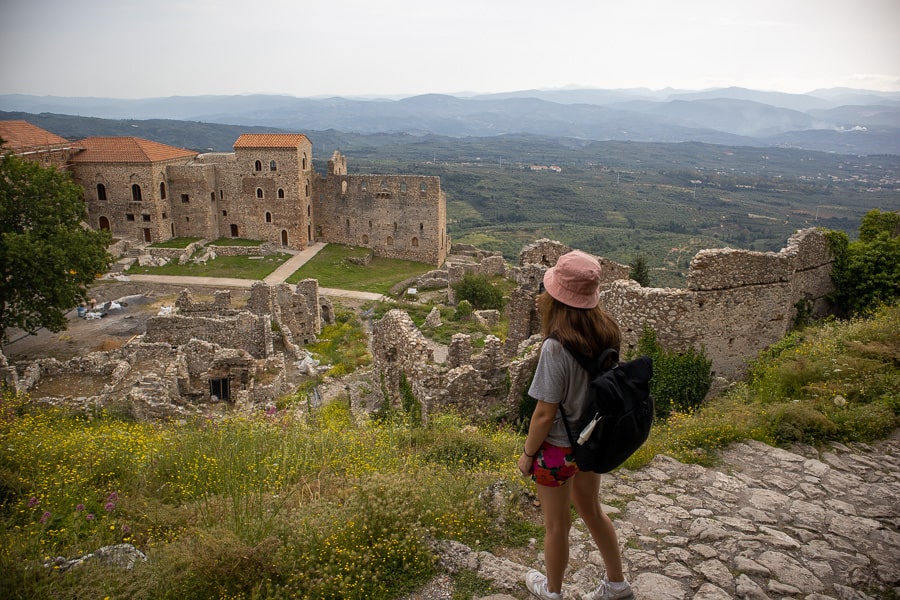
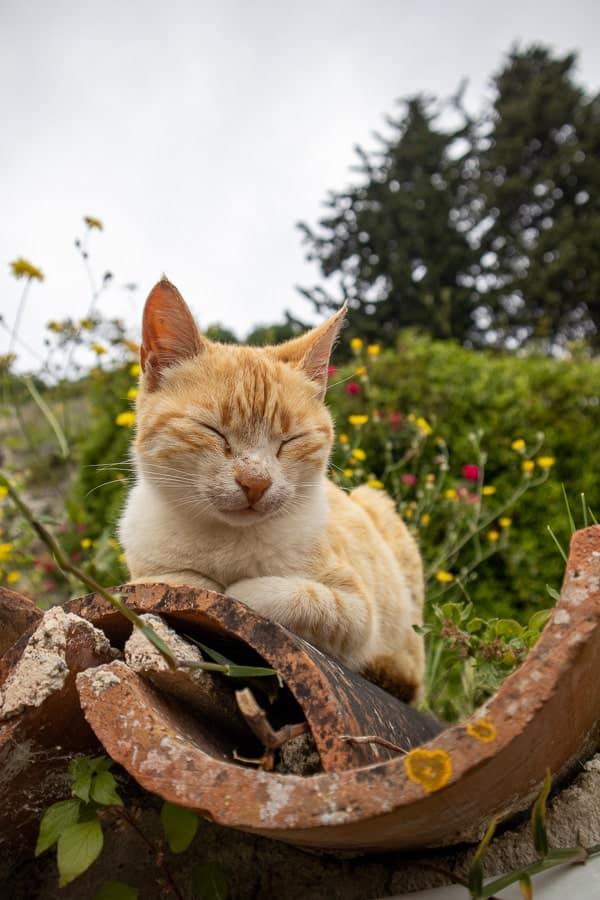
The highlights of our visit included the Pantanassa Holy Convent (look out for the friendly cats of the monastery!), the Holy Church of Agia Sophia and the Castle ruins at the very top of the hill. Here, you are treated to a panoramic view of the valley below and glimpses of distant mountainous ranges.
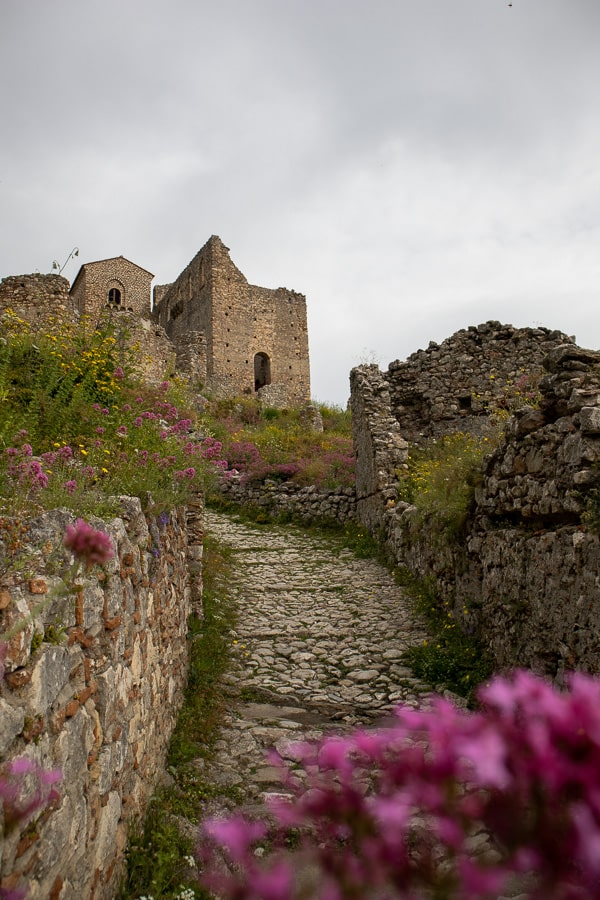
Plan to spend a few hours exploring the site. A friend recommended lunch at Chromata, on the hillside near Mystras. Unfortunately, it was closed when we stopped by, but we had a lovely lunch at a restaurant nearby called Skreka under their delightful alfresco.
The drive from Mystras to Monemvasia is fairly nondescript, but there is one very worthwhile stop on the way.
Monemvasia Winery
We pulled into this local winery on a whim on our way to Monemvasia, proving to be a very worthwhile decision.
This family-owned and operated winery set out to revive the grape used to make a local sweet white wine, the Malvasia. During Ottoman rule in the 16th century, the vineyards growing the Malvasia grape were destroyed, and all production ceased. After 12 years of effort, in 2010 Monemvasia Winery received the label of Protected Designation of Origin and in 2013, bottled its first Malvasia wine.
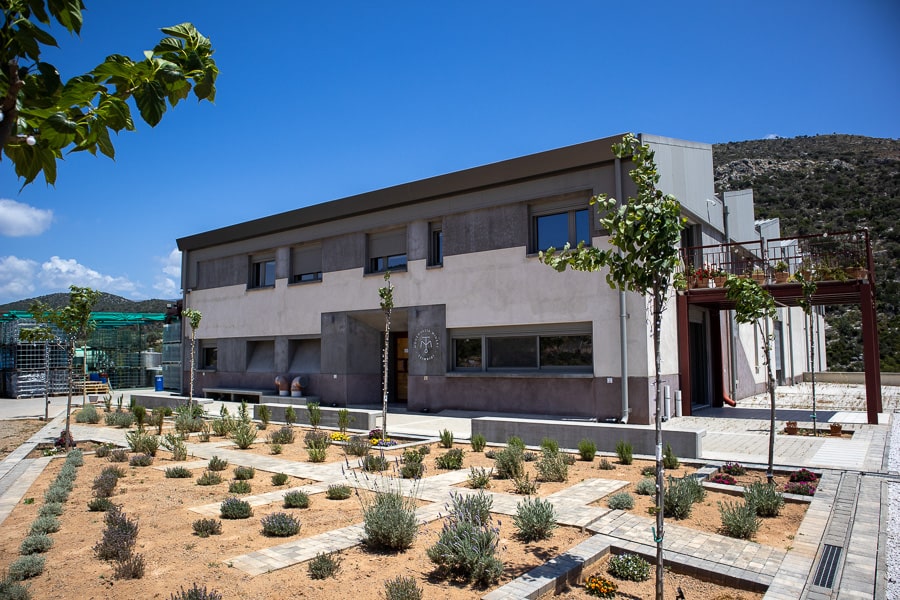
In 2020, the winery opened a brand new modern production facility and tasting room. Tours and tastings take place here, where you learn about the history of the winery, its wines and most importantly, get to sample the range!
We were lucky that we could spontaneously squeeze onto a tour as we hadn’t booked ahead, bookings can be made online.
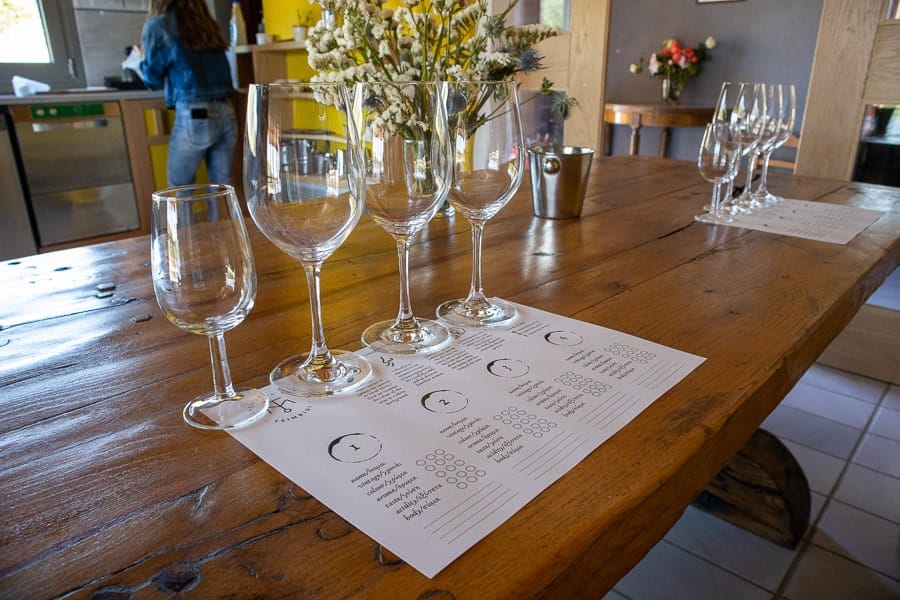
Following our tour and tasting, we picked up a couple of bottles to take with us before continuing onwards to Monemvasia.
Monemvasia
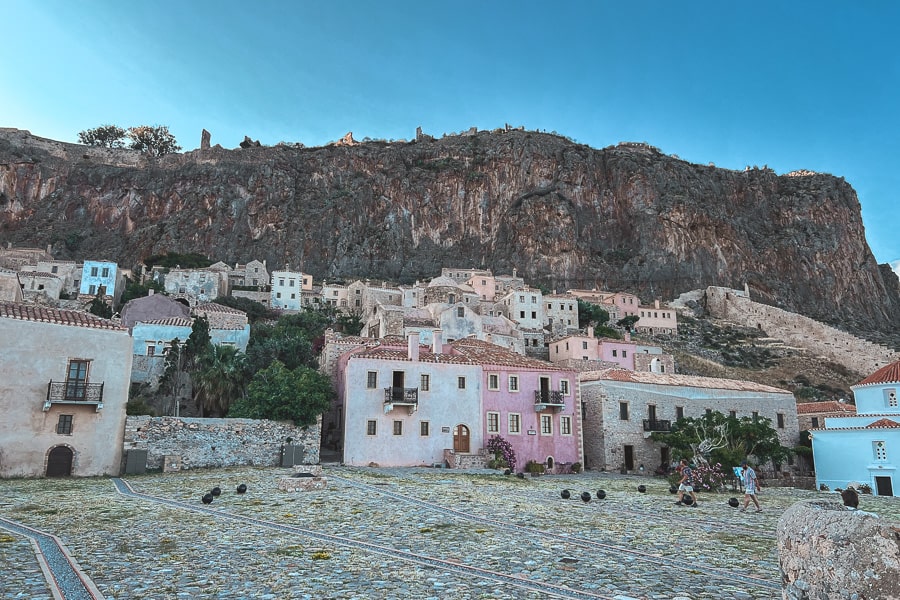
Monemvasia is one of those unique places that have to be seen to be believed.
This fortified medieval town sits at the base of a large, mountainous rock, connected to the mainland by a single narrow road. The terracotta-hued town is built in tiers up the hill leading to the cliff edge. The town consists of three narrow main cobblestoned streets, connected to an offshoot of even smaller, maze-like alleyways.
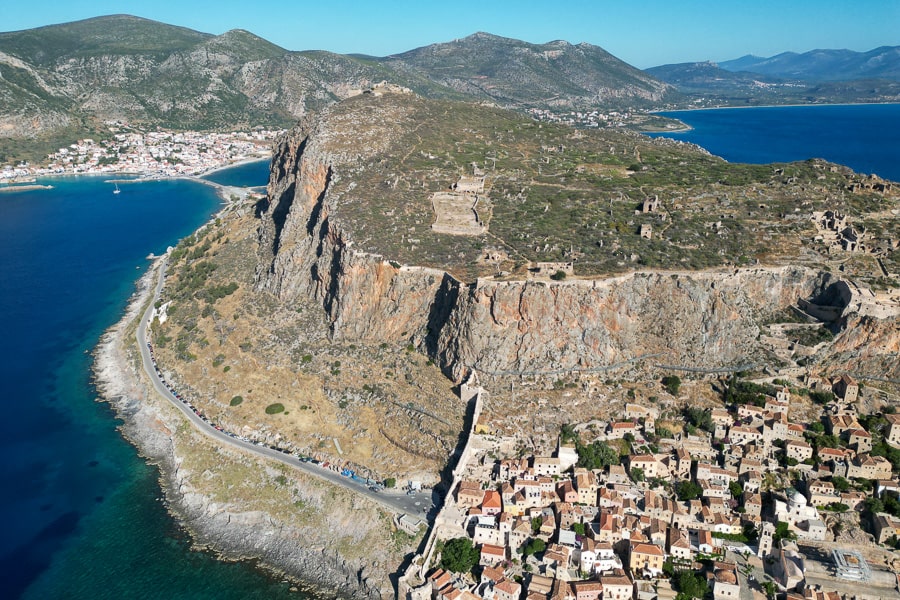
The town is also teeming with churches – forty, to be exact! Whilst most of them are in ruins, it only adds to the medieval charm.
Within the city walls, it is pedestrians only – no cars can come into the town (as there are no roads!). Be prepared to pull your luggage along the cobblestone streets, or there may be porters available to hire at the front entrance.
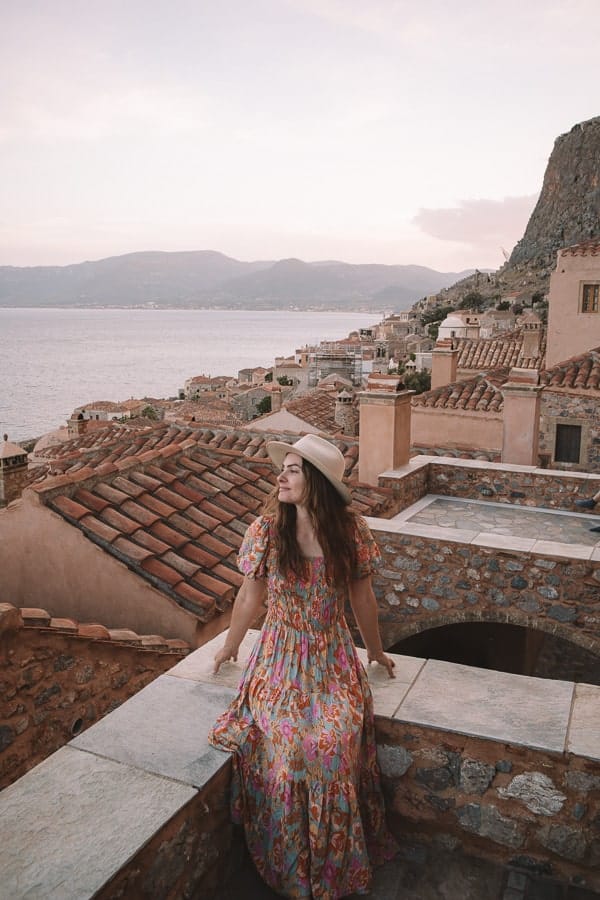
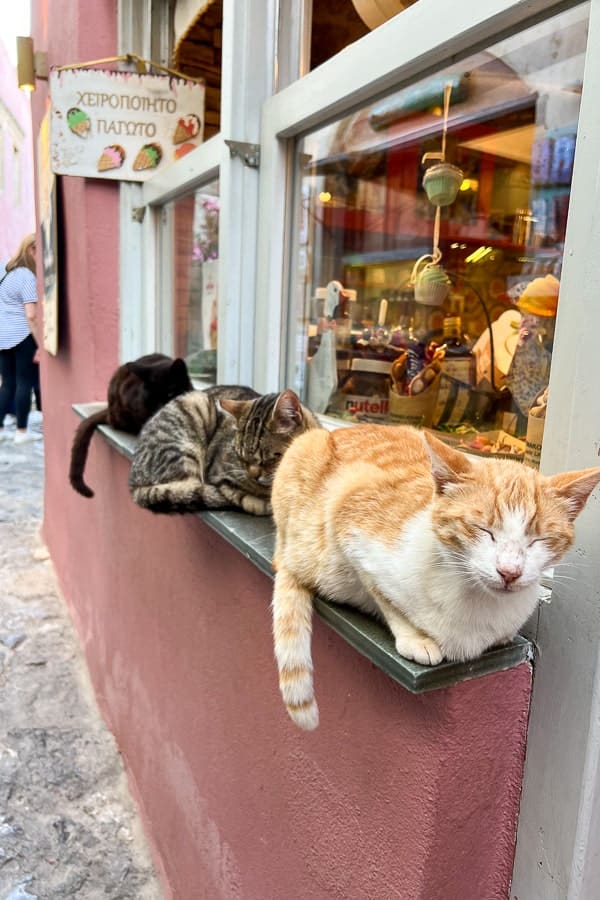
On your first night in Monemvasia, settle into your accommodation and go for a wander to get familiar with the maze-like streets of the town.
Where to Eat
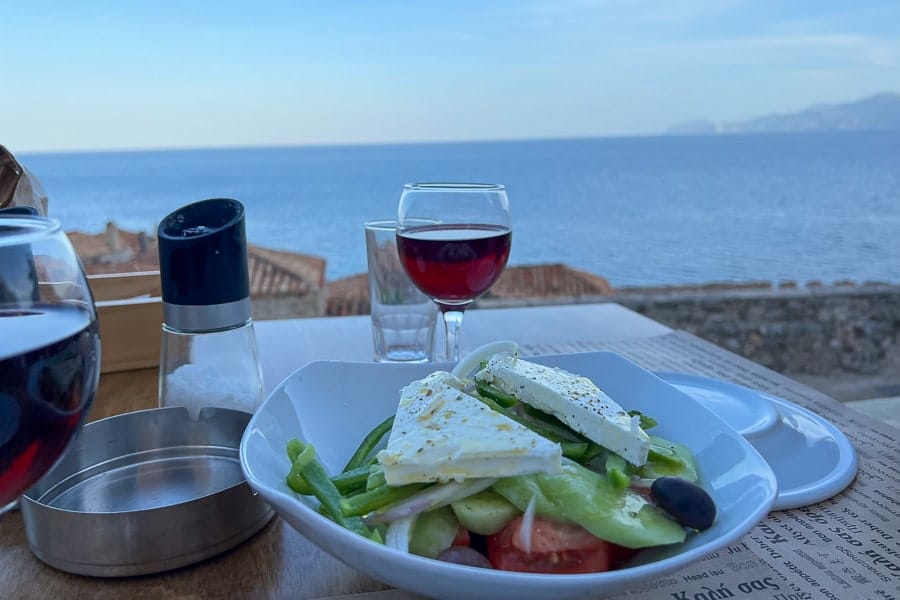
- Emvasis Café & Cocktail Bar: for cocktails with a view
- Matoula Restaurant: we enjoyed their delicious giant dolmades and balcony ocean views
- Malvasia Café: down the very end of the main street, but one of the best views in town for a coffee or cocktail!
Where to Stay
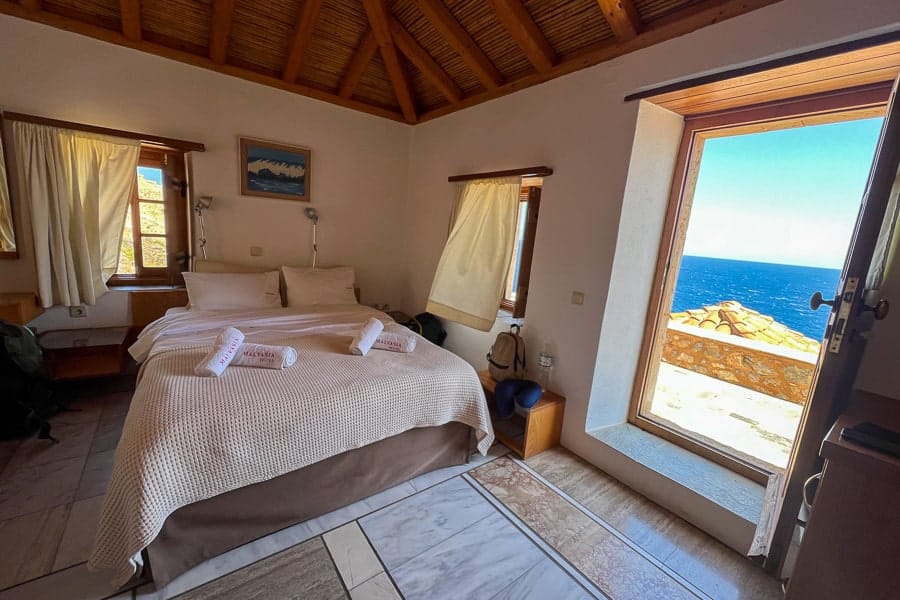
If you are on a budget, consider accommodation in the town of Gefyra just before the bridge to Monemvasia – but I would highly recommend staying “on the rock” in Monemvasia Lower Town… It’s an incredible experience, and one I won’t forget.
- Budget – Filoxenia Hotel
Located a few hundred metres before the bridge to Monemvasia, this guesthouse has rooms with balconies that overlook the sea. - Mid-Range – Bastione Malvasia Hotel
I booked a room with a balcony that looked over the town and it was simply spectacular. It was honestly so hard to leave the room, I just wanted to spend all the time on our beautiful balcony soaking in the room (especially at sunset!). To book this exact room, make sure to “Superior Double Room with Balcony” on booking.com. For the price, I thought it was incredible value. - Luxury – Moni Emvasis Luxury Suites
This luxury hotel features private, stone-built suites with panoramic views over the ocean
Day 5: Monemvasia
Today is a more relaxing day, but there is still plenty to do in Monemvasia.
Exploring Upper Town
Start your day with a hike to the Upper Town ruins of Monemvasia. The Upper Town was once inhabited, just like the bustling Lower Town (where your accommodation is) is today. The Upper Town is a maze of ruins (some better preserved than others), and home to the beautifully restored 12th-century church, Agia Sofia.
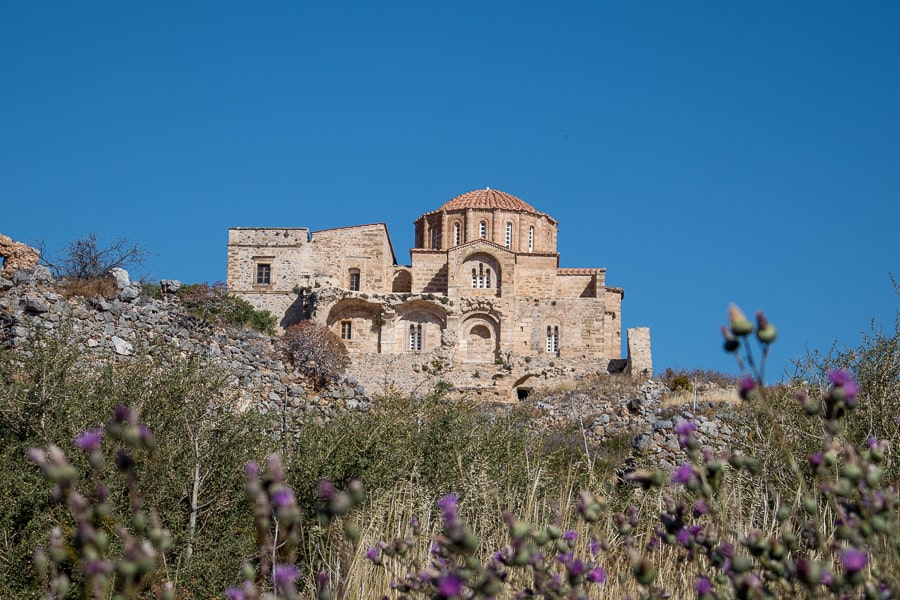
The hike is a steep uphill climb, and the cobblestone path can be slippery so take care.
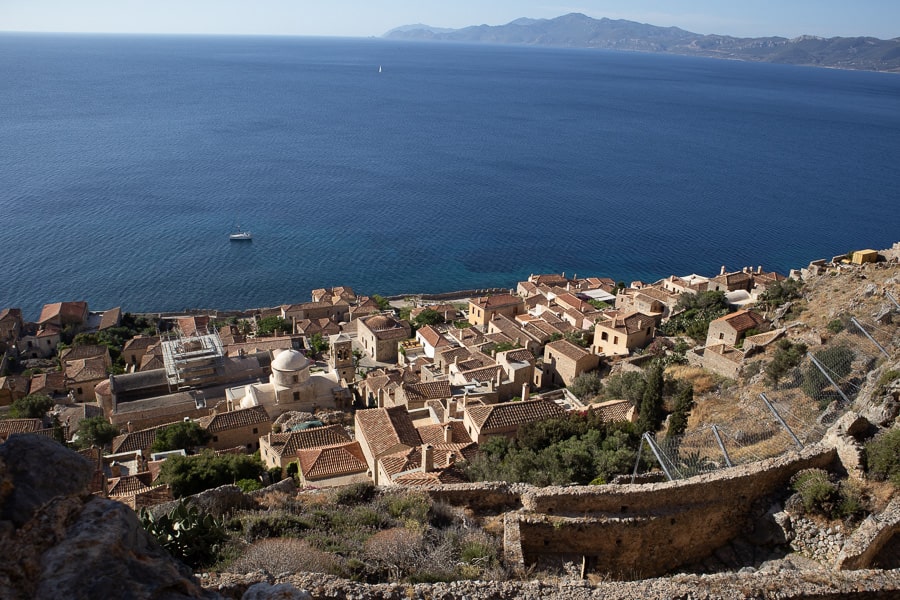
When you reach the top, the view is simply breathtaking – you’re rewarded with a panoramic view across the entire Lower Town, with sparkling azure blues of the ocean backdrop.
Swimming in Monemvasia
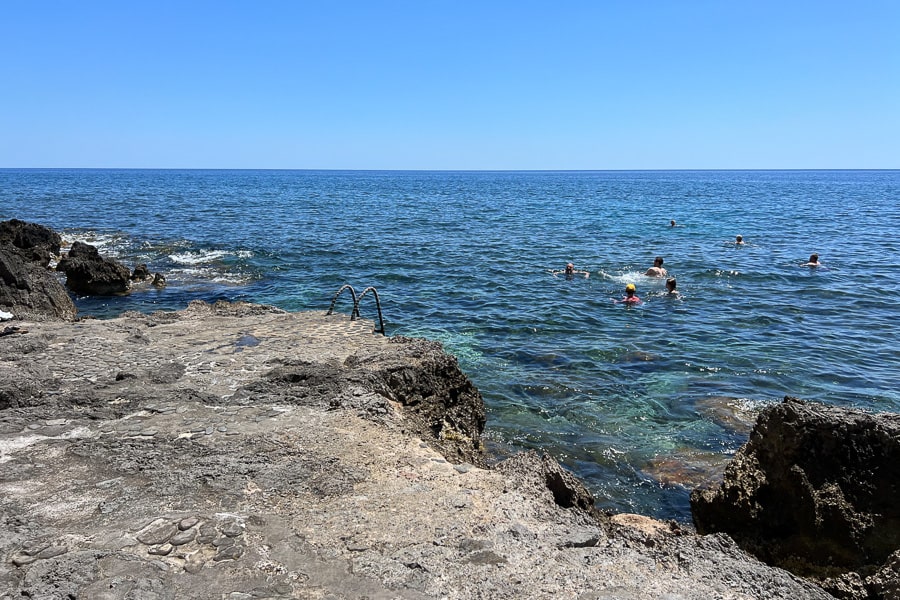
After exploring the ruins and visiting the church, you may want to cool off with a dip in the enticing ocean below. In the lower town, head south towards the ocean and look for the stairs leading down to the ocean.
Here, you’ll find a flat rocky section with a simple ladder inviting you to take a dip. It’s a remarkable sight from the water to look back at the town and rock towering above you (especially if you had just hiked to the top of it earlier!)
Wandering Lower Town
Spend your afternoon wandering the nooks and alleys of the town, popping into the small boutiques to browse local wares.
Several friends (as well as our guide at Monemvasia!) recommended Bryon’s Wine Bar for a wine tasting. Unfortunately, we didn’t make it here this time, thanks to working our way through the bottles of wine purchased from the winery!
Around sunset, take a stroll along the wall and watch as the town illuminates with the golden hue of the setting sun.
Optional Itinerary Extension: From Monemvasia, a popular detour (as a day trip or overnight trip) is to visit the island of Elafonisos. Touted as having one of the best beaches in the Peloponnese, and even in Greece, this small island is the spot for beach lovers and those seeking relaxation.
We didn’t visit it this trip, but you can reach it via a 1-hour drive from Monemvasia to the town of Neapolis, then jumping on a short 10-minute ferry across to Elafonisos island.
Day 6: Monemvasia to Mani Peninsula
Driving Time: 2 hours – 3 hours
If your experience was anything like mine, you won’t want to leave Monemvasia. But all good things must come to an end! Today we are heading to explore the Mani Peninsula, the southernmost tip of continental Europe made up of coastal fishing villages, mountainous ranges and some unique attractions.
Driving Tip: Of all the roads we drove on in the Peloponnese, we found the Mani Peninsula to be the most challenging. There was the occasional pothole, but what gave us driving angst was that many of the small towns had very narrow roads (many with blind corners) that only one car could drive through – we were always praying that there would be no oncoming traffic… so take it slow here.
Gytheio
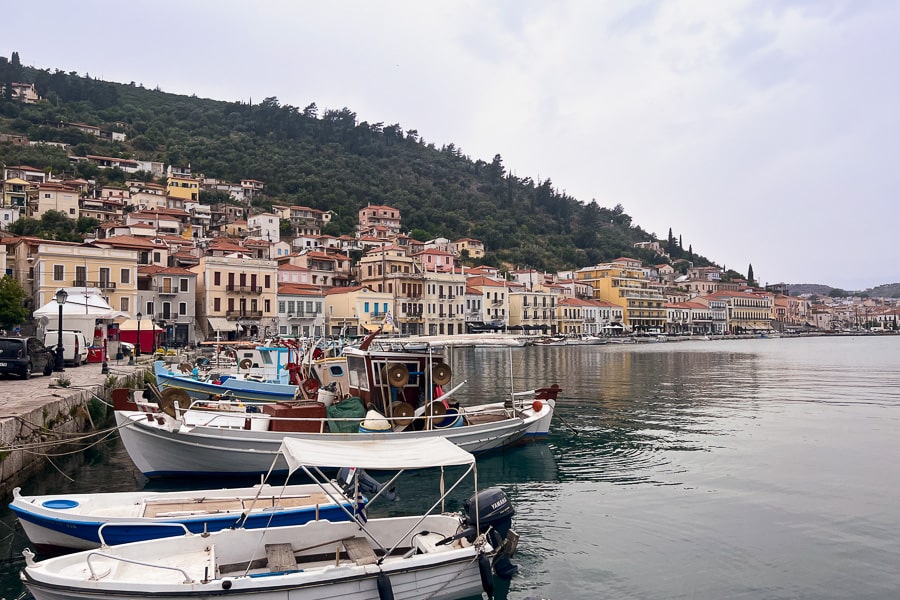
Monemvasia to Gytheio is just over an hour’s drive. This quaint seaside town is built into the slopes surrounding the harbour of the town. It’s worth stopping and spending a few hours wandering the town.
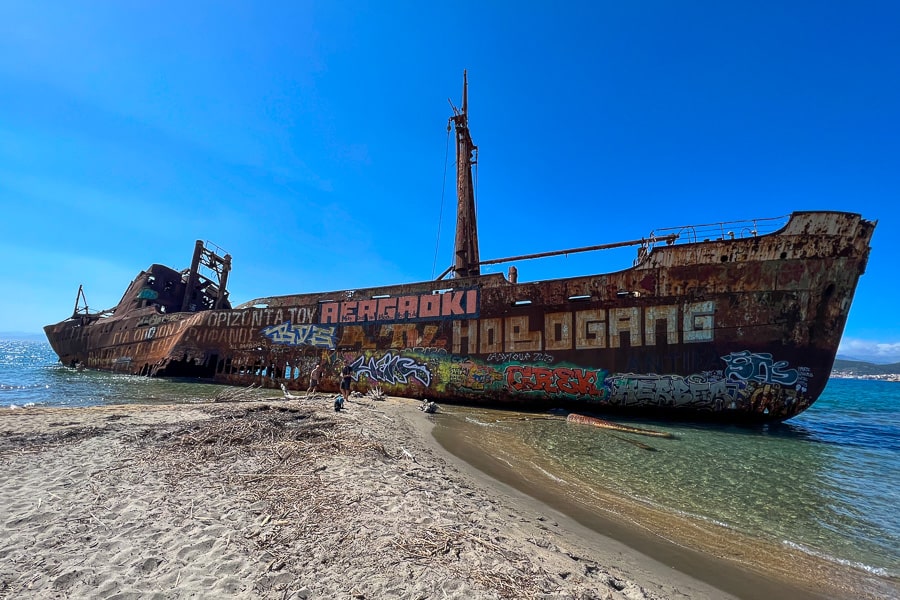
Just before Gytheio, take a short detour to Glyfada Beach. Lying in the shallow waters here you will find a curiously unique sight – a long abandoned cargo ship, the Dimitrios shipwreck. You can walk right up to the wreck, now covered with graffiti and making for a fascinating sight.
In Gytheio, parking can be tricky. We had luck finding a free spot along the road here and taking a short walk along the waterfront into town. The most scenic viewpoints are along the harbour near the waterfront looking back at the picturesque town.
Along here you’ll find many local tavernas serving fresh seafood, we had a delicious lunch of fried sardines, moussaka and Greek salad at Palyria.
At this point, you can choose whether to take a detour to visit Vathia or continue to your hotel in either Areopoli or Limeni.
Vathia
A trip to Vathia will add an extra 40 minutes each way, but for us it was a worthwhile detour. Vathia is a historic and remote village situated on a rocky hilltop towards the southernmost point of the Mani Peninsula. The village consists of imposing “tower houses,” used as defensive structures during times of conflict.
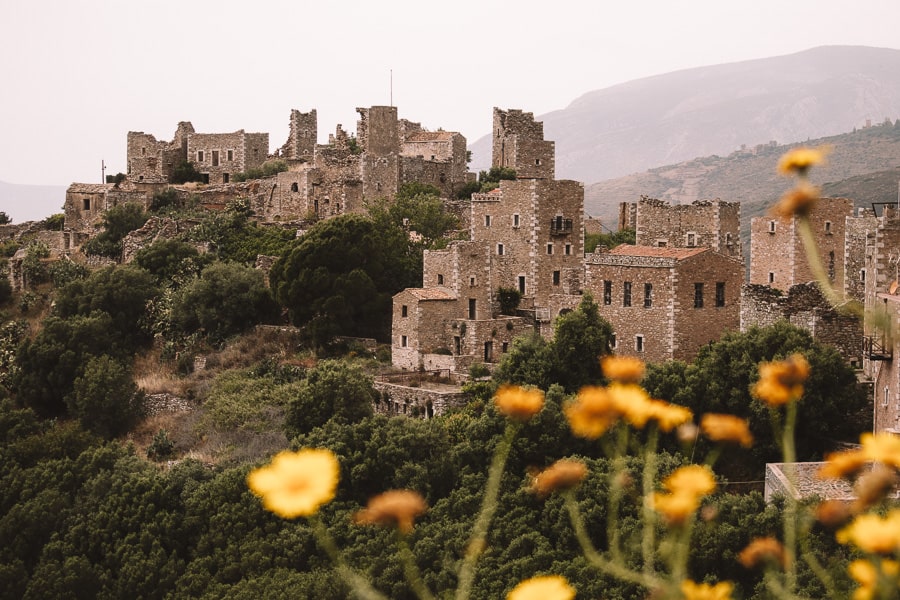
These days, the village feels as if it has been abandoned – about half of the buildings are crumbling ruins that you can freely explore.
There is only one restaurant in town, and besides wandering through the village and building remains, there isn’t a lot to do here. However, it is a unique and interesting spot unlike anywhere else we have seen on our travels. And the view from the top of the hill is spectacular!
Areopoli and Limeni
Spend tonight in Areopoli or Limeni.
When booking accommodation last minute, I found there to be more affordable options in Areopoli, which became our base for the night.
Areopoli is located slightly inland, with stone-built houses, narrow alleys and cobblestoned streets. It is a small town, consisting mostly of a central square that is the hub of the town. It is here you’ll find most of the town’s restaurants and bars.
Limeni is a traditional coastal village tucked away in a small bay. On a sunny day, Limeni looks like it belongs on a postcard – with stone-built houses with colourful wooden shutters, local tavernas and café’s lining the waterfront and sparkling turquoise water.
Where to Stay
- Budget (Areopoli) – Mani Hotel
I stayed in this family-run hotel offering large and clean rooms. The bathrooms are older, Greek style but it was fine for our one-night stay. - Mid-Range (Areopoli) – Trapela Areopolis Boutique Hotel
Elegantly decorated rooms with stone walls and balconies offering views of the garden, mountain or sea - Mid-Range (Limeni)- Pirgos Mavrimichali
Have a memorable stay in a restored 18th-century tower overlooking the picturesque bay of Limeni. - Luxury (Limeni) – Trapela Limeni Luxury Suites
Boutique, luxurious and spacious suites in an incredible cliffside location overlooking the picturesque village
Day 7: Mani Peninsula to Kalamata (or back to Athens)
After checking out of your hotel, drive 20 minutes south to the Caves of Diros.
Caves of Diros
Having explored many caves in the Southwest of Australia, I was unexpectedly blown away by these caves.
What makes them unique is that they are not explored on foot, but rather on boat. Descending deep into the cave, visitors sit one or two abreast on small gondola-like boats. The guide will then stand (and more often than not, crouch!) as he navigates and paddles through the network of caves.
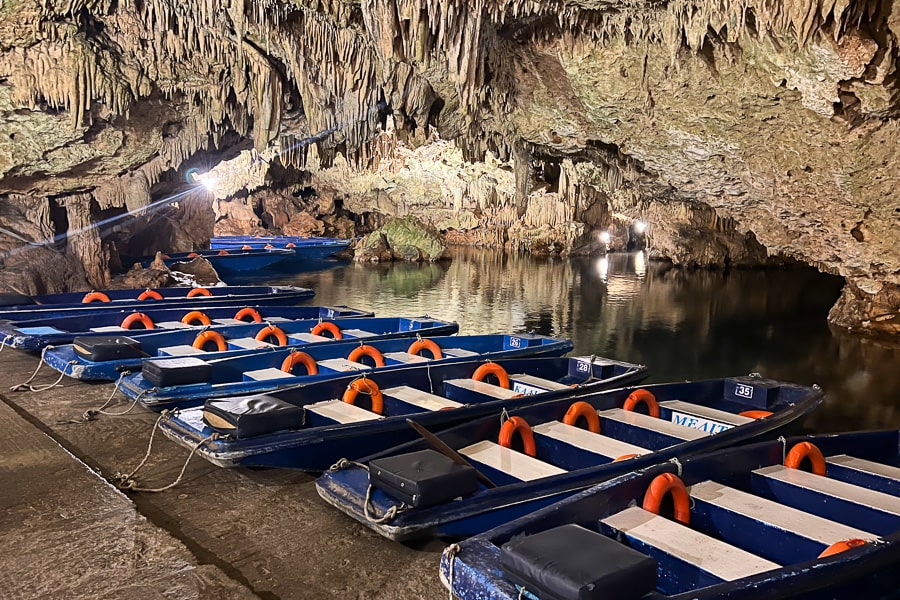
This isn’t an experience for those who don’t like the dark or small spaces – there were several times my husband and I had to duck down with our faces tucked in towards our knees as there are some very narrow and skinny sections of the cave to navigate. We had an absolute blast and really enjoyed this one-of-a-kind experience.
At this point, if you are short on time and want to keep this to a one-week Peloponnese road trip itinerary, you can head back to Athens.
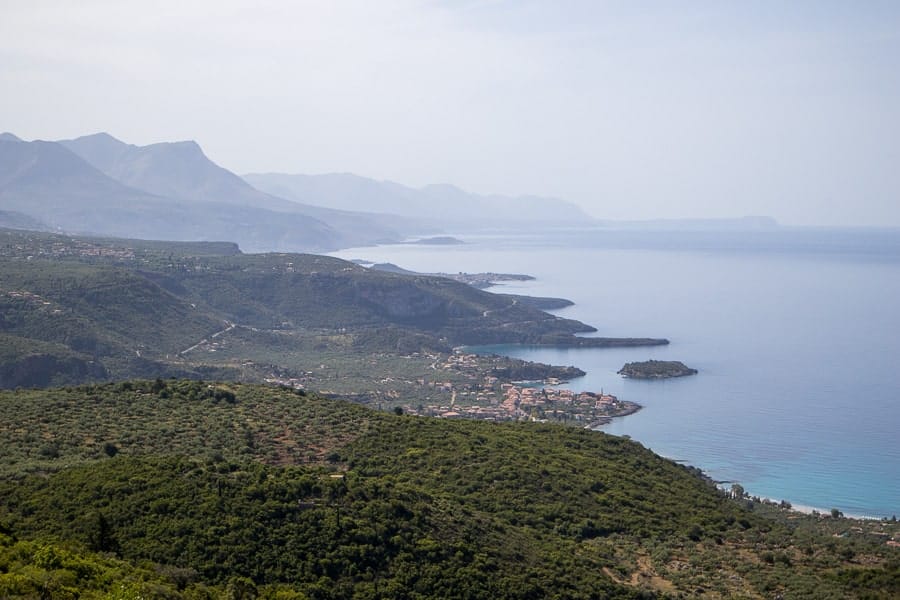
The direct route from the Caves of Diros will take about 3.5 hours, or you can drive back via the scenic western coast of the Mani Peninsula, passing through Kardamyli and Kalamata (either will be a great lunch stop). This longer route will take 4.5 hours of driving and will be the direction we will be heading if you are following my longer 11-day itinerary.
As you meander your way along the coast, there are small towns and beaches along the way you can stop at.
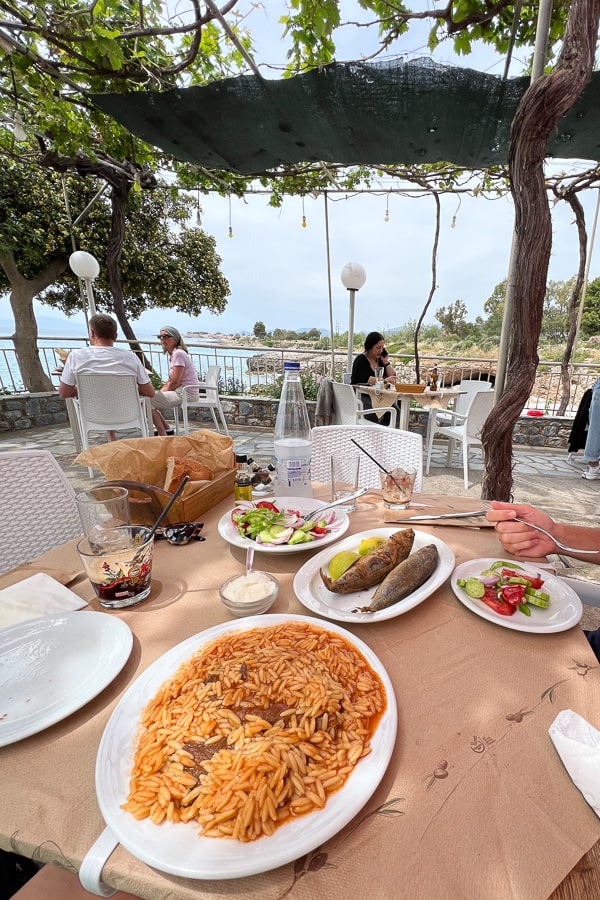
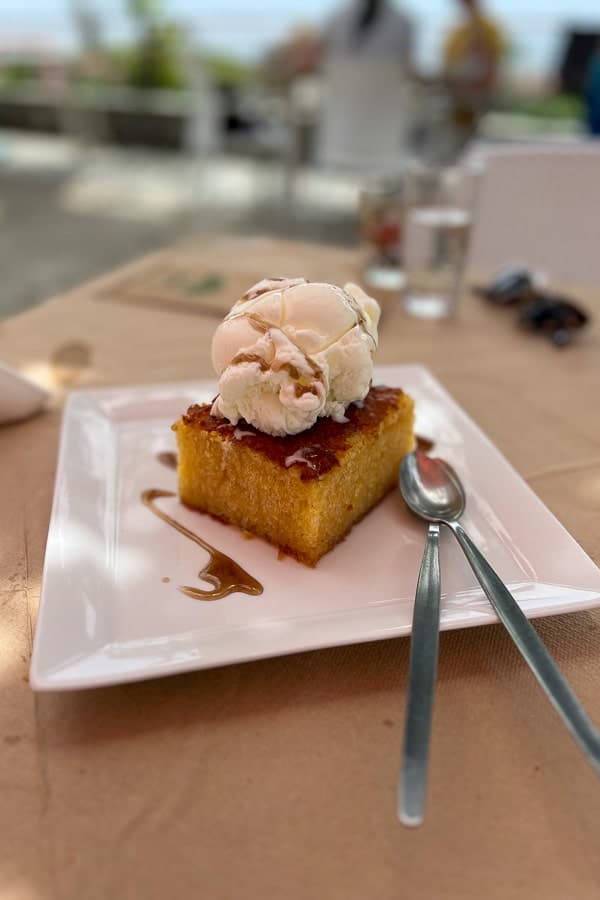
We had a delightful lunch at a local taverna right on the beach, Voulimeneas. Sit outside under the patio of grapevines and feast on local Greek dishes… the local orange cake for dessert was unreal!
Foneas Beach
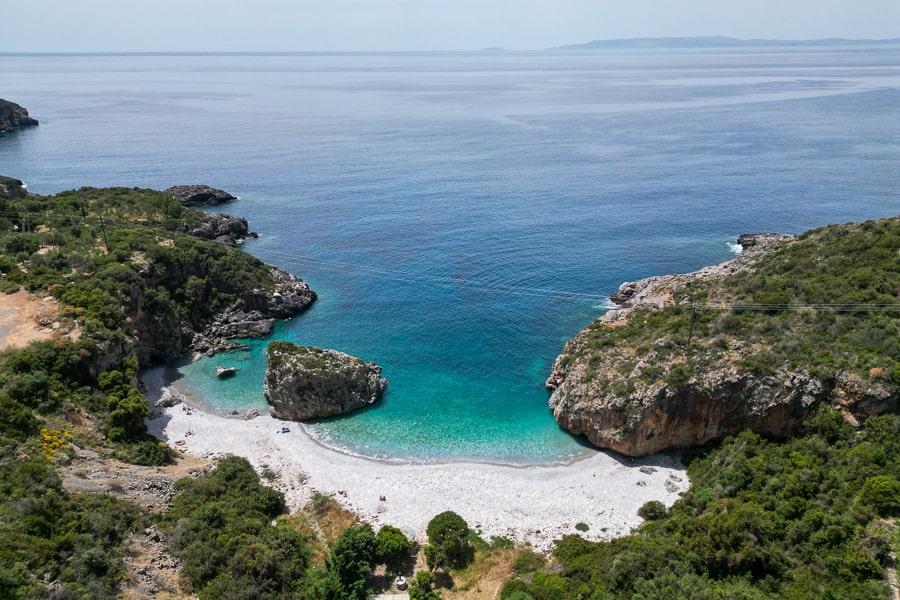
Continuing north towards Kalamata, you’ll pass Foneas Beach. This pebbled beach with clear water and an interesting rocky outcrop was one of my favourite beaches in the Peloponnese. Parking is just along the side of the road here.
Kardamyli & Mourtzinos Tower
A short drive further, you’ll come across the small seaside town of Kardamyli. This relaxed, sleepy town consists of one main road with a few cafés, shops and tavernas, and some accommodation along the beach.
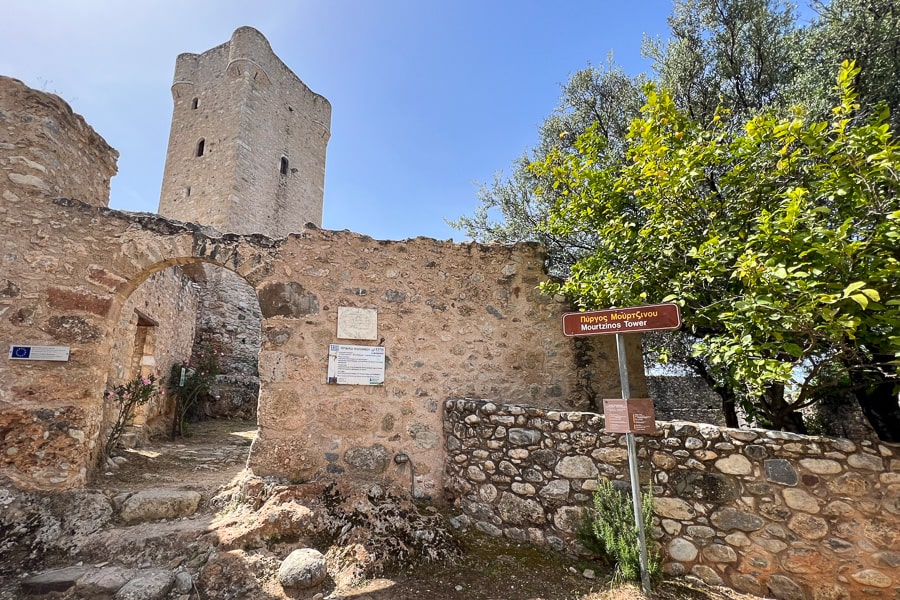
We stopped in to explore the Mourtzinos Tower, an excellent restoration of a complex of a church, museum and house. Although a small site, it was an unexpected gem thanks to the detailed signage in English explaining the history of the site and town.
Kalamata
Kalamata is the capital of the Peloponnese and consists of two main areas: the beach resorts along the coast and the downtown city.
We had spent the week in Kalamata before starting our road trip to attend a conference. Whilst tourists visit Kalamata mostly for the beach resort experience, it’s worth considering spending a night here on your road trip and exploring the city.
Spending one night here will also break up the journey and allow you to explore some of the attractions a short drive away from Kalamata.
Where to Eat
- Kardamo: modern Greek fusion in an atmospheric restaurant
- Thiasos: A very local Greek taverna that specialises in roast pork at very affordable prices.
- Ναυτίλος: A family-run taverna serving classic Greek meals down on the beach.
Where to Stay
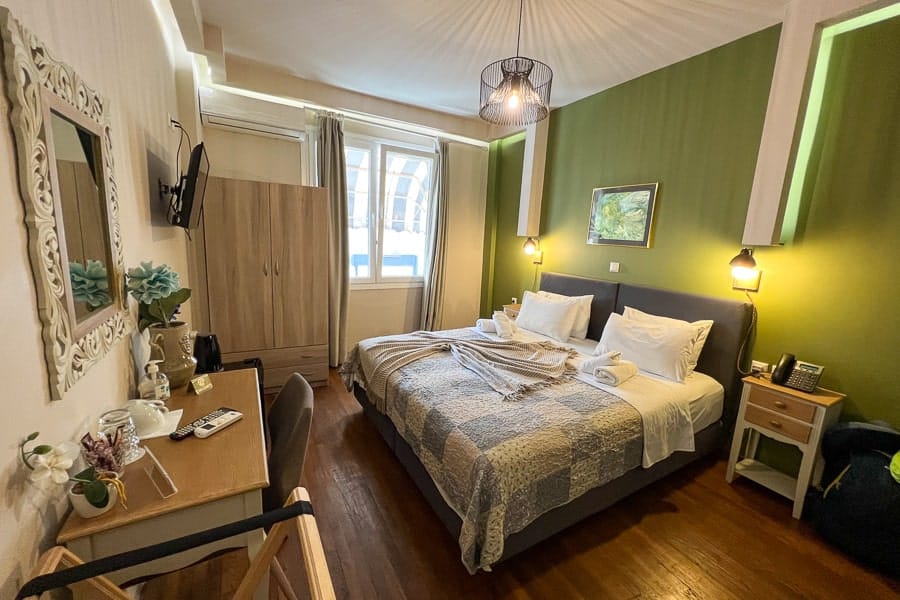
- Budget – Central Rooms
Basic but comfortable accommodation in the centre of downtown Kalamata - Mid-Range – Pharae Palace
Beachfront accommodation conveniently located midway between downtown and the beach area - Luxury – Horizon Blue Boutique Hotel
Luxurious beachfront accommodation with a pool overlooking the sea
Day 8: Kalamata to Pylos
Driving Time: 1 – 2 hours
Today you’ll be making your way west across the Peloponnese towards Pylos. There are a few places to stop and explore along the way, pick and choose based on your interests and time permitting.
Ancient Messene
From Kalamata: 1 hour
Nestled in the valley at the foot of Mount Ithome lies one of Greece’s best-preserved archaeological sites, Ancient Messene. The remains of this ancient city that dates back to 369 BC are spread across a large valley.
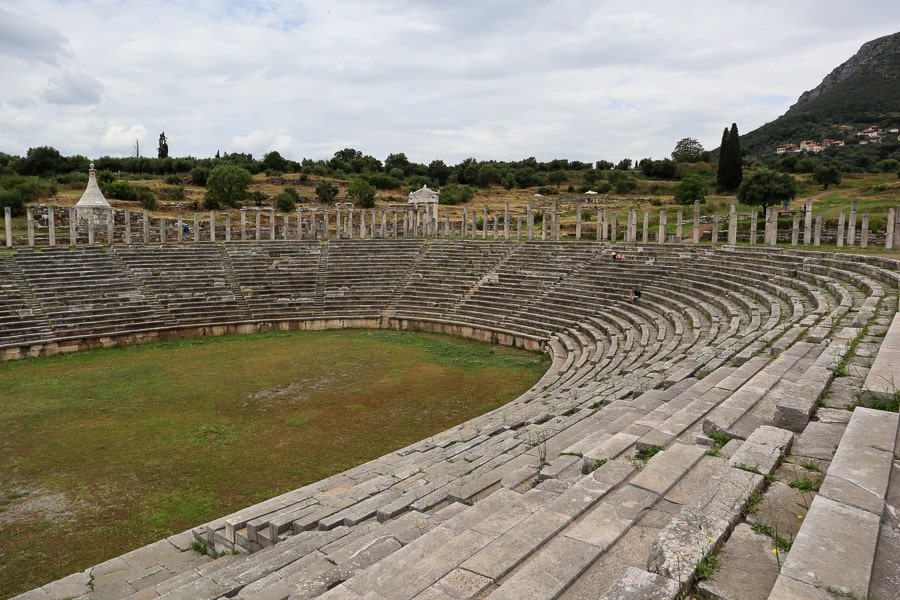
Ruins to be explored include the Agora (marketplace), Roman bathhouse, an ancient theatre, the Sanctuary of Asclepius and my personal favourite, the stadium.
Polylimnio Waterfalls
From Kalamata: 50 minutes
I wasn’t expecting to find waterfalls in Greece! Polylimnio Waterfalls consists of three tiered pools, all of which require a moderate hike to get to. Those that make the trek are rewarded with the sight of emerald, green water surrounded by lush vegetation.
The first two lakes are easier to get to, with the third (and largest pool) requiring a bit more of a strenuous hike, including wooden bridge crossings and some scrambling over logs and rocks.
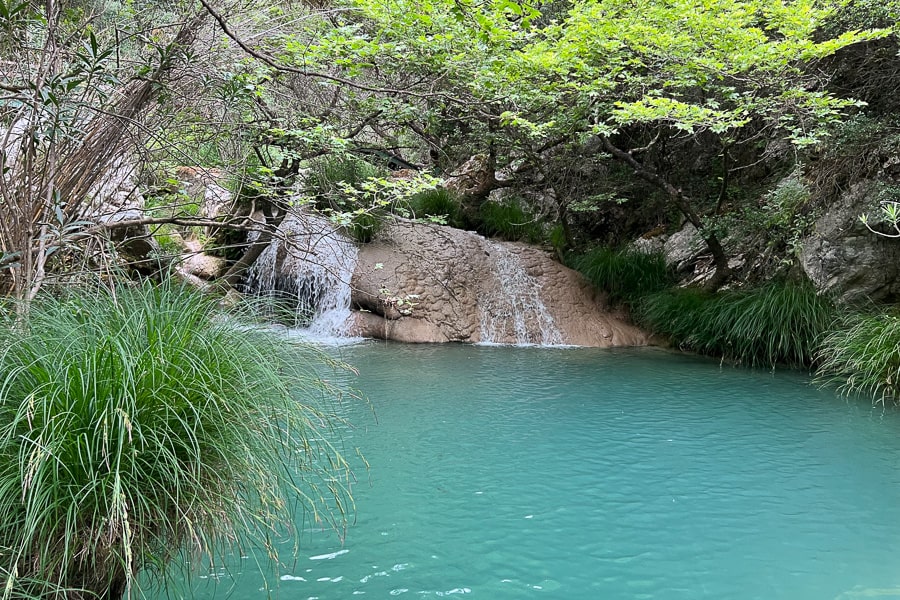
The third pool is the deepest and clearest, ideal for swimming but is the most challenging one to get to. The track in is also not the easiest (it’s a narrow, steep dirt road).
To make life a bit easier, consider joining a guided hiking tour from Kalamata that saves you the drive and navigating to the top waterfall.
Given how difficult it is to access this spot, it was surprisingly busy when we visited on a weekend.
Koroni
From Kalamata: 1 hour 15 minutes
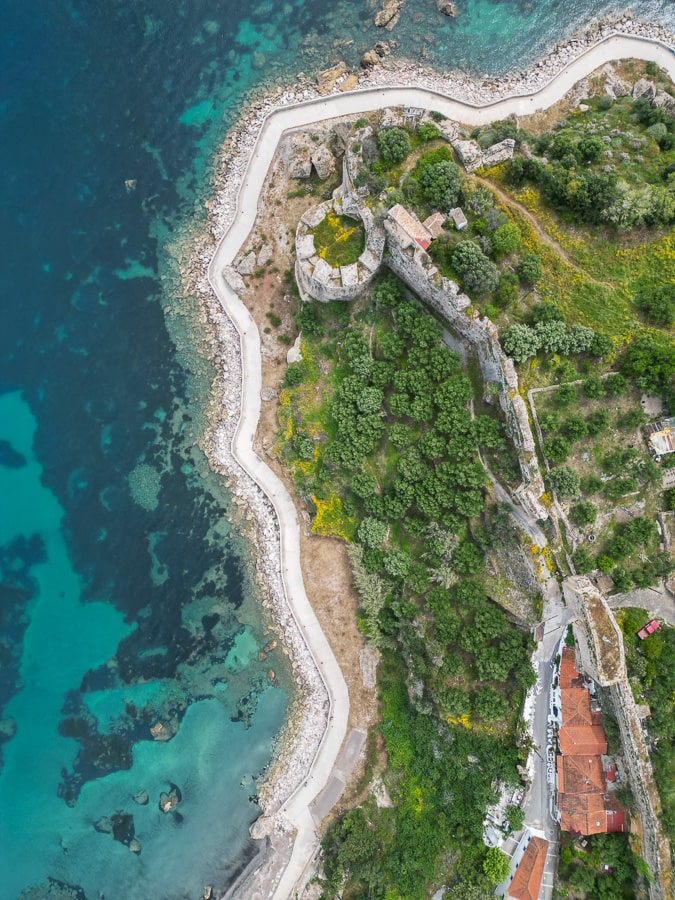
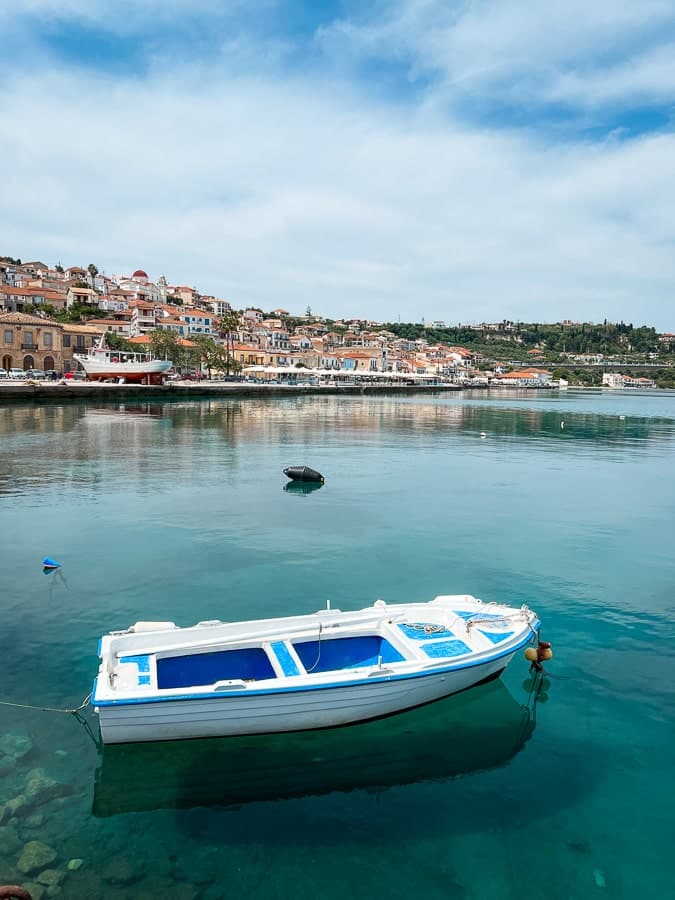
The main attraction in this picturesque village is Koroni Castle (free entrance). Built by the Venetians in the 13th century, the complex consists of a church, a monastery and a castle. You can climb the castle ruins to the top for a 360-degree panoramic view of the surrounding coastline before wandering around the town near the harbour below.
Pylos
I chose Pylos as our base for 2 nights to explore the surrounding area, including Methoni Castle and Voidokilia Beach.
You’ll find the main square of Pylos right down by the harbour, consisting of a lively bustling hub of shops, restaurants and bars.
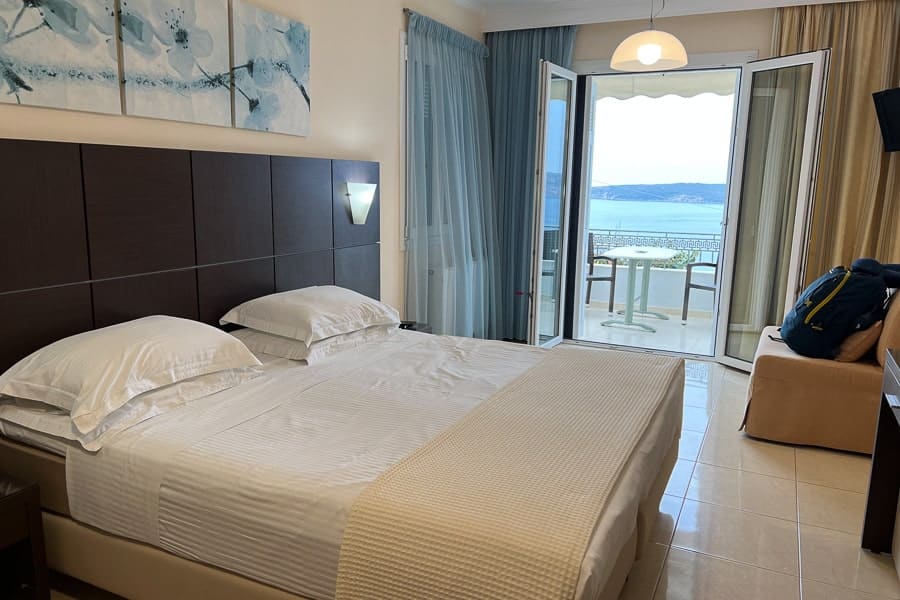
Where to Stay
- Budget – Hotel Anezina
We stayed in this small guesthouse run by a very friendly Greek lady. The rooms were large, spotlessly clean and had a small kitchenette. - Mid-Range – Karalis
This hotel has modern rooms and is situated right on the beach (and even has a beach bar!) - Luxury – Costa Navario Resort
One of Greece’s most luxurious resorts, right on the doorstep of the Ionian Sea
Day 9: Pylos
Plan to spend your day exploring some of the attractions near Pylos.
Methoni Castle
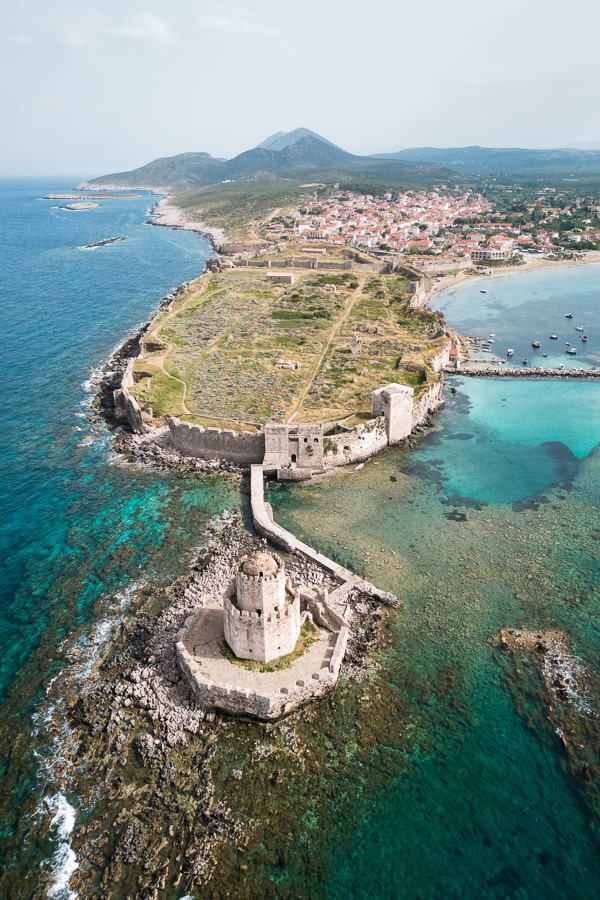
We set off bright and early to Methoni Castle (30 minutes from Pylos) as our first stop of the day. I was excited to see this Fortress Complex after seeing some incredible photos online beforehand. Unfortunately for us, it was closed due to the staff needing to vote in the local elections! Bad luck for us.
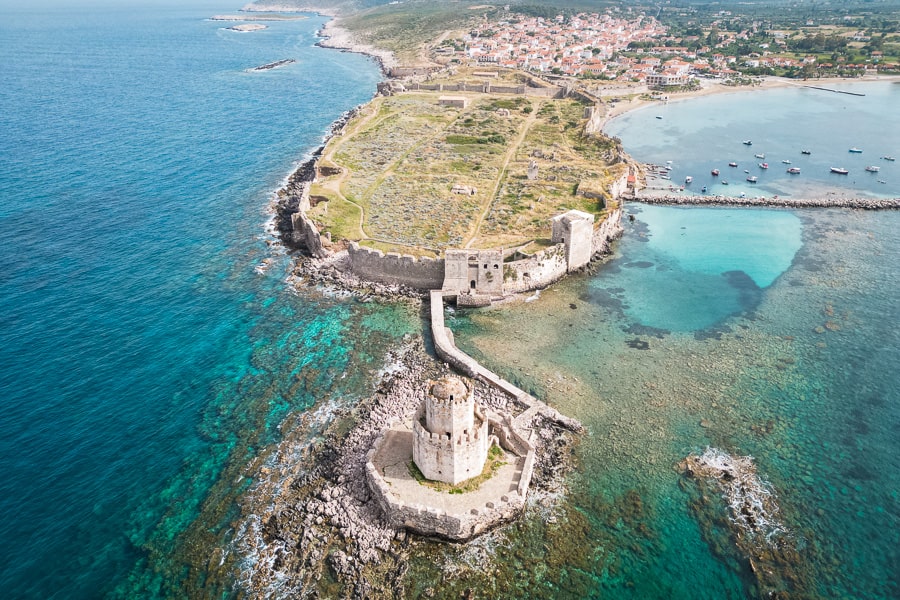
We were able to explore the exterior grounds, as well as get some aerial photos so it wasn’t a complete write-off.
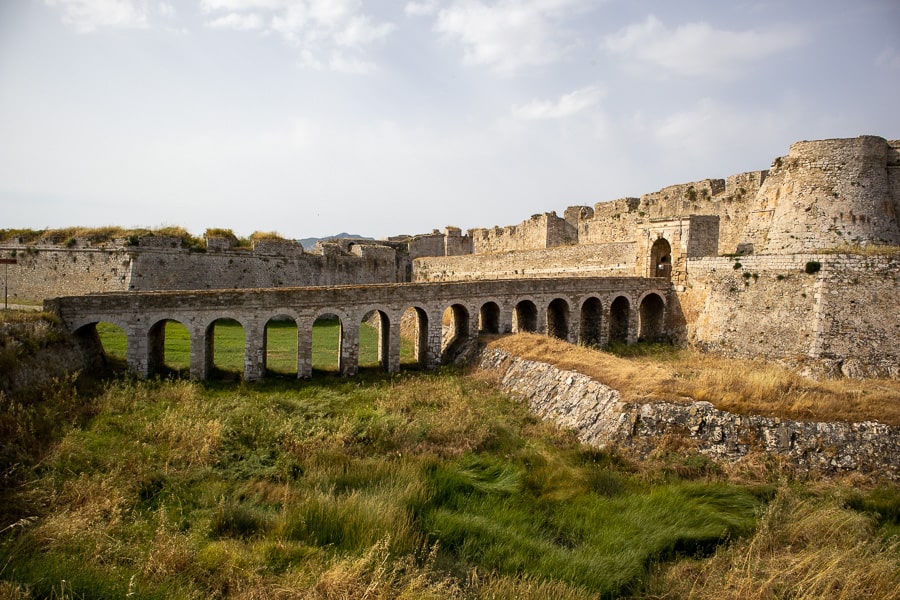
Some background on Methoni Castle: The strategic location of this fortress made it a crucial stronghold for civilisations across the centuries (including the Byzantines, Venetians and Ottomans).
The interesting feature of this Castle is the impressive bridge over the (now dry) moat and the Bourtzi Tower, which lies separated from the Fortress on a small island connected by a bridge.
Voidokilia Beach, Old Navarino Castle & Nestor’s Cave
We were planning to visit the stunning Voidokilia Beach when our hotel owner told us of a hike nearby.
This hike includes exploring the Old Navarino Castle ruins and Nestor’s Cave (the mythical cave of Nestor, from Homer’s Odyssey). Immediately intrigued, we set off to explore the area.
Begin the hike from the parking spot for Divari Beach. We chose to start with the longer uphill hike first to the Old Navarino Fortress ruins. We were rewarded with a stunning coastal view from the hilltop, whilst exploring the crumbling castle ruins with barely another tourist in sight.
Head towards the north side of the ruins to find the steep but manageable path down to Voidokilia Beach, passing Nestor’s Cave on the way.
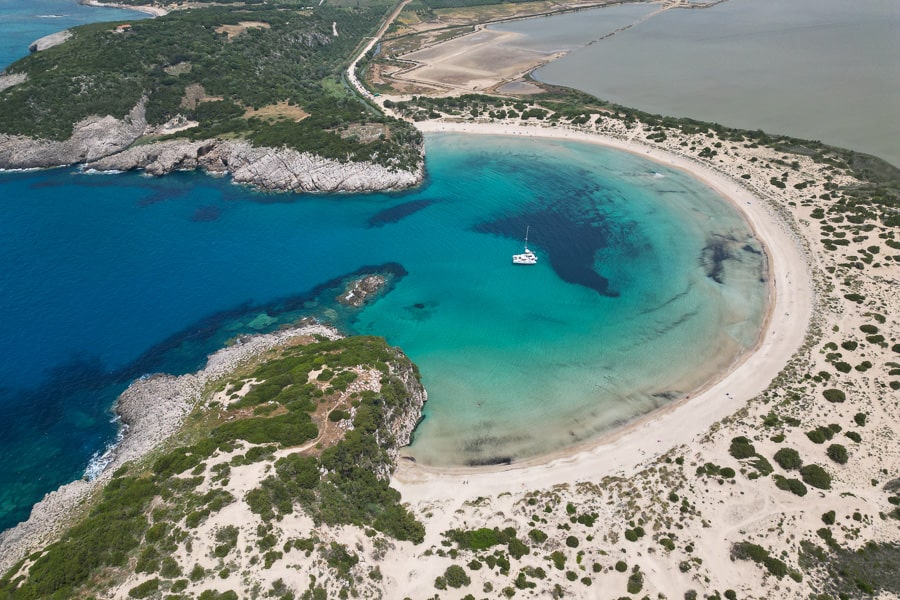
A refreshing swim was a worthwhile reward after reaching the sandy shores of the omega-shaped Voidokilias Beach. To get back to the car, it is a short 15-minute hike along the marshy edge of a lake (but thankfully, flat).
Palace of Nestor
The Palace of Nestor is the best preserved Mycenaean palace in all of mainland Greece. It was the administrative centre of the kingdom of Pylos during the 13th century B.C. At the site, the undercover walkway has many informative signs detailing how the remains we see today would have looked at the time before most of it was destroyed by fire in 1200 B.C.
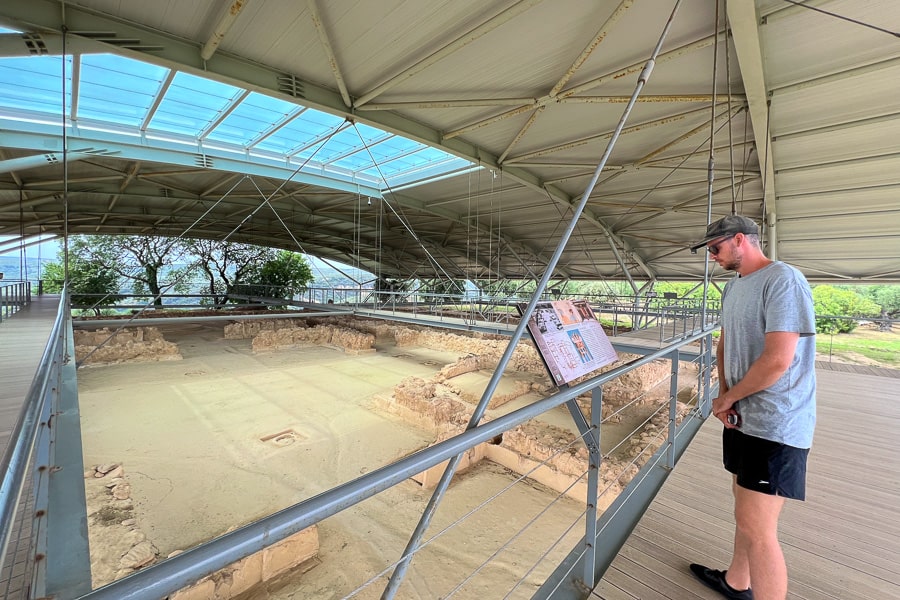
Of particular interest are the well-preserved remains of a bathtub. This is the only preserved example of a bathroom found so far in a Mycenaean palace on the Greek mainland.
After exploring the Palace of Nestor, you can take a quick detour to Tholos Tomb at the same site.
Day 10: Pylos to Olympia
Olympia
Most people visit the Ancient Olympia archaeological site on a day trip from Athens or Kalamata, or from the nearby Port as part of a cruise. We decided to spend one night in Olympia before wrapping up our road trip, as it is a 2-hour drive from Pylos. I enjoyed wandering the streets of Olympia, which are quiet once all the day trippers leave.
Where to Stay
- Budget – Prytanio
Comfortable and modern guesthouse with simple rooms - Mid-Range – Amalia Hotel
Large rooms with balconies surrounded by Mediterranean gardens and an outdoor pool - Luxury – Hotel Europa
This large hilltop hotel has a swimming pool with pool bar
Day 11: Olympia to Athens
Driving Time: 3.5 hours
Ancient Olympia
As mentioned, Ancient Olympia gets busy with tour groups and day trippers (especially if there is a cruise ship docked in the port!), so I’d recommend an early start to explore the Archaeological Site of Ancient Olympia, where the first Olympic Games were held.
It is quite a large site, so it’s best to avoid walking the complex in the heat of the day in summer anyway. We arrived at the entrance at 9.30 am. Plan to spend 1-2 hours exploring the archaeological site, then up to another hour afterwards at the museum.
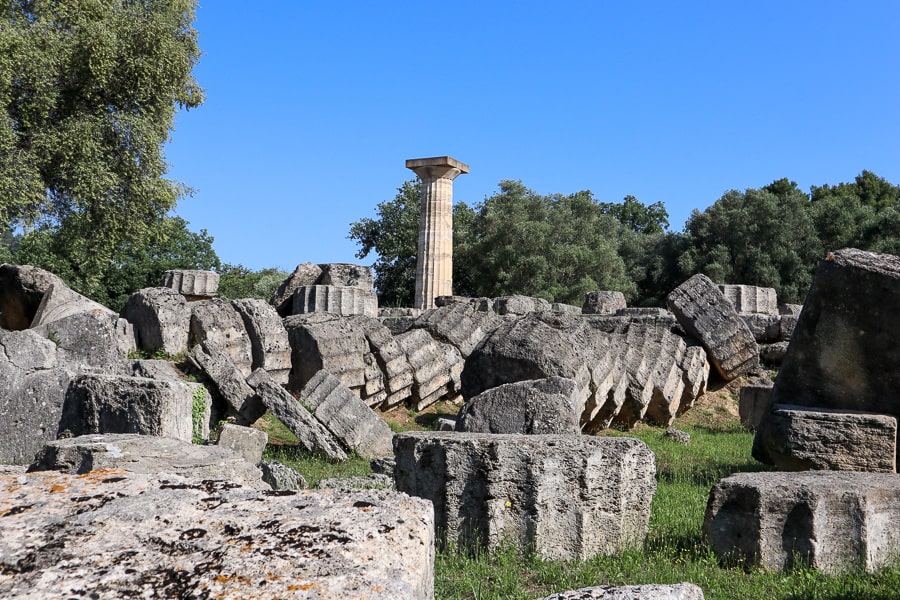
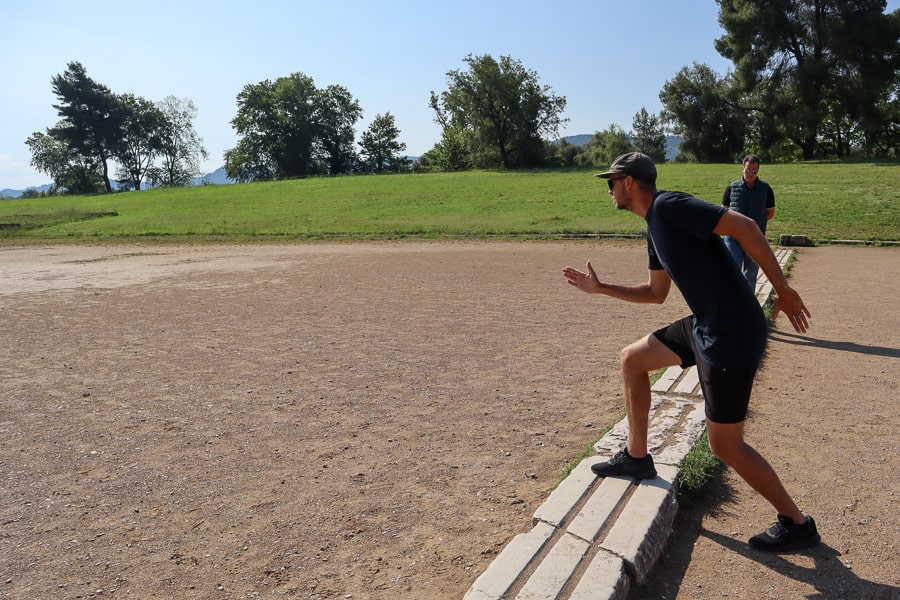
Despite not being as much of a history buff as my husband, it was truly fascinating to explore the site. My personal highlights were sprinting from the start line at the stadium, seeing where the Olympic flame is lit (even to this day!) and admiring the sheer size of the Temple of Zeus.
Get a skip-the-line ticket here
We saw a few groups of people who had hired Virtual Reality headsets. These headsets superimpose life-like recreations of what the ruins would have looked like in their day. They looked like a fun way to add extra context to your self-guided tour of Olympia!
Wrapping up the Road Trip
That’s a wrap on this epic road trip across the Peloponnese!
From Olympia, it is a 3.5-hour drive back to Athens. A worthwhile stop (if you didn’t already on your way to Nafplio) is to stop by and admire the Corinth Canal – a remarkable display of human excavation and engineering (free to visit).
A quick note on this itinerary: if you are planning on exploring the nearby Ionian islands like Zakynthos or Kefalonia (like we did), you can catch a ferry from the towns of Kyllini and Patras respectively to these neighbouring islands. For us, it was worth the one-way car rental fee to end our road trip in Patras and catch the ferry to Kefalonia the next morning, instead of driving back to Athens and getting a flight.
Final Thoughts
If you’re still reading this, well done for making it to the end of this massive blog! I hope and trust it will be useful to help you in planning your own epic Peloponnese road trip. I was blown away by what a remarkable and unique part of Greece this is.
The Peloponnese has so much incredible history, culture, natural attractions and delightfully delicious food – all for a much lower price tag and fewer crowds than you’ll find on the more touristy islands. This road trip is the best way to experience all the region has to offer – so happy adventuring and safe travels!
Let me know in the comments below if this guide was helpful, or if you have any other questions.