
It wasn’t until my fifth and most recent trip to Japan I had even heard about Koyasan. I was looking for unique places off the usual tourist path to visit during our one month in Japan adventure when a friend recommended a Mt Koyasan temple stay. Intrigued, I looked into it more and after managing to find a temple lodging with availability for our dates, I booked it.
This Japan temple stay experience was a very unique and memorable one. In this guide I’ll share all you need to know about visiting Koyasan, including where to stay in Koyasan, what to do, and tips I wish I’d known beforehand. I’ll also share my handpicked recommendations for the best Koyasan temple lodging.
Quick History and Background on Koyasan
Koyasan was founded by Kobo Daishi in the 9th century. As the birthplace of Shingon Buddhism in Japan, Koyasan was established as a centre for spiritual learning and meditation.
Mount Koya, in the heart of the Wakayama Prefecture, was picked not only for its remote and peaceful location but also for the fact that the mountain has eight peaks that resemble a lotus flower, an auspicious symbol in Buddhist cosmology.
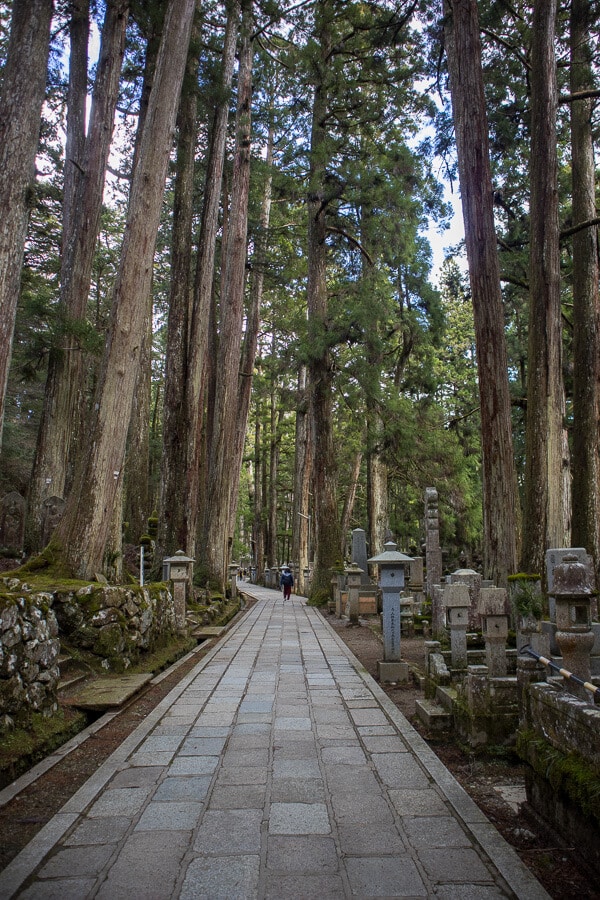
Fast forward to the modern day, Koyasan is an UNESCO World Heritage Site, covered with over 100 temples. It is also home to Japan’s largest cemetery, the Okunoin Cemetery. Not just any normal cemetery, a moss-lined pathway in the forest leads to the mausoleum and final resting place of Kobo Daishi.
Visitors from across the world come to Koyasan Mountain to stay in temple lodging (shukubo) and experience a unique glimpse into the culture and life of the Buddhist monks.
How to Get to Koyasan from Osaka
As part of our month long trip to Japan, we travelled from Osaka to Koyasan for a one-night Koyasan Buddhist temple stay. The journey takes over 2 hours and requires a few different modes of transport, but was quite easy to navigate and a very scenic journey.
To get to Koyasan, your journey begins from Osaka’s Namba Station. If coming from the Midosuji subway line, look for signs for the Nankai Namba section of the station where the train departs from.
For an easy-to-follow day by day itinerary for Osaka, check out my Osaka guide here.
Koyasan World Heritage Ticket
At the station, we headed to the ticket office to purchase a Koyasan World Heritage Ticket.
This is a discount ticket which includes all transport (train, cable car and unlimited bus rides) required for a 2-day round trip between Namba Station and Koyasan. It also includes a discount coupon for admission to some of the main attractions in Koyasan, and a few souvenir shops and restaurants.
If you are taking an overnight trip, I recommend getting this pass as it saves you money and is very convenient compared to buying individual tickets. The regular Koyasan World Heritage Ticket costs 3,540 Yen. You can purchase it online for a slight discount, with the digital version costing 3,140 Yen.
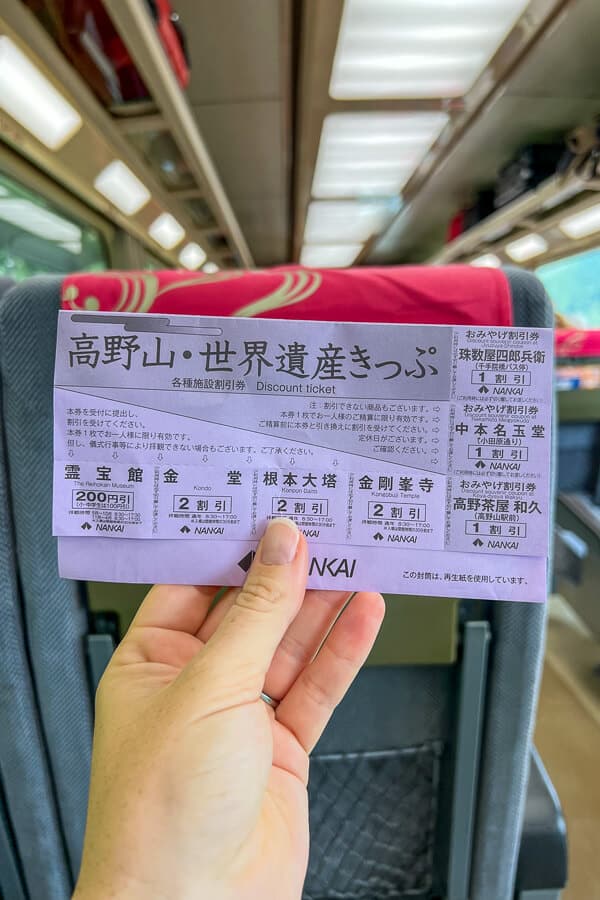
When you buy your pass, they’ll ask if you want to pay a supplement for the Limited Express train. We chose not to at the time, but ended up getting the Limited Express train regardless for the journey to Koyasan and paying the supplement onboard.
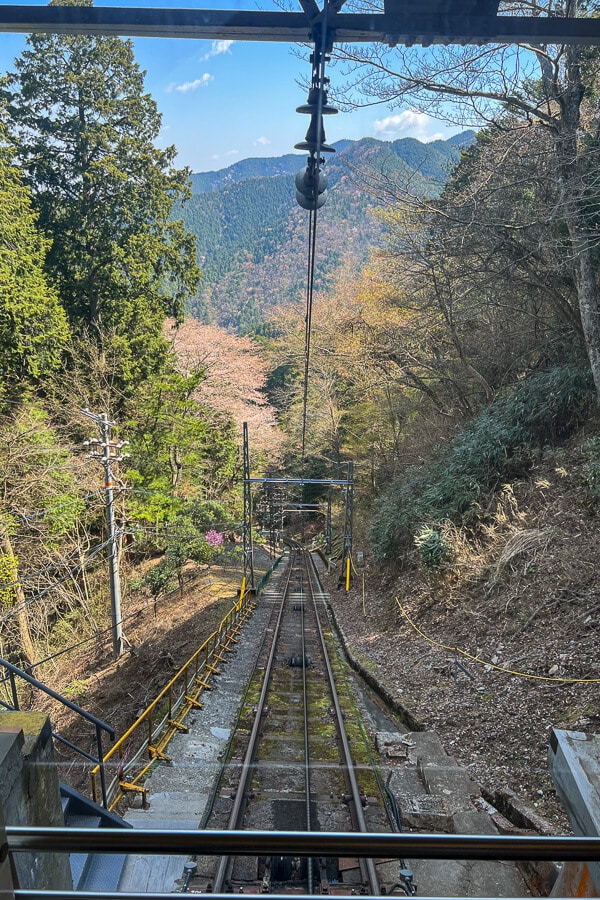
Once you reach Gokurakubashi Station at the foot of Mount Koya, you transfer to the Koyasan Cable Car which transports you up the steep incline of the mountain to Koyasan Station (5 minutes).
From here, it is a 10-minute bus ride into the centre of Koyasan town.
If you have purchased the World Heritage Ticket, you don’t need to buy any further tickets for this journey.
Limited Express Train vs Local, Express and Rapid Trains to Koyasan
From Nankai Namba station there are two train options:
- the slower, cheaper and more common Local, Express and Rapid express trains that are included as standard in the World Heritage Ticket (requires a transfer at Hashimoto Station, up to 100 minutes) or
- the faster but more expensive Limited Express train that heads directly to Gokurakubashi (60 minutes)
We originally were planning to get the Express train, but a Limited Express train was departing around the same time.
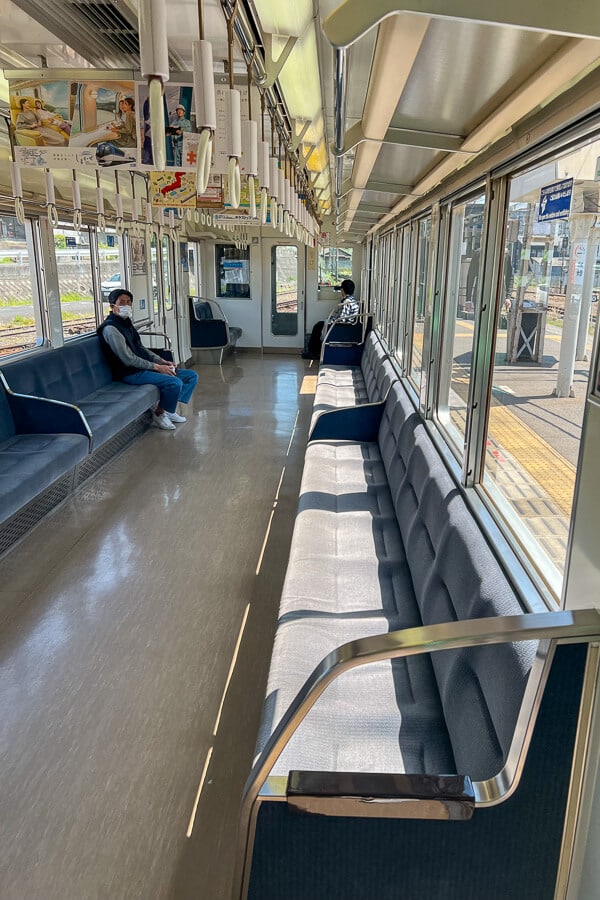
The Limited Express train has comfortable forward-facing seating (similar to the types of seats you find on the Shinkansen), whereas the standard Express train has mostly sideways seating similar to that of the subway system.
In a snap judgment call, we decided to hop on the Limited Express train, hoping we could sort out the difference in ticket price at Hashimoto Station. What we didn’t realise was that the seats on the Limited Express trains are reserved – we mistakenly sat in someone’s reserved seat but luckily only had to move seats once!

Shortly into our journey, an inspector came along to check tickets. We were able to pay the Limited Express supplement on the spot to the inspector and reserve our seats for the rest of the journey, so it all worked out well in the end!
Long story short – the Limited Express trains are much more comfortable, I’d say it’s worth paying the supplement for that and to avoid switching trains part way into your journey.
The Limited Express pass costs 4,090 yen versus 3,540 yen for the Regular pass.
But if you’re on a budget, the normal express trains are fine too. There are more departure options for the normal trains too, compared to the Limited Express, which is only a few times a day.
Koyasan Day Trip from Osaka
It is possible to visit Koyasan on a day trip from Osaka if you leave early, as it will take a full day. One day is all you need to see the main temples, sites and attractions.
I do recommend staying at least one night for the full Buddhist temple stay experience, as this is such a unique and different cultural encounter unlike anything else I’ve ever had.
Just a quick reminder not to leave home without travel insurance! There’s nothing worse than getting unwell overseas, let alone worrying about whether you can afford to pay for treatment. I use Covermore when I travel, and they’ve been fantastic – from delayed flights in Kuala Lumpur to getting stuck on an island in the Philippines due to the weather, I’ve had no issues the few times I’ve needed to make a claim. Get a quote here!
How to Get Around Koyasan
We got off the bus from Koyasan Station in the centre of town (the Senjuinbashi intersection, where you’ll also find the Koyasan Tourist Information Centre).
The town is relatively small and is walkable on foot, or there is a bus that runs through the main street of town and passes all the main tourist sites.

If you follow my itinerary below, we walked most of the town on foot and only caught the bus from Okuin Cemetery at the far eastern end of town back to the centre.
However, as unlimited bus rides are included in the World Heritage Ticket, you could conveniently use the bus to save on walking time – just check the schedules that are signposted at the bus stops on the main street, as bus times aren’t very regular (around every 30 minutes when we visited in April 2023).
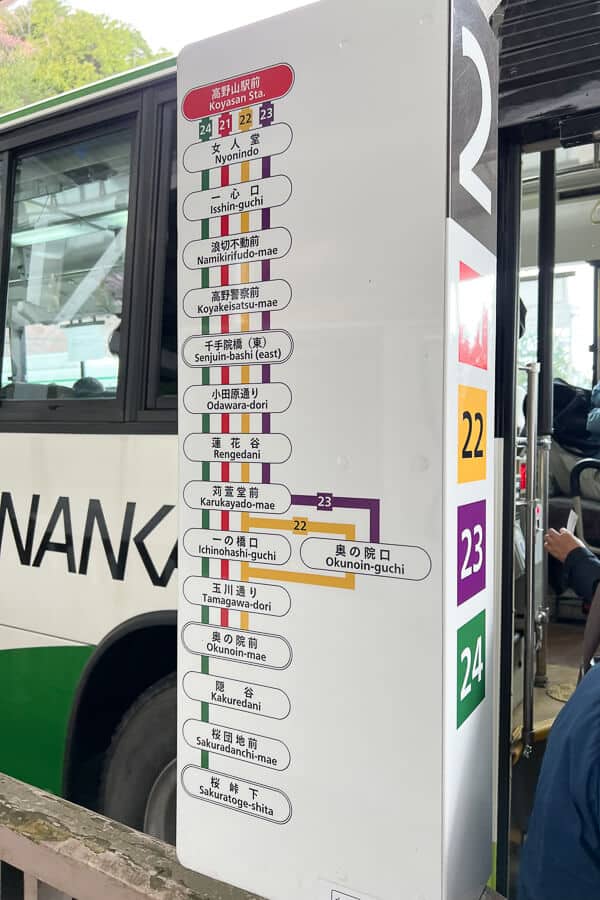
The bus route and times are also synced with Google Maps, making it very easy to navigate (another reason to make sure you have mobile data when travelling Japan).
- Bus 51 runs from one end of town to the other along the main street (east to west and vice versa e.g from Daimon Gate to Okunoin Cemetery)
- Bus 41, 42 and 45 run from Koyasan station to the centre of town to the eastern end of town (Okunoin Cemetery).
Here a map of the town showing the bus stops and major attractions.
Koyasan Temple Lodging
There are several options for temple stays in Koyasan, however, some come more recommended than others. Generally, you can usually expect the following from a Mount Koyasan temple stay:
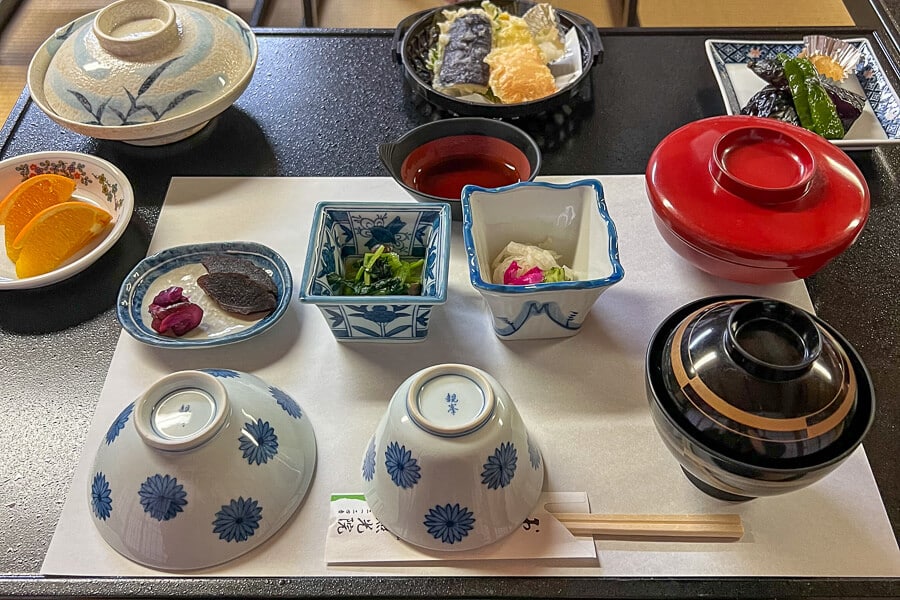
- Dinner and breakfast are included: Buddhist vegetarian cuisine is served (Shojin ryori). Dinner is also served early around 5.30 pm, so make sure you arrive at your accommodation in time.
- Join the Buddhist morning ceremony: It’s not mandatory, but most guests who choose to stay in temple lodgings will wake early and join the morning prayer ritual in the main hall. At our temple, we sat on small wooden stools for 30-45 minutes while two monks conducted the prayers. No photos were allowed in the main hall of this experience. I have heard that some of the more touristy temples, such as Eko-in, allow photos. Eko-in also includes a fire ritual as part of its morning prayers.
- Bathing Facilities may be communal: Similar to ryokans, most temples have large, gender-separated bathing facilities. Our room at Henjoko-in did have a private toilet.
Best Temple to Stay in Koyasan
There are over 50 temple stays in Koyasan, so there are many options but largely, most will offer a similar experience.
I will caution that best is subjective and depends on what you are looking for from your experience. For example, many consider Eko-in as the best temple stay Koyasan, however, you could also argue it is the most touristy temple stay in town.
The easiest way to book a temple stay is through one of the properties listed on booking.com.
Keeping this in mind, when considering which temple to stay in Koyasan, here are some recommended options:
- Eko-in ($$$): widely regarded and popular among tourists, Eko-in is one of the more progressive temples. Many of the monks are younger and speak fluent English. The rooms are also larger and more luxurious. Eko-in offers morning prayers, including fire rituals, as well as night tours of the ceremony. As one of the most comfortable and premium options for tourists, Eko-in is more expensive but gets rave reviews.
- Saizenin ($$): Traditional temple lodging with the option of a private toilet, and some also have a private shower. Dinner is served privately in your room.
- Yochi-in ($): This is a great option for a budget temple stay in Koyasan
Browse all accommodation in Koyasan
You can also book other temples on Japanican.com, which is what we did due to no availability at the other temples on the booking . com platform. I did find that our temple was perhaps less “touristy” however, I also didn’t have the best experience because of it.
Read on below for my review.
Henjoko-in: Temple Stay Koyasan Review
I only booked our Koyasan Japan temple stay a few weeks before, and unfortunately, couldn’t find any availability for our window of dates on booking.com. I found that Henjoko-in temple had availability on Japanican.com so I went ahead and booked this.
Our experience came with mixed reviews – I wouldn’t recommend staying here unless the alternatives listed above weren’t available.
We didn’t necessarily have a bad experience, we just had little to no interaction with the monks, poor communication in the lead-up and no explanation of things like the food we were eating at dinner which detracted from the experience.
Positives:
- Great central location in the middle of town
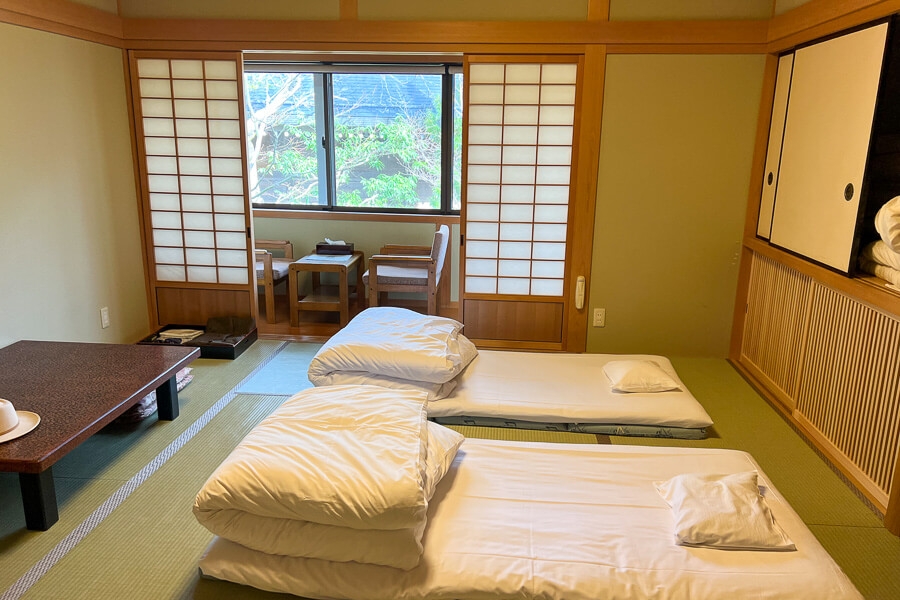
- The room was comfortable and had a heater and modern toilet in the room
- The dinner and breakfast were tasty
- The communal bath was large, clean and quiet
Negatives:
- When we arrived there was no reception or sign of where to go. We were just wandering around looking for someone for 5-10 minutes.
- We weren’t given any information about the temple or grounds. I would have loved to have been able to walk around the beautiful grounds but we were just shown directly to our rooms and left there until dinner!
- Dinner and breakfast were in a large hall with everyone else staying there and it was such a strange experience. We sat at single tables about 1.5 metres apart – it felt like we were at school!
Check out the video from my experience here.
The food was already placed on the tables when we entered, and there was no explanation as to what we were eating or any interaction from any of the staff so it was just a bit of a cold and uncomfortable experience both times.

The monks were older and had limited English (which is completely fine). So maybe having a slightly more “touristy” temple stay like at Eko-in in this type of situation would have been welcomed so at least we could feel a bit more immersed in the experience, as opposed to the kind of business transaction vibes we got from our quick one-night stay where the interaction was very hands off.
Overall, for the price we paid (35,000 Yen / A$370 / US$244) for one night, it was a mixed experience. I’m still glad we could have this experience, but next time would look to book at Eko-in or one of the other temples listed above.
Essential Visitor Tips for Koyasan
Leave your suitcases in Osaka: if you are only coming for an overnight stay, I highly recommend leaving large luggage and suitcases in a locker in Namba Station or using the luggage forwarding service to send them to your next destination. There is limited room on the cable car and local bus at Koyasan Station, we saw some poor tourists struggling with massive suitcases (and getting in everyone’s way!) on the bus and it was no fun for anyone.
Bring warm clothes: We made the mistake of not checking the weather in Koyasan, thinking it was going to be pretty similar to Osaka. As Koyasan is over 800 metres in elevation, it is a lot colder! We made the mistake of not bringing enough warm clothes, and even wearing every layer we had we were freezing in the middle of April as it was 6 degrees Celsius, even in the middle of the day!
Don’t wear the yukata to morning prayer: While we wore our yukata to our meals, in the temple guidebook, they asked visitors to please not wear the yukata to the morning prayer. A couple in our group hadn’t read this and got caught out and had to change.
Most temples have public baths: Similar to many ryokans, most of the temples have shared bathing facilities. Our room did have a private toilet, however, bathing facilities were communal and gender separated. If you aren’t comfortable with this, make sure to book a room with private facilities (at an additional cost).
Things to Do in Koyasan: Self-Guided Itinerary
Leaving Osaka around 9.30 am, we arrived at Koyasan town on the bus around 11 am and hopped off at Senjuin-bashi, the main intersection in town.
Follow along on my self-guided walking itinerary to explore the main sights and attractions around Koyasan.

You can access a free audio guide on your phone, using the Audio Guide points at most major tourist attractions, or hire an audio guide in town at the Tourist Information Centre. You can also book a local English-speaking guide for a 1-day private walking tour around town.

Kongobu-ji
The closest attraction once you hop off the bus is Kongobu-ji, the head temple of Koyasan. Our favourite feature of this temple was the magnificent Banryutei Rock Garden – the largest in Japan. It is designed to represent a pair of dragons emerging from a sea of clouds (we couldn’t quite see it!).

After wandering through the ornate main temple, you are welcomed into a large hall with free hot tea which was much welcomed on a chilly day!
Tip: World Heritage Ticket holders get 20% off the entrance fee.
Open: Daily 8.30 am – 5 pm
Entrance: ¥1000 (further 20% off with the World Heritage Ticket discount)
After exiting the temple, walk along the path heading right until you reach Kongobu-ji Kompon Daito, Grand Central Pagoda. This brightly coloured 50 metre pagoda is very striking, and worth the detour.

Daimon Gate
Walk 10 minutes down the main road to reach the Daimon Gate on the western edge of town. This impressive gate with views across the valley is the traditional entrance to Koyasan.
It symbolises the transition from the mundane world to the sacred world of Koyasan, guarded by two fierce-looking statues that are believed to ward off evil spirits.

Heading back towards the centre of town, there are a few recommended lunch stops. We had a delicious Japanese lunch at Ponpoko, a small family-run restaurant that seats about 10 customers.
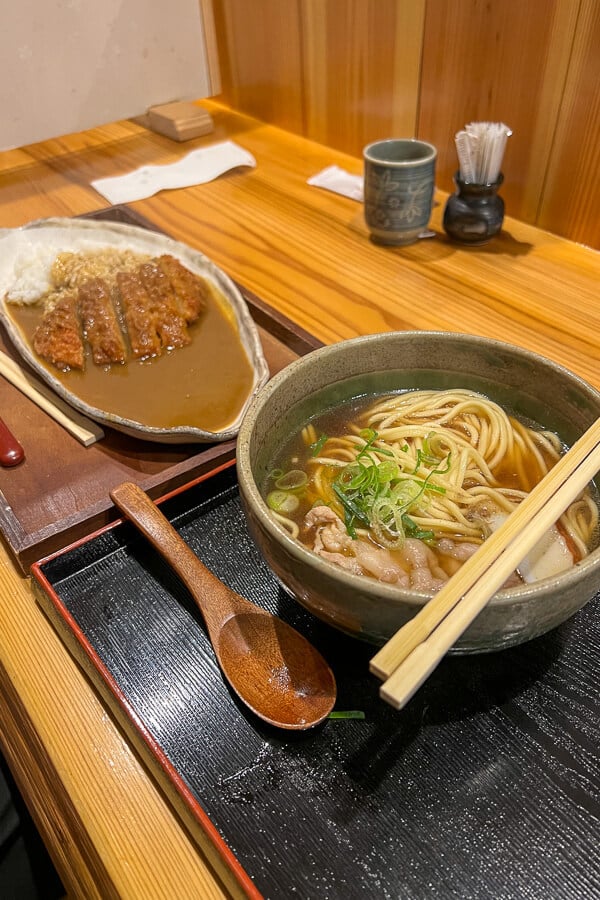
After lunch, craving a sweet treat we stopped in at Cafe Shizuku which was also serving delicious-looking vegan curries.
Down the road near the main intersection, there is a long-standing Japanese sweets store called “みろく石本舗 かさ國,” serving different kinds of mochi and other sweet treats. You can dine in and enjoy free tea alongside your dessert.

Reihokan Museum
The other main attraction in this part of town is the Reihokan Museum, which showcases cultural assets from Mount Koya’s long history including Buddhist statues and paintings.
We skipped this one due to the high entrance fee, but you do get 20% off with the World Heritage Ticket if you’re interested in seeing more works of art from Shingon Buddhism
Open: Daily 8.30 am – 5 pm
Entrance: ¥1300 (further 200 yen discount with the World Heritage Pass Ticket)
Okunoin Cemetery & Torodo Lantern Hall
Catch the bus from the main street or walk 10 minutes to the start of the forest walk in the Okunoin Cemetery.
As you walk on the main street, on the right hand side there are a set of orange torii gates leading to a small shrine “Kiyotakainarijinja” at the top of the hill, reminiscent of the famous torii gates of Fushimi Inari in Kyoto.

There are two paths into the cemetery, make sure you enter from this one, crossing over the Kongobu-ji Okuno-in Ichinohashi (First Bridge) near Houzen-in Temple Lodging.
This will take you through the longer and more scenic part of the cemetery, with towering cedar trees and moss-covered gravestones and memorials. Stretching for two kilometres, there are an estimated over 200,000 gravestones.

Tip: Guided nighttime tours are available of the cemetery (enquire with your accommodation or at the visitor information centre), however due to the freezing temperatures and our lack of appropriate warm weather clothing we had to pass on this one.
At the end of this beautiful, scenic and atmospheric walk you’ll reach the complex with the main Okunoin Temple, Torodo Lantern Hall and the Mausoleum of Kobo Daishi.
The Lantern Hall was particularly atmospheric with over 10,000 lanterns, said to have been burning continuously for hundreds of years. There are no photos allowed in this area.
Tip: Keep an eye out on the right of the path leading to Okunoin Temple for the Miroku Stone in a small cage. You are challenged to lift the heavy stone from a lower part of the cage with only one hand, with the stone believed to feel lighter for good people and heavier for bad people.
After exploring the area, we took the shorter path back through to the Okunoin-mae bus stop to get the bus back into town. This is a more modern and less scenic part of the cemetery, featuring gravestones from large corporations such as Mitsubishi and Panasonic.

Is Koyasan Worth Visiting?
Despite our lacklustre temple lodging experience, I thoroughly enjoyed our one night in Koyasan and was glad we made the effort to visit. It is one of the most unique places and experiences we have had after five trips to Japan, with memorable cultural experiences.
Based on this, I think Koyasan is definitely worth visiting, as the Japan temple lodging experience is such a unique and insightful cultural experience.
If you’re looking for a temple stay in Japan, Koyasan is easy to get to, has many temples to choose from and the small town has many interesting sights to explore.
You can watch a one-minute video of our entire experience here to get a better idea of what to expect.
Final Thoughts
Visiting Koyasan is a unique cultural experience that is worth adding to your Japan itinerary. It is an easy and scenic trip from Osaka, and spending one night in temple lodging is a great way to try a memorable Japan Buddhist temple stay.
Let me know if you have any questions about visiting Koyasan in the comments below, and check out my other Japan guides for help in planning your Japan adventures.
Japan Itineraries:
- A Fun 7 Day Tokyo Itinerary: Complete 1 Week in Tokyo Guide
- An Exciting 4 Days in Osaka Itinerary for First-Timers
- Exploring Fuji Five Lakes: 3 Days in Kawaguchiko Guide
- Takayama Itinerary: 2 Days Discovering Traditional Japan
- A Perfect 4 Weeks in Japan Itinerary: Ultimate Travel Guide
Japan Travel Planning, Tips & Tricks:
- How to Plan a Trip to Japan: Ultimate Japan Travel Guide
- Is Japan Expensive? My EXACT Japan Trip Cost Breakdown Revealed
- 30 Unmissable Experiences for Your Japan Bucket List
- 15 Things to Know Before Visiting Japan for the First Time
- Cool Stuff to Buy in Japan: 20 Souvenirs Actually Worth Buying
- How to Visit Katsuoji Temple on a Day Trip from Osaka
- Minoh Park: A Peaceful, Underrated Day Trip from Osaka
Other Japan Travel Guides: