
My husband and I have always toyed with the idea of buying a kitchen knife in Japan. However, it wasn’t until our SIXTH trip to Japan in 2025 that we finally bit the bullet and purchased our first Japanese santoku knife from a store in Tokyo’s bustling Kappabashi Street.
We’ve had a look at knives in Osaka and Tokyo on previous trips, but have always been too overwhelmed with the sheer number and variety of different types of knives to commit to a purchase.
In this article, I’ll guide you through our experience of buying our first knife in Japan, with tips and tricks to help make the process easier for you, as well as what to expect when knife shopping in Japan.
If you find this article useful, make sure to check out my other extensive Japan guides and detailed itineraries to make the most of your adventures in Japan. You’ll find links at the end of this guide.
Where to Start with Buying Knives
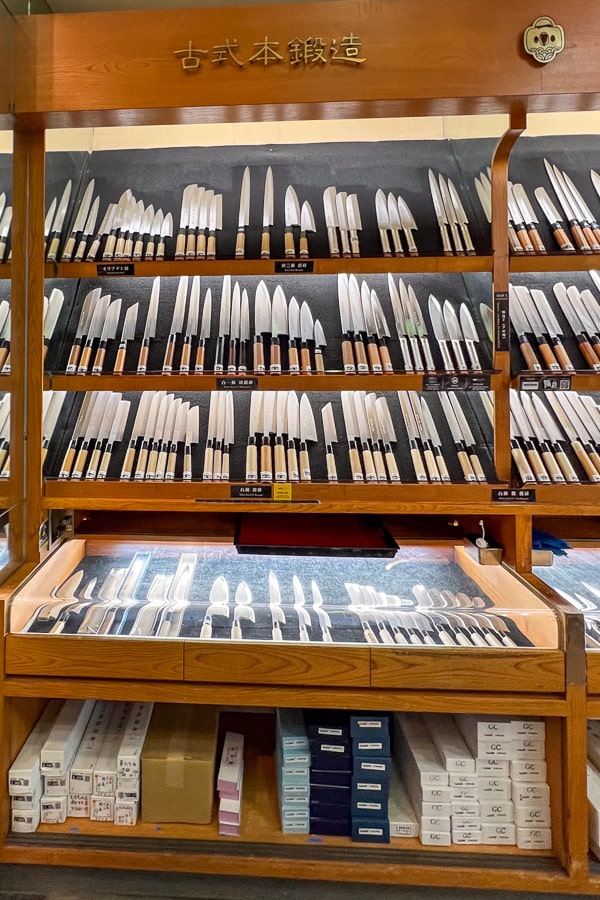
When you first walk into any knife shop in Japan, you might feel overwhelmed by the sheer variety of styles and sizes on display. The first thing you need to decide is which style of knife you want, based on what you want to use it for.
Knife Style
Here are a few popular styles to consider:
- Santoku (Multi-Purpose): The all-rounder. Literally meaning “three virtues” (fish, meat, and vegetables), this is the go-to everyday knife in Japanese households. Perfect if you want one knife to do it all. Shorter than a Gyuto, with a flatter edge profile and wider blade.
- Gyuto (Multi-Purpose): Most similar to a Western chef’s knife but lighter and sharper. Great for anyone who loves cooking and wants a versatile blade with a Japanese edge. Longer than a Santoku, ideal for handling larger cuts of meat and more volume.
- Nakiri (Vegetable): A straight-edged, large flat vegetable knife designed for effortless slicing, dicing, and chopping greens.
- Deba (Fish): A specialist fish knife which is heavier and shorter, ideal for fish filleting, but can also be used for poultry and breaking down other meat.
- Yanagiba (Sashimi): A very sharp knife with a long, slim profile, predominantly used to prepare fish for sashimi
Not sure what to pick? My suggestion – go with the Santoku. This is what we went with, as it is a versatile chef’s knife and a great starting point for most people buying their first Japanese knife.
It’s a great all-rounder and will be a go-to knife in the kitchen, perfect for multitasking and all cooking preparation tasks.

Knife Material
Now you’ve narrowed down the style of knife you want, the next thing to decide is what it’s made from. Most Japanese knives are made from stainless steel or carbon steel. Both have their own pros and cons to consider.
If you want to get even more technical, within these two types of materials, there are also many grades of stainless and carbon steel. If you’d like to dive deeper into the technical world of knives, this guide is a good starting point.
Stainless Steel
The low maintenance choice – it doesn’t rust easily, it’s resistant to staining, and it’s more forgiving if you forget to dry it straight after washing. Perfect if you’re buying your first Japanese knife without the minor burden of extra special care that the carbon steel requires.

Carbon Steel
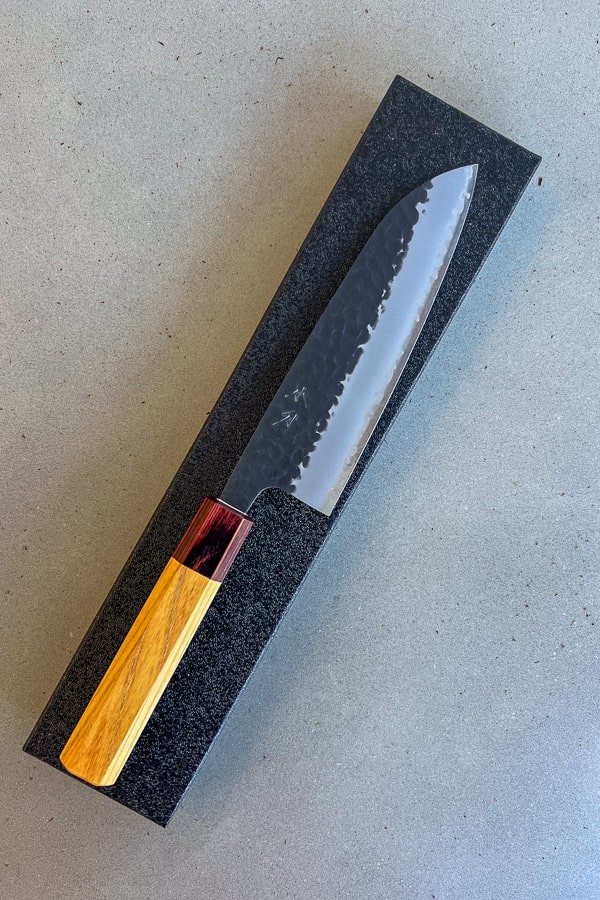
This is the traditional choice and what we ended up going with after my husband had done his research. It’s beloved by chefs and purists for its razor-sharp edge and beautiful patina that forms over time. But it does need extra love and care compared to a stainless steel knife.
Carbon steel will rust if you leave it wet, and it can discolour with acidic foods. The pro of carbon steel, apart from the unique and interesting look, is that it is harder than stainless steel, meaning it will hold its sharp edge for longer, and is generally easier to sharpen.
So if you’re happy to dry it every time after use, and maybe even oil it occasionally, it will be a beautiful and keen edge for a long time.
We’ve owned our Santoku carbon steel knife for a few months now, and try not to use it when chopping acidic food like lemons and make sure to wash and dry it thoroughly after each use (which isn’t as burdensome as it sounds).
And, it’s a beautiful piece that we look at daily in the kitchen!
Where to Buy a Knife in Japan
The easiest and most extensive shopping options for tourists looking to buy a knife in Japan are Tokyo and Osaka’s Kitchen Streets, which are Kappabashi Street and Sennichimae Doguyasuji, respectively.
These streets are PACKED with stores selling all things kitchenware, from kitchen knives, pots, pans, tea pots, sake sets, chopsticks, plastic food samples and everything else imageinable in between.

Tokyo’s Kappabashi street is a normal, outdoor open street, while Osaka’s Sennichimae Doguyasuji street is more of a narrow, undercover shopping arcade which can feel a bit claustrophobic, especially on a busy day (which is basically every day in the city!).
Due to this, we had a quick look through when we first arrived in Osaka, but decided quickly to save our proper knife shopping for Tokyo, hoping Kappabashi Street would be a bit calmer and not as crammed.

Kappabashi is bigger and has more options. I do think Kappabashi is a bit more touristy, but it also meant that we found it easier to find someone to help us in the store, speaking English to help compare options and answer our questions before deciding which knife to buy.
In Kyoto, Aritsugu is a popular choice – you’ll find it in Nishiki Market.
Most department stores across Japan will also have a selection of kitchen knives to browse. However, the staff may not speak English or be able to provide as much guidance on blade types or materials. They also don’t offer blade engraving, which many specialty stores do.
For more ideas for unique souvenir ideas of things actually worth buying and bringing home from Japan, check out my ultimate shopping guide with over 20 ideas!
Our Experience: Buying a Knife in Tokyo’s Kappabashi Street
After spending the morning re-visiting the popular Asakusa area (home to Senso-ji Temple), we walked on foot to the nearby Kappabashi Street.
At nearly 800 metres long, with over 170 shops, this shopping street has every kind of kitchenware imaginable! The start of the street is quite recognisable, thanks to the giant chef’s head towering over the top of the corner building.

Despite visiting mid-week, it was still a LOT busier than I was expecting – we entered quite a few knife shops that were very crowded with other tourists, making it difficult to get help or browse knives easily. So I’d recommend coming earlier in the day when the shops first open (usually around 10 a.m.) if possible for a smoother shopping and browsing experience.
We went into two stores with no success. The first, Kiwami, was packed and quite a small store, so we quickly decided it wasn’t for us. The second one, Tsubaya, only had a very limited range of carbon steel santokus, and didn’t offer tax refunds, which ruled that store out for us.
Starting to feel a little disheartened, we then tried our third store, Kamata Hakensha. We didn’t know it at the time, but Kamata is one of the older stores, founded in 1923 and passed down through four generations of family.

While busy, we were able to get a lovely older lady who spoke English to help us narrow down our options and explain a few of the knives to us.
We decided to bite the bullet and go with this beauty – a carbon steel santoku knife, with an ebony and sakura wood handle. Like many other specialty knife stores, they offer free engraving services, which Dane decided to take them up on.
We paid for our new knife and left it there to be engraved before picking it up an hour later. They also offered tax refund services, which I’ll explain more in the next section.
The cost of our knife was 20,000 Yen, which worked out to be $240 AUD with exchange rates at the time (approx 155 USD).
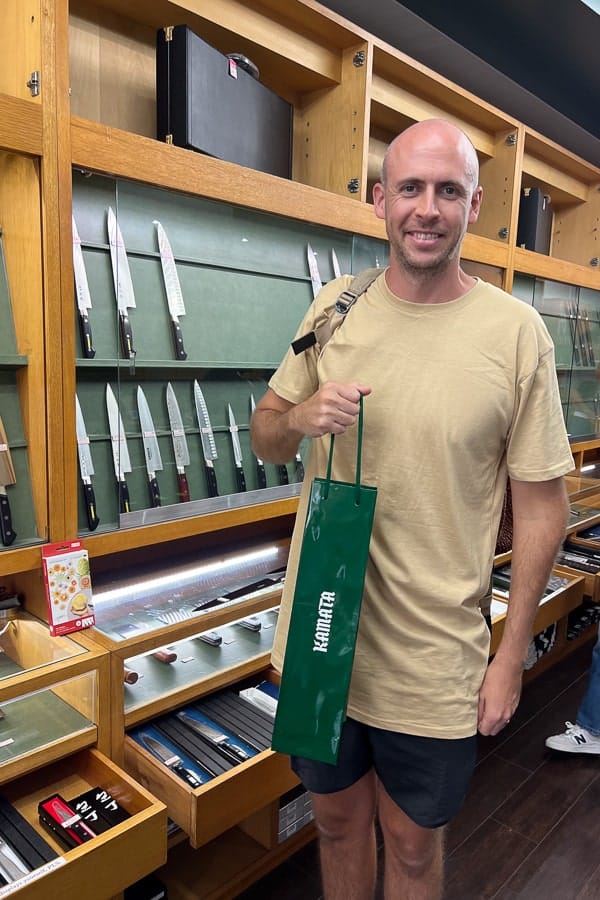
Needless to say, we had a great experience shopping at Kamata Hakensha, and are very happy with our new knife so far, several months on – it’s an absolute joy to use and I even look forward to chopping veggies now! They have an English website too.
It had been a long day of exploring for us, and we were feeling a little overwhelmed by how busy all of the stores were, so we didn’t check out any other stores – however there are over 10+ stores specialty knife stores situated along the length of Kappabashi Street, so go and check out as many as you have the appetite for to compare options.

Tax Refund
Many stores in Japan offer tax-free in-store shopping, which allows you to purchase items excluding the 10% consumption tax. This was an important factor in our decision on where to buy a knife, because why pay the extra 10% when you don’t have to, especially on such an expensive purchase!
As mentioned above, one of the three stores (Tsubaya) didn’t offer tax-free purchases. We were very happy to find that Kamata did offer tax-free purchases, but there was an extra hurdle to clear.
Instead of applying the tax exemption at the time of making the transaction in-store, we paid full price but were issued paperwork and instructions to head down the street to the Kappabashi Tax Refund Counter agency to get our refund.

At this store, we showed our paperwork, receipt and passport and within a few minutes got a cash refund; however, a “handling charge” fee of 2.2% was charged, meaning you don’t get the full 10% back but instead receive a reduced rate of 7.8%.
This is a slight inconvenience and quirk that many of the Kappabashi knife stores participate in this business model instead of applying the tax refund directly in-store at the time of purchase, like most big stores in Japan do.

So if you do find a store that offers the full 10% refund instantly off the purchase price, that’s a win!
In case you need a refresher on the tax refund requirements:
- Minimum Purchase Requirement: Purchases that total 5,000 yen or more (excluding tax) in a single transaction are eligible for a tax refund
- Show Your Passport: You’ll need to show your actual passport to process the transaction (not a copy)
Just note that the tax refund system is being overhauled in Japan from November 2026. From this point, visitors will need to pay the full price at the time of purchase and then receive a refund at the airport before departure – so this procedure in place at Kappabashi will change, but not for a while yet.

Tips for Knife Shopping
- Do your research: Know what style and material you want
- Get there when stores open in the morning (usually 10 a.m.) for a calmer shopping experience with better service – even on a weekday, they were very busy in the afternoon with tourists, even when travelling in shoulder season in June.
- Bring your physical passport to claim a tax refund
- Check which stores offer tax refunds (they don’t all do, there should be a sign in the window if they do, but make sure to ask/ check before buying)
- Ask if they offer free engraving services, if you wish to get yours engraved in Japanese (many people choose to get their name engraved)
Just a quick reminder not to leave home without travel insurance! There’s nothing worse than getting unwell overseas, let alone worrying about whether you can afford to pay for treatment. I use Covermore when I travel, and they’ve been fantastic – from delayed flights in Kuala Lumpur to getting stuck on an island in the Philippines due to the weather, I’ve had no issues the few times I’ve needed to make a claim. Get a quote here!
Getting the Knife Home
There are no special requirements to get your knife out of Japan – just make sure it is packed in your checked luggage and not your carry-on.
Knife Making Experiences
We actually looked into doing a knifemaking experience in Kyoto, but ran out of time to fit it into our schedule. It sounds incredible, though, especially if you’re interested in learning more about forging in depth. In this 3-hour workshop at a traditional blacksmith, you’ll learn how to use the tools and make a Japanese-style knife using the traditional process.
Given the cost of purchasing a new knife, this workshop actually works out to be pretty good value, and you get to go home with a very special kind of souvenir from your trip!
For more information, check out the Knife Making experience here.
Final Thoughts
That wraps up this detailed guide on how exactly to buy your dream kitchen knife in Japan! It only took us 6 trips to Japan until we finally bit the bullet and made our purchase, but I’m so glad we did – our knife is a dream to use, and is such a happy memento from our travels that we get to use and look at it daily.
For more help in planning your dream trip to Japan, check out my other travel guides below, and happy adventuring!
More Japan Itineraries:
- A Fun 7 Day Tokyo Itinerary: Complete 1 Week in Tokyo Guide
- The Perfect 3 Day Kyoto Itinerary: How to Avoid the Crowds
- An Exciting 4 Days in Osaka Itinerary for First-Timers
- A Perfect 4 Weeks in Japan Itinerary: Ultimate Travel Guide
- How to Easily Visit the Chureito Pagoda from Tokyo
Japan Travel Planning Essentials, Tips & Tricks:
- How to Plan a Trip to Japan: Ultimate Japan Travel Guide
- Is Japan Expensive? My EXACT Japan Trip Cost Breakdown Revealed
- 30 Unmissable Experiences for Your Japan Bucket List
- 15 Essential Things to Know Before Visiting Japan for the First Time
- Cool Stuff to Buy in Japan: 20 Souvenirs Actually Worth Buying
Great information. !! Greetings from Switzerland!! Visiting Japan October 2026 for 14 days! First time!!!🥹🙏😁👋💜💐🙏