
Despite being an avid hiker, I haven’t done that much hiking in Japan over my last five trips. On my most recent trip in May 2025, I decided to tick off one of Japan’s iconic hikes – the Nakasendo Trail. This ancient road connected Japan during the Edo period, linking Kyoto to the historic capital of Edo (now Tokyo).
Fast forward to modern day, the trail is a popular hiking route to pass through the historic and well-preserved post towns in the Nagano prefecture. Picture quaint towns, with Edo period architecture, connected by a trail in the countryside bursting with towering forests, lush waterfalls, thick bamboo groves, serene tea houses and idyllic natural scenery.
We left Kyoto and headed to Nagoya, which was our base for the next two nights, with the plan of completing the Magome to Tsumago section of the Nakasendo Trail as a day trip. Read on for everything you need to know to plan the perfect day trip from Nagoya.
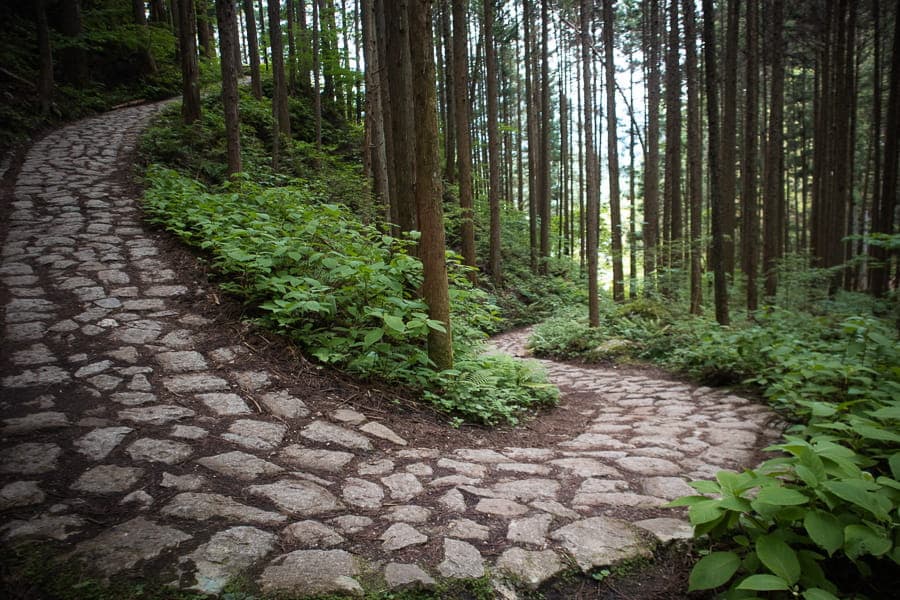
Quick Itinerary Overview
This was our route, departing from Nagoya. Keep reading below for details of how to get there and what to expect.
Getting There:
- Train: Nagoya – Nakatsugawa
- Bus: Nakatsugawa – Magome
Hike: Magome – Tsumago (8 km, ~3 hours)
Getting Back:
- Bus or Walk: Tsumago – Nagiso
- Train: Nagiso – Nakatsugawa
- Train: Nakatsugawa – Nagoya

Trail Direction and Difficulty
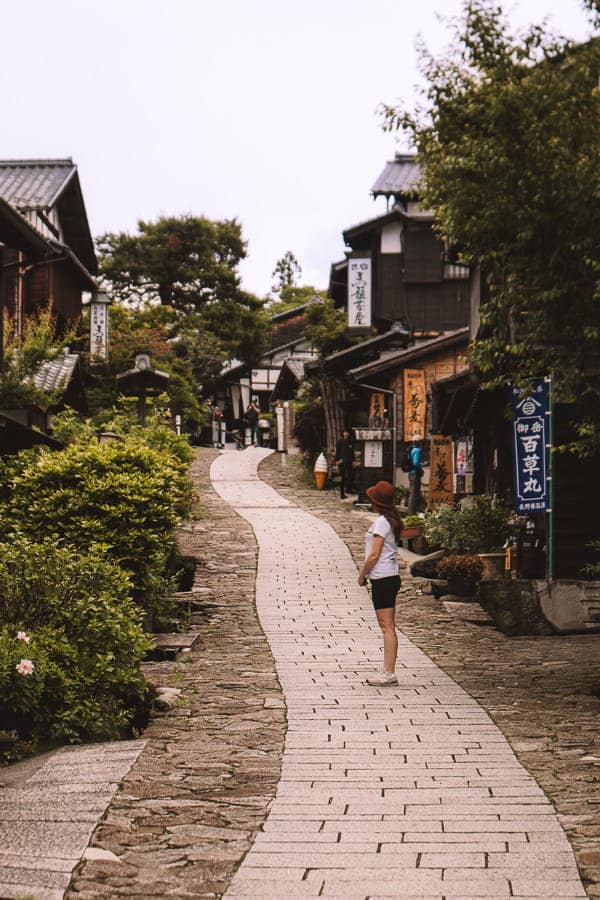
Our starting point for the hike was the historic post town of Magome. The main benefit of starting here is that there is less walking uphill.
It took us 3 hours to complete the 8 kilometre trail, at a somewhat leisurely pace and lots of photo stops! This included slight detours to see the two waterfalls on the trail (which I highly recommend doing).
The trail itself isn’t too challenging – in fact, I was 5 months pregnant when we hiked it! We took things at a slightly slower pace than normal; there were plenty of rest stops along the way to catch your breath.
Getting There from Nagoya
We chose Nagoya as our base to explore the Nakasendo trail.
As Japan’s fourth largest city, accommodation is plentiful and very affordable (particularly compared to Tokyo and Kyoto!), with numerous train connections to easily reach the starting point of the trail in a couple of hours or less.
It also meant we got to explore the city, home to notable attractions such as the Nagoya Castle, as well as home to the famous Ghibli Park (which we didn’t get to visit this time, as tickets are very hard to come by!).
Read my full one day in Nagoya itinerary here.
We stayed at the Via Inn Nagoya Station Tsubaki-cho, which was a short walk from Nagoya Station, clean and comfortable. My other accommodation recommendations are shared below.
Budget – nine hours Nagoya Station: this modern and sleek capsule hotel is close to the station with clean and quiet capsules. Bonus: Glitch Coffee operates out of the ground floor of the hotel (one of my favourite specialty coffee stores in Japan).
Mid-Range – Via Inn Nagoya Station Tsubaki-cho: Via Inn is one of my favourite chain hotels in Japan – they offer excellent value for money accommodation, and their Nagoya hotel is no exception, in a convenient location for our Nakasendo day trip, just a short walk from the station.
Luxury – Nikko Style Nagoya: this modern, trendy hotel features spacious rooms (a rarity in Japan!), a live DJ on weekends, bicycle rentals and specialty coffee.
Nakasendo Map

Nagoya to Magome (Hike Starting Point)
A train and bus journey is required to reach Magome.
Nagoya to Nakatsugawa
From Nagoya, you can catch:
Option 1: JR Chuo Main Line Rapid
- 1.5 hours
- 1340 Yen
- Suica accepted

Option 2: JR Shinano Limited Express
- 50 minutes
- ~2,500 Yen (unreserved seat) – as this train is a limited express, you need to pay for the base fare (1340 Yen) with an extra fee for the express supplement (1200 Yen for unreserved seats).

We opted for the more expensive but quicker Shinano train, departing Nagoya at 9 am and arriving at Nakatsugawa at 9.50 am. We purchased our tickets at the ticket machines beforehand at Nagoya Station, as Suica and other IC cards can’t be used to pay the express supplement fee.
Tip: unlike the Shinkansen ticket machines, we couldn’t use our foreign credit cards to buy our tickets for the JR Shinano line, and had to use cash (an issue we’ve encountered before in Kyoto, purchasing tickets for the JR Thunderbird at the ticket machines!). You can line up at the JR ticket office if you need to pay by card.
Nakatsugawa to Magome
When exiting the station, head to the bus terminal to the left. Look for the M bus (brown sign) – the bus departure should connect with the train times, so don’t linger too long at the station.
The bus from Nakatsugawa to Magome costs 800 Yen, and needs to be paid in cash when exiting the bus.

Grab a ticket as you enter the bus, and then pay for your fare when exiting the bus with cash. Make sure you have a small change of 1,000 Yen bills (or the exact fare), as the driver can’t change large bills.
The bus took about 25 minutes, navigating the steep and winding roads to reach the hilltop town of Magome, the starting point for our hike.
Just a quick reminder not to leave home without travel insurance! There’s nothing worse than getting unwell overseas, let alone worrying about whether you can afford to pay for treatment. I use Covermore when I travel, and they’ve been fantastic – from delayed flights in Kuala Lumpur to getting stuck on an island in the Philippines due to the weather, I’ve had no issues the few times I’ve needed to make a claim. Get a quote here!
Tsumago (Hike End Point) to Nagoya
Tsumago to Nagiso
Head to the Tsumago bus station and catch a bus to Nagiso Station. The fare is 300 Yen, cash only. Or you can catch a taxi, which will cost around ~1,800 Yen, making it a good option if you have a group.
Tip: I’d recommend grabbing something to eat in Tsumago – there weren’t many options open while waiting for the train at Nagiso mid-afternoon.
Alternatively, you can continue your hike and navigate the 3.5 kilometres between Tsumago and Nagiso on foot.

Nagiso to Nakatsugawa
Nagiso train station is tiny, consisting of two platforms. The ticket window is open from 7.50 am to 4.05 pm daily, with the fare to Nakatsugawa costing 330 Yen (cash only). If the ticket window is closed, you will need to pay for your fare on the train or at the arrival station.

Note: In the afternoon, some JR Shinano Limited Express trains pass through Nagiso Station on the way to Nagoya Station (thus avoiding the transfer at Nakatsugawa). The timing didn’t work out for us, so we caught the cheaper but slower JR Chuo Main Line (journey time of 2 hours versus 1 hour 10 minutes with the Limited Express).
Nakatsugawa to Nagoya
You’ve made it back to Nakatsugawa Station!
From here, we had to exit the station with our paper tickets and tap back in with our Suica cards as we were catching the JR Chuo Main Line for our return trip to Nagoya instead of purchasing the more expensive tickets for the Shinano Limited Express as the connections lined up.

We left Nagoya at 9 am and returned around 4 pm, making it a very doable day trip. Trains do run later in the day, so you could easily extend your day and get back to Nagoya later at night (or, leave earlier if you’re an early bird!).
Tip: If you’re thinking of extending your day, make sure to check the train schedule using Google Maps beforehand, as connections aren’t as frequent later on in the day.

Hiking the Trail
Being one of Japan’s more well-known hiking routes, there’s plenty of signage along the way in both Japanese and English, so don’t worry about getting lost on the trail.

When you get off the bus in Magome, you’ll turn left at the Tourist Information Centre and begin your uphill hike along the cobblestoned street that marks the start of the trail. The Tourist Information Centre has English brochures, maps and a stamp if you’re collecting them.

After passing the quaint wooden cafes and houses (keep an eye out for the water wheels too), you’ll reach a great viewpoint looking over the forested mountains.

Hiking in early summer in May, we spotted wild strawberries growing in the bushes, and passed thickets of bamboo before coming across a free garden in a local’s backyard.

Passing through a small cluster of locals’ houses, before entering the cypress forest and reaching the free tea room and rest house around the halfway point of the hike. Staffed by friendly volunteers, you can rest your legs and stop for some complimentary tea (donations welcome).
We spoke to the elderly volunteer, him in broken English and us with our rudimentary Japanese, and he offered some pickled ume (plum).


Passing through more of the forest, we came across a gushing river and bridge, before reaching the intersection where you can take a short optional detour to see the two waterfalls in the area, which I highly recommend you do!

As you approach the final stretch leading to Tsumago, you’ll cross a large river before popping back out into civilisation at the equally charming post town. It’s smaller than Magome, but there are many souvenir shops and a few restaurants and cafes if you’d like to have a meal before getting the bus to begin your journey back to Nagoya.

While our bus to Magome at the start of the day was full, I never felt the trail was busy. After leaving Magome, we rarely saw other people except at the tea house along the way. Signage was plentiful and in English, making it a very comfortable and easy day trip.

Tips
Bring Cash
As you can tell from the Getting There section, lots of the local buses and trains are cash only, and can only change 1,000 Yen bills. Make sure to have cash and small change on hand. There aren’t any 7-Elevens in the post towns, so I doubt they have any ATMs that accept foreign cards.
Stock Up on Snacks
Likewise, with a lack of convenience stores along the way, it’s best to bring some snacks with you to stay energised for the day. You’ll find homely restaurants and cafes in the two post towns, but there are not many food options on the trail itself. We also brought two big water bottles with us.
Watch for Bears
You’ll come across many signs on the trail warning of bears – and bear bells!

After our first bear bell encounter in Takayama, we now realise what these bells are for, placed along the trail. Luckily, no bears were sighted (just a cute cat!). It’s recommended to carry something to make a sound to ward off bears (like a bell).

Use Google Maps to Plan your Journey
All the train and bus timetables are synced into Google Maps, making it relatively straightforward to plan your journey. I use AirAlo eSims to make sure I have a reliable internet connection when travelling in Japan.
Japan Travel Navitime is another useful app synced with bus and train routes.
Bathrooms
There are a couple of restrooms along the way, but they aren’t very frequent, so make sure to stop if you see one!
Final Thoughts
I hope this guide has helped you plan your own day trip from Nagoya to hike the iconic Nakasendo trail. It was one of the highlights of our most recent trip to Japan, and while it’s not quite a hidden gem, it still offers an incredibly tranquil way to see more of rural Japan and the beautiful countryside.
If you’re looking for a stress-free option, consider this one-day tour from Nagoya that includes comfortable coach transfers. This is great for groups or families, as it provides options for both hikers and non-hikers, so there’s something for everyone to be able to enjoy the day together, even if you aren’t up for hiking the 8 km trail.
I would have loved to spend a night in or near one of the towns, but accommodation is very limited. If you’re interested in doing more than a day trip, make sure to book your accommodation well in advance so you don’t miss out, like us – Tajimaya in Magome offers a traditional Japanese inn experience in a 110-year-old building, a 5 minute walk from the bus stop.
Luggage forwarding services are available in both Magome and Tsumago, making it easy if you want to spend a night or two in the area but still do the hike between the two towns.
Lastly, make sure to check out my other Japan travel guides below to make the most of your time in Japan.
If you love the idea of hiking the Nakasendo, check out my suggested day trip from Osaka to Minoh Falls!
More Japan Itineraries:
- A Fun 7 Day Tokyo Itinerary: Complete 1 Week in Tokyo Guide
- The Perfect 3 Day Kyoto Itinerary: How to Avoid the Crowds
- A Perfect 4 Weeks in Japan Itinerary: Ultimate Travel Guide
Japan Travel Planning Essentials, Tips & Tricks: